2026 Buyer’s Playbook: Uncover Hidden Dealer Fees & Save $800

The 2026 Buyer’s Playbook: Uncovering Hidden Dealer Fees to Save an Average of $800 (INSIDER KNOWLEDGE) reveals essential strategies for navigating the evolving automotive market, empowering buyers to identify and successfully negotiate away various deceptive charges, ultimately leading to significant financial savings on their next vehicle.
Navigating the modern car market can feel like traversing a minefield, especially with the persistent challenge of hidden dealer fees. As we approach 2026, the landscape continues to shift, making it more critical than ever for consumers to be well-informed and prepared. This comprehensive guide, drawing on insider knowledge, aims to equip you with the strategies needed to identify, challenge, and ultimately save hundreds, if not thousands, of dollars by sidestepping these often-unjustified charges.
Understanding the 2026 Automotive Market Dynamics
The automotive market in 2026 presents a unique blend of technological advancements and persistent consumer challenges. While electric vehicles (EVs) and advanced driver-assistance systems (ADAS) are becoming standard, the fundamental business practices of dealerships, particularly concerning fees, have not always kept pace with consumer expectations for transparency. Understanding these dynamics is the first step toward a successful negotiation.
Supply chain issues, though less severe than in previous years, can still impact inventory levels for specific popular models. This can sometimes embolden dealerships to tack on additional fees, assuming buyers will pay for immediate availability. However, a well-prepared buyer knows how to leverage market information and compare options effectively.
The Shift Towards Digital Dealerships
The rise of digital car buying platforms and online sales processes has transformed how many consumers approach purchasing a vehicle. While these platforms offer convenience, they can also introduce new avenues for fees if not carefully reviewed. It’s crucial to understand that even an online purchase often culminates in paperwork at a physical location, where additional charges might surface.
- Online platforms offer price transparency for the vehicle itself.
- Finalizing paperwork can still involve in-person fee disclosures.
- Digital contracts require the same scrutiny as traditional ones.
The 2026 market demands a hybrid approach: utilizing online tools for research and initial pricing, then applying critical in-person negotiation skills to finalize the deal. This blend ensures you get the best of both worlds, leveraging technology without falling prey to hidden costs.
The automotive landscape is constantly evolving, with new regulations and consumer protections slowly coming into play. Staying updated on these changes can provide additional leverage during negotiations. Always remember that knowledge is power, especially when dealing with complex financial transactions.
Identifying Common Hidden Dealer Fees
Dealer fees come in many guises, some legitimate, others less so. The key to saving money is to differentiate between mandatory government charges and optional, often inflated, dealership add-ons. Many of these fees are designed to increase the dealer’s profit margin without adding tangible value for the buyer.
One of the most frequently encountered, yet often negotiable, fees is the ‘documentation fee’ or ‘doc fee.’ While dealers argue this covers administrative costs, the actual expense for processing paperwork is minimal, making the typically high charges largely profit-driven. These fees vary significantly by state, so knowing your state’s regulations is crucial.
Dissecting the Documentation Fee
The documentation fee is a prime example of a charge that can be challenged. It’s often presented as non-negotiable, but savvy buyers know better. While it covers the cost of preparing and processing the sales contract, registration, and title documents, the amount charged rarely reflects the true cost of these administrative tasks.
- Doc fees can range from $50 to over $1,000 depending on the state.
- Research your state’s maximum allowable doc fee.
- Always question the necessity and amount of this charge.
Another common fee is for ‘dealer preparation’ or ‘pre-delivery inspection.’ While a vehicle should certainly be inspected and cleaned before delivery, charging a separate fee for this service is often redundant, as these costs are typically built into the vehicle’s invoice price. Be wary of any charge that sounds like it’s already part of the car’s inherent value.
Strategies for Negotiating Away Unwanted Charges
Negotiation is an art, not a battle. Approaching the discussion with a calm, informed, and firm demeanor will yield the best results. Your goal is to achieve a fair deal, not to antagonize the salesperson. Remember, they are also looking to close a sale, and a reasonable compromise benefits everyone.
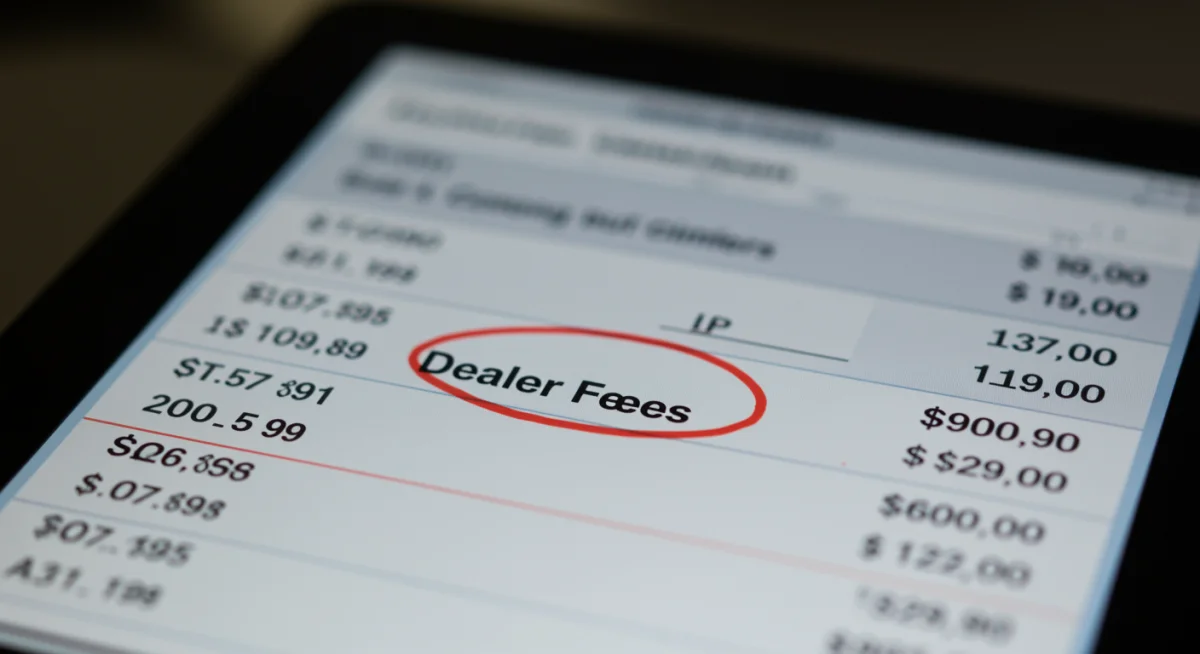
Start by requesting a full, itemized breakdown of all costs before you commit to anything. This transparency allows you to scrutinize each line item. If a fee appears unfamiliar or unjustified, ask for a detailed explanation. Don’t be afraid to question anything that seems out of place or excessively high.
Effective Negotiation Tactics
When challenging a fee, always have your research ready. If you know the average doc fee in your state, or if a competitor doesn’t charge a particular fee, use that information as leverage. Present your case factually and politely, explaining why you believe the fee is unwarranted or excessive.
- Ask for a full, itemized list of all fees upfront.
- Research state-specific fee regulations.
- Be prepared to walk away if a fair agreement cannot be reached.
Consider bundling the negotiation of various fees into the overall vehicle price. Sometimes, a dealer might be more willing to reduce or remove a specific fee if it means securing the sale at an agreeable total price. This approach allows for flexibility and can often lead to a more favorable outcome than tackling each fee individually.
It’s also important to separate the vehicle price negotiation from the financing and trade-in discussions. Focus on getting the best price for the car first, then move on to other elements of the deal. This prevents confusion and ensures you’re getting a good value for each component of the transaction.
Leveraging Online Resources and Competitor Pricing
In 2026, the internet is your most powerful tool in car buying. Online resources provide unparalleled access to information, from invoice pricing to competitor offers, giving you a significant advantage. Using these tools effectively can arm you with the data needed to counter inflated fees and secure a better deal.
Start by researching the true market value of the vehicle you’re interested in. Websites like Edmunds, Kelley Blue Book, and TrueCar offer excellent pricing guides based on recent sales in your area. This information helps you establish a baseline for what you should reasonably pay, separate from any added fees.
Utilizing Online Price Comparison Tools
Many online platforms allow you to compare offers from multiple dealerships without having to visit each one in person. This not only saves time but also provides concrete offers that you can use as leverage. If one dealership is offering a vehicle at a lower out-the-door price (including all fees), you can present this to another dealer to encourage them to match or beat it.
- Compare prices from multiple dealerships online.
- Look for ‘out-the-door’ pricing that includes all fees.
- Use written quotes as negotiation tools.
Don’t hesitate to contact dealerships in neighboring cities or even states. Sometimes, a slightly longer drive can result in significant savings if those dealerships have different fee structures or are more competitive. Always get any offers in writing, whether via email or a printout, to avoid misunderstandings during the final purchase.
Moreover, online forums and consumer review sites can provide valuable insights into specific dealerships’ practices regarding fees. Learning from other buyers’ experiences can help you anticipate potential issues and prepare your negotiation strategy accordingly.
The Role of Financing and Extended Warranties
Financing and extended warranties are often significant profit centers for dealerships, and they can sometimes be bundled with various fees, making the overall cost opaque. Understanding these components separately is crucial to ensure you’re not overpaying for services or loans that could be acquired more affordably elsewhere.
Before stepping into a dealership, secure pre-approved financing from a bank or credit union. This gives you a benchmark interest rate and empowers you to walk away from unfavorable dealer financing offers. Dealerships often mark up interest rates, so having your own financing in place provides a strong negotiation position.
Evaluating Extended Warranties and Protection Plans
Extended warranties, paint protection, fabric protection, and gap insurance are all optional products that dealers frequently push. While some might offer value, many are overpriced and can be purchased for less from third-party providers. Always question the necessity and cost of these add-ons.
- Obtain pre-approved financing before visiting the dealership.
- Research third-party extended warranty providers.
- Decline unnecessary protection plans.
Carefully read the terms and conditions of any extended warranty or protection plan. Understand what is covered, for how long, and what the deductible is. Often, the manufacturer’s warranty already provides sufficient coverage for the initial years, making an immediate extended warranty redundant.
Remember that you are under no obligation to purchase these additional products from the dealership. If you feel pressured, politely decline and explain that you prefer to arrange these services independently. Your focus should remain on the total purchase price of the vehicle itself.
Protecting Yourself: Contract Review and Final Check
The final stage of any car purchase is the contract review, and this is where many hidden fees can still slip through if you’re not diligent. Never rush this process. Take your time to read every line, ensuring that all agreed-upon terms, prices, and fees are accurately reflected and that no new charges have been added.
Bring a trusted friend or family member to review the contract with you, as an extra pair of eyes can often spot discrepancies. Pay close attention to the ‘out-the-door’ price, which should include the vehicle’s price, all taxes, registration fees, and any agreed-upon dealer fees. This total figure is the most important number to verify.
Key Elements to Scrutinize in the Contract
Look for any line items that weren’t discussed or agreed upon during negotiations. These could be vague charges like ‘market adjustment’ or ‘dealer services’ that can easily be challenged. Ensure that any trade-in value is correctly applied and that your agreed-upon interest rate for financing is accurately listed.
- Verify the ‘out-the-door’ price matches your negotiated total.
- Check for any undisclosed or new fees.
- Ensure all trade-in and financing terms are correct.
If you find any discrepancies, do not sign the contract until they are resolved to your satisfaction. Be prepared to ask for clarification and insist on corrections. A reputable dealership will address your concerns transparently; a hesitant or evasive response should be a red flag.
Finally, once the contract is signed, keep a complete copy of all documents. This includes the sales agreement, financing terms, and any warranty information. These documents are your record of the transaction and can be crucial for future reference or in case of any disputes.
| Key Strategy | Brief Description |
|---|---|
| Market Research | Understand true vehicle values and competitor pricing to establish a strong negotiation baseline. |
| Fee Identification | Learn to distinguish legitimate government fees from negotiable or unjustified dealer add-ons. |
| Negotiation Tactics | Employ polite but firm strategies, leveraging information to challenge and reduce fees. |
| Contract Scrutiny | Thoroughly review all final documents for accuracy and any last-minute, unapproved charges. |
Frequently Asked Questions
Documentation fees in 2026 vary by state, often ranging from $100 to $1,000. While dealers often claim they are non-negotiable, they can frequently be challenged. Research your state’s maximum allowed fee and use this information to negotiate a reduction or removal.
Always ask for an itemized breakdown of all costs. Look for vague charges like ‘dealer prep,’ ‘market adjustment,’ or ‘administrative fees’ that aren’t government-mandated. Compare offers from multiple dealerships to spot discrepancies in pricing structures.
It’s generally recommended to secure pre-approved financing from a bank or credit union before visiting the dealership. This provides a competitive interest rate and strengthens your negotiation position, allowing you to compare and potentially refuse less favorable dealer financing options.
Extended warranties from dealerships are often overpriced. While they can offer peace of mind, it’s advisable to research third-party providers who often offer similar coverage at a lower cost. Decline unnecessary add-ons and evaluate your actual need for extended coverage.
The most important number is the ‘out-the-door’ price. This includes the vehicle’s price, all taxes, registration fees, and any agreed-upon dealer fees. Focus on this total to ensure you are getting the best overall deal, rather than just the base price.
Conclusion
The 2026 automotive market, while exciting with its innovations, also demands a vigilant approach from car buyers. By understanding common dealer fees, leveraging online resources, and employing effective negotiation strategies, you can confidently navigate the purchasing process. The average savings of $800, as highlighted by this insider knowledge, is not just a theoretical figure but a tangible goal achievable through preparedness and a commitment to scrutinizing every line item. Empower yourself with this playbook, and drive away not just with a new car, but with the satisfaction of a smart, well-negotiated deal.