2025 Buyer’s Toolkit: Essential Documents for a Smooth Car Transaction
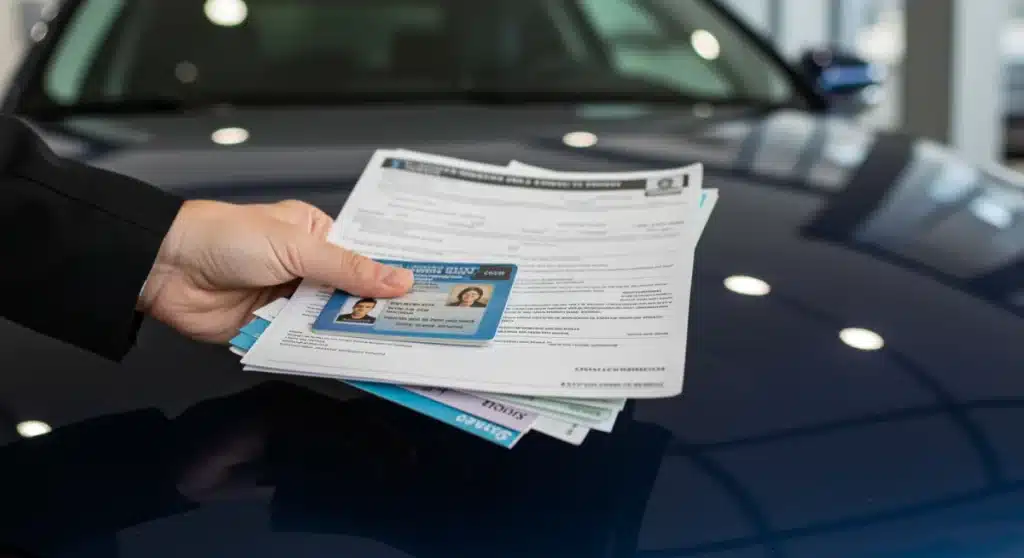
To ensure a smooth and swift car transaction in 2025, buyers will need to prepare a specific set of essential documents, including proof of identity, financial records, and insurance information, to complete the purchase efficiently.
Navigating the world of car buying can often feel overwhelming, but with the right preparation, it doesn’t have to be.
The 2025 Buyer’s Toolkit: Essential Documents Needed for a Smooth Transaction in Under 90 Minutes. is designed to demystify the process, ensuring you’re fully equipped for a hassle-free purchase.
Imagine walking into a dealership or completing an online transaction with confidence, knowing every piece of paperwork is in order.
This guide will empower you to streamline your next car acquisition.
understanding the modern car buying landscape
The automotive retail experience is constantly evolving, with technology and consumer expectations driving significant changes.
In 2025, the trend leans heavily towards efficiency and digital integration, meaning prepared buyers can expedite their transactions considerably.
Gone are the days of endless paperwork and multiple trips to the dealership; today’s process values speed and convenience.
Understanding this shift is crucial. Dealerships and online platforms are increasingly adopting digital solutions for contracts, financing applications, and even vehicle registration. This digital transformation means that while the core documents remain important, their presentation and submission methods might differ. Being aware of these modern practices allows you to adapt and ensure your toolkit is truly ready for 2025.
the shift to digital documentation
- Online Portals: Many dealerships now offer secure online portals for uploading documents ahead of time.
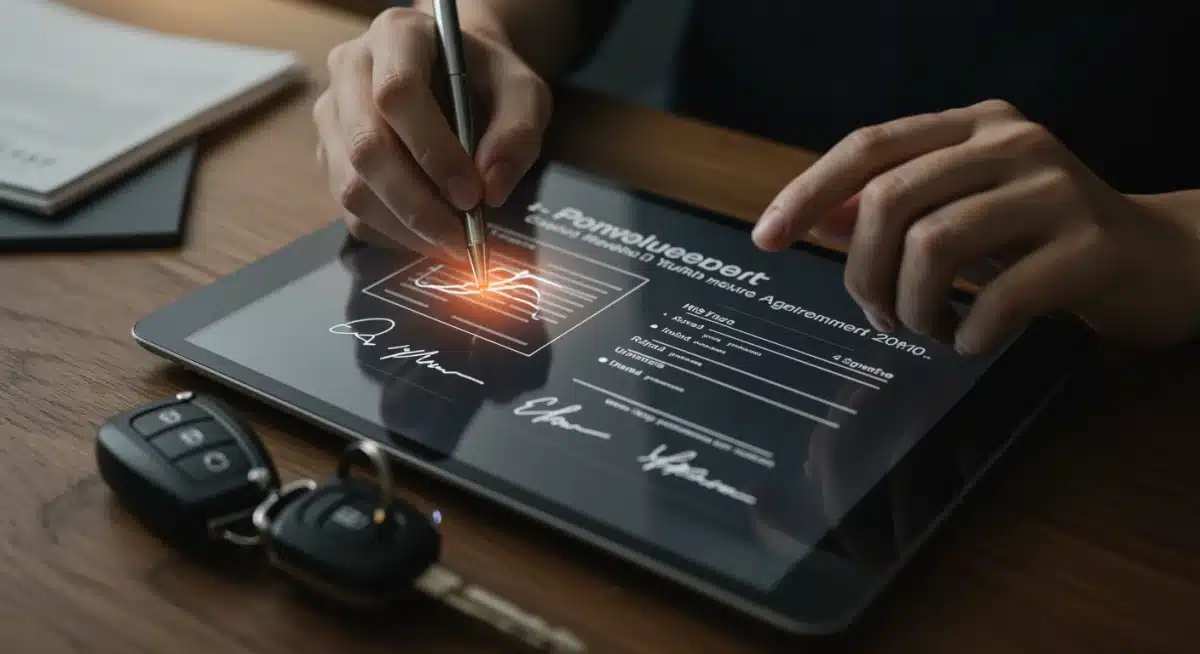
- E-Signatures: Digital signatures are becoming standard, legally binding and speeding up the contract process.
- Virtual Consultations: Some aspects of the transaction, including document review, can be done remotely.
The goal is to minimize time spent physically at the dealership, making the entire purchasing journey more palatable. This focus on digital efficiency isn’t just about convenience; it also enhances security and accuracy by reducing manual errors. Therefore, preparing your documents in a digital format, or at least having digital copies readily available, will be a significant advantage.
In conclusion, the modern car buying landscape prioritizes speed and digital convenience. Buyers who understand and embrace this shift by preparing their documents accordingly will find their 2025 car transaction remarkably smooth and efficient, often completing it in less than 90 minutes.
proof of identity and residency
One of the foundational requirements for any significant purchase, especially a vehicle, is establishing your identity and place of residence.
This isn’t just a dealership formality; it’s a legal necessity to prevent fraud and ensure proper registration.
For a swift transaction, having these documents readily accessible and up-to-date is non-negotiable.
The specific forms of identification accepted can vary slightly by state and dealership, but there’s a common set that will cover almost all scenarios.
It’s always a good practice to have both primary and secondary forms of ID, just in case one is deemed insufficient or additional verification is needed.
Remember, clarity and validity are key; expired documents will only cause delays.
primary identification
- Valid Driver’s License: Your current, unexpired state-issued driver’s license is universally accepted.
- State-Issued ID Card: If you don’t drive, a state identification card serves the same purpose.
- Passport: A valid U.S. passport can also serve as primary identification, especially for non-drivers.
Beyond proving who you are, dealerships and state motor vehicle departments require proof of where you live. This ensures the vehicle is registered to the correct address and that you are eligible for any state-specific incentives or regulations. Utility bills, bank statements, or official government mail are typically accepted.
proof of residency
- Utility Bill: A recent utility bill (electricity, water, gas) showing your name and current address.
- Bank Statement: A recent bank statement or credit card statement with your address.
- Lease Agreement or Mortgage Statement: Official housing documents can also serve as proof.
Having these documents prepared and perhaps even scanned into digital files will significantly cut down on transaction time. Dealerships appreciate efficiency, and showing up with all necessary identification and residency proofs demonstrates you’re a serious and prepared buyer. This proactive approach sets a positive tone for the entire purchasing experience.
financial readiness: proof of funds or loan pre-approval
One of the most critical aspects of any car purchase is how you intend to pay for it.
Whether you’re paying cash or securing a loan, demonstrating your financial readiness upfront can dramatically accelerate the transaction.
In 2025, dealerships are increasingly appreciative of buyers who arrive with their financial ducks in a row, as it streamlines their internal processes and reduces sales cycle times.
For those purchasing with cash, having clear proof of funds is essential.
This isn’t just about showing a bank balance on your phone; it often requires official documentation that can be verified.
Similarly, if you’re financing, a pre-approved loan letter from your bank or credit union is invaluable.
It tells the dealership that your financing is already secured, allowing them to focus on the sale rather than the loan application process.
for cash buyers
- Bank Statement: A recent statement showing sufficient funds for the purchase.
- Letter from Bank: An official letter from your bank confirming available funds.
- Certified Check: For immediate payment, a certified check can act as proof of funds.
For buyers seeking financing, pre-approval offers several advantages.
It not only speeds up the transaction but also gives you a clear understanding of your budget and interest rate before you even step onto the lot.
This empowers you to negotiate more effectively and avoid unexpected financial surprises.
for financed buyers
- Loan Pre-Approval Letter: Document from your bank/credit union detailing loan amount, interest rate, and terms.
- Proof of Income: Recent pay stubs, W-2 forms, or tax returns may be required by lenders, even if pre-approved.
- Credit Report (Optional but helpful): Knowing your credit score beforehand helps manage expectations and identify potential issues.
Being financially prepared means you’ve done your homework and secured your funding source before engaging in serious negotiations. This level of preparation not only saves time but also often leads to a better overall deal, as you can focus on the vehicle price rather than getting caught up in the financing details at the last minute. It’s a cornerstone of a smooth, under 90-minute transaction.
current vehicle information for trade-ins
For many car buyers, a new purchase often involves trading in an existing vehicle.
This can significantly impact the overall cost of your new car, making it a crucial part of the transaction.
To ensure the trade-in process is as smooth and quick as possible, having all relevant documentation for your current vehicle is paramount.
Dealerships need to verify ownership, assess the vehicle’s history, and ensure there are no outstanding liens before they can accept your trade-in.
Without these documents, the process can grind to a halt, requiring you to retrieve information or make extra trips.
Being prepared means you can secure the best possible trade-in value and integrate it seamlessly into your new car purchase.
essential trade-in documents
- Vehicle Title (Pink Slip): Proof of ownership, ensuring it’s free of liens or that you have the payoff information.
- Current Registration: Demonstrates the vehicle is legally registered and recently inspected (if applicable).
- Loan Payoff Information: If you still owe money, bring the account number and lender’s contact information.
- Maintenance Records: A history of service can enhance your vehicle’s perceived value.
Beyond the official paperwork, having a clear understanding of your vehicle’s condition and features can also aid in the trade-in discussion.
Be ready to discuss any modifications, recent repairs, or notable wear and tear.
The more transparent and documented you are, the faster and fairer the appraisal process will be.
In summary, preparing your current vehicle’s documentation is just as important as preparing for your new purchase. It ensures a transparent and efficient trade-in valuation, directly contributing to a quicker overall transaction. Don’t let a missing title or registration delay your new car acquisition when a little preparation can prevent it.
proof of insurance
Before you can drive your new car off the lot, having valid automobile insurance is a legal requirement in nearly every state across the U.S.
Dealerships cannot allow you to leave without proof of coverage, making this document a critical component of your 2025 buyer’s toolkit.
Failing to have this ready can cause immediate and frustrating delays, turning a 90-minute transaction into a much longer ordeal.
The good news is that securing proof of insurance can often be done very quickly, especially if you already have an existing policy.
Many insurance providers offer instant digital proof, which can be emailed or accessed via a mobile app.
The key is to proactively contact your insurance agent or company before your purchase date to arrange for coverage on your new vehicle.
what to prepare for insurance
- Insurance Binder or Policy Declaration Page: A temporary or permanent document showing coverage for the new vehicle.
- Insurance Agent’s Contact Information: For quick verification or to add the new vehicle on the spot.
- Existing Policy Information: If you’re transferring coverage, have your current policy number handy.
It’s important to understand that while a temporary proof of insurance (often called a binder) is usually sufficient for driving off the lot, you will need to finalize your policy shortly thereafter.
Ensure the coverage meets your state’s minimum requirements and consider additional coverage options that protect your investment.
In conclusion, proof of insurance is a non-negotiable step in the car buying process. By arranging this in advance, whether through a quick call to your agent or via an online portal, you eliminate a common bottleneck and ensure your new vehicle can be legally and safely driven home without delay. This foresight is crucial for achieving that under 90-minute transaction goal.
additional documents for special circumstances
While the core documents cover most car buying scenarios, certain situations may require additional paperwork.
Being aware of these potential needs can prevent last-minute scrambling and ensure your transaction remains on track.
These special circumstances can range from purchasing on behalf of a business to taking advantage of specific incentives or rebates.
Understanding whether any of these apply to you is part of comprehensive preparation.
A quick check of your personal situation and the specifics of the car you’re buying can help you identify if any extra documents are necessary.
It’s always better to over-prepare than to find yourself missing a crucial piece of paper when you’re ready to finalize the deal.
common special documents
- Power of Attorney: If someone is purchasing or signing on your behalf, a notarized POA is required.
- Business Documents: For company purchases, business registration, tax ID, and authorized signatory documents are needed.
- Military ID/Veterans Affairs Documentation: For military discounts or special financing programs.
- Proof of Student Enrollment: For student rebates or financing offers.
Another area where additional documents might be needed is if there are multiple buyers or co-signers involved in the purchase.
Each individual will typically need to provide their own proof of identity and potentially financial information.
multiple buyers or co-signers
- All Parties Present: Ideally, all individuals on the loan or title should be present with their IDs.
- Individual Financial Information: Each co-signer may need to provide their own proof of income or credit details.
Anticipating these specific needs ensures that every participant in the transaction is properly documented and verified, preventing any holdups. By considering these additional documents where applicable, you fortify your 2025 buyer’s toolkit, making it robust enough for any situation and guaranteeing a truly smooth and swift car buying experience.
organizing your 2025 buyer’s toolkit for speed
Having all the necessary documents is one thing; having them organized and readily accessible is another.
For a transaction truly completed in under 90 minutes, organization is key.
Imagine trying to find a specific document amidst a pile of papers while a salesperson waits; it’s a recipe for frustration and delays.
In 2025, with the prevalence of digital tools, organizing your documents can be more efficient than ever.
Creating a dedicated digital folder and a physical binder ensures you have immediate access to everything required, whether you’re at the dealership or completing parts of the transaction online.
digital organization tips
- Dedicated Cloud Folder: Create a folder on Google Drive, Dropbox, or iCloud for all scanned documents.
- Clear Naming Convention: Name files logically (e.g., “JohnDoe_DriversLicense.pdf”, “BankStatement_Jan2025.pdf”).
- Password Protection: Ensure sensitive documents are stored securely with strong passwords.
While digital copies are increasingly accepted, it’s still wise to have a physical backup, especially for original documents like titles or specific forms that may require wet signatures. A simple folder or binder can keep these originals tidy and safe.
physical organization tips
- Labeled Sections: Use dividers in a binder for categories like “ID,” “Financing,” “Trade-In,” “Insurance.”
- Originals vs. Copies: Keep originals safe and only provide copies unless explicitly asked for the original.
- Checklist: Create a checklist of all required documents and tick them off as you gather them.
The final step in organization is a quick review before you head out.
Double-check that all documents are current, valid, and in the correct place.
This minimal effort upfront will save you significant time and stress during the actual transaction, allowing you to focus on the excitement of your new car rather than fumbling for paperwork.
An organized toolkit is your fastest route to a smooth, under 90-minute car purchase.
| Key Document Category | Purpose for Transaction |
|---|---|
| Proof of Identity & Residency | Verifies buyer’s identity and confirms legal address for registration. |
| Financial Readiness | Demonstrates ability to pay, either through funds or pre-approved loan. |
| Current Vehicle Info (Trade-in) | Establishes ownership and lien status for smooth trade-in valuation. |
| Proof of Insurance | Legal requirement to drive off the lot; ensures immediate vehicle coverage. |
frequently asked questions about car buying documents
While it’s ideal to have everything prepared, missing documents will likely cause delays. The dealership may ask you to return with the missing items or offer to help you obtain them, which can extend your transaction time significantly. Proactive preparation is always recommended.
Many dealerships accept digital copies for initial review, especially for identification and proof of residency. However, some documents, like a vehicle title for a trade-in or certain financing agreements, may still require original physical copies or wet signatures. Always confirm with your dealer beforehand.
It’s advisable to get loan pre-approval a few weeks before you plan to purchase. This gives you time to compare offers and ensures the approval is still valid when you’re ready to buy. Most pre-approvals are good for 30-90 days, so time it carefully.
An expired driver’s license is generally not accepted as valid proof of identity. You must have a current, unexpired state-issued ID or driver’s license to complete a car purchase. Renew your license well in advance to avoid any transaction hurdles.
Yes, most dealerships require proof of insurance before finalizing the sale, regardless of when you intend to pick up the car. This is to ensure legal compliance and protect both the buyer and the dealership. Arrange coverage for the new vehicle’s effective date of purchase.
conclusion
Mastering The 2025 Buyer’s Toolkit: Essential Documents Needed for a Smooth Transaction in Under 90 Minutes. is not just about gathering papers; it’s about adopting a strategic approach to car buying.
By proactively organizing your identification, financial proofs, trade-in details, and insurance information, you empower yourself to navigate the purchase process with unparalleled efficiency.
This preparedness transforms a potentially lengthy and stressful ordeal into a swift, confident, and satisfying experience.
Embrace this toolkit, and drive away in your new vehicle knowing you’ve completed the transaction with ease and expertise.