Beyond the Dealership: D2C Models Gaining 5% Market Share by 2025
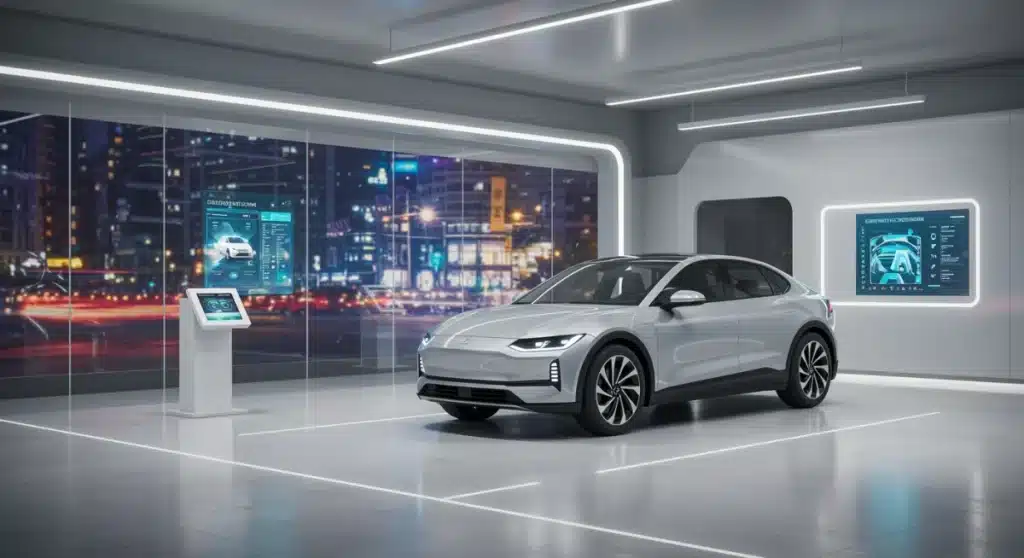
Direct-to-consumer auto sales models are rapidly transforming the automotive retail landscape, with projections indicating they will seize a substantial 5% of the U.S. market by 2025, driven by evolving consumer preferences and technological advancements.
The automotive industry is on the cusp of a significant transformation, moving beyond the dealership: a 2025 analysis of direct-to-consumer sales models gaining 5% market share in the U.S. reveals a profound shift in how vehicles are bought and sold. This evolution is not merely a trend but a foundational change, driven by consumer demand for convenience, transparency, and a more personalized experience, challenging the long-standing traditional dealership model.
The Rise of Direct-to-Consumer Automotive Sales
The direct-to-consumer (D2C) model, long successful in other retail sectors, is now making significant inroads into the automotive industry. This approach allows manufacturers to sell vehicles directly to buyers, bypassing the traditional franchised dealership network. This shift is fueled by a desire for greater control over the customer experience and a response to modern purchasing habits.
The automotive landscape is undergoing a digital revolution, with online platforms and virtual showrooms becoming increasingly sophisticated. Consumers are accustomed to purchasing high-value items online, and vehicles are no exception. This move towards D2C is not without its challenges, especially given existing franchise laws, but its appeal to both manufacturers and buyers is undeniable.
Manufacturer Benefits of D2C
Manufacturers embracing D2C models gain several strategic advantages. They can establish a direct relationship with their customers, fostering brand loyalty and gathering invaluable first-party data. This data can then inform product development, marketing strategies, and personalized service offerings.
- Enhanced Brand Control: Manufacturers dictate the entire customer journey, ensuring brand consistency.
- Improved Customer Insight: Direct feedback loops lead to better product and service alignment.
- Streamlined Inventory Management: Reduced reliance on dealer stock allows for more efficient production.
- Potentially Higher Margins: Eliminating the middleman can increase profitability per vehicle.
Consumer Advantages of D2C
For consumers, the D2C model offers a simplified, often more transparent, buying experience. The ability to configure a vehicle online, understand pricing upfront, and arrange for home delivery appeals to a demographic that values efficiency and convenience.
No longer are buyers subjected to lengthy negotiations or pressure tactics often associated with traditional dealerships. Instead, the focus shifts to a consultative approach, where the manufacturer’s representative acts as a brand ambassador rather than a sales agent driven by commission.
The rise of direct-to-consumer automotive sales represents a fundamental re-evaluation of the traditional automotive retail model, driven by manufacturers seeking greater control and consumers demanding a more seamless purchasing journey.
Navigating Legal and Regulatory Hurdles
The transition to a direct-to-consumer model in the automotive industry is not straightforward, primarily due to a complex web of state franchise laws designed to protect existing dealerships. These laws vary significantly across the U.S., creating a patchwork of regulations that manufacturers must carefully navigate.
Many states have laws that explicitly prohibit manufacturers from selling directly to consumers, effectively mandating the traditional dealership model. Overcoming these legal barriers often requires significant lobbying efforts, legal challenges, and innovative approaches to sales and service.
State Franchise Laws and Their Impact
State franchise laws were initially established to protect dealers from unfair practices by manufacturers, ensuring their investments in sales and service infrastructure were secure. However, in the context of D2C, these laws can be seen as impediments to market innovation and consumer choice.
- Varying Regulations: Each state presents unique legal challenges and opportunities for D2C.
- Lobbying Efforts: Manufacturers often engage in legislative battles to amend or bypass existing laws.
- Hybrid Models: Some D2C companies operate hybrid models, utilizing service centers or delivery hubs that don’t technically function as sales dealerships to comply with laws.
Innovative Legal Strategies
Companies like Tesla have pioneered strategies to operate within or around these legal frameworks, often by establishing showrooms that focus on education and test drives rather than direct sales transactions. The actual sale might occur online or through a separate entity, carefully structured to comply with state-specific regulations.
Other manufacturers are exploring agency models, where traditional dealerships act as agents for the manufacturer, facilitating sales but not holding inventory or setting prices. This allows manufacturers to retain control over pricing and the customer experience, while still leveraging the physical presence and service capabilities of dealers.
Successfully navigating the legal and regulatory landscape is paramount for any automotive brand looking to implement or expand a direct-to-consumer sales model in the United States, requiring careful planning and a deep understanding of state-specific laws.
Technological Innovations Driving D2C Adoption
Technological advancements are not just facilitating the shift to direct-to-consumer sales; they are actively driving it. From sophisticated online configurators to advanced logistics and virtual reality experiences, technology is making it easier and more appealing for consumers to purchase vehicles directly from manufacturers.
The digital tools available today allow for a seamless and immersive online shopping experience that rivals, and in some cases surpasses, the traditional in-person dealership visit. These innovations are crucial for convincing consumers to make such a significant purchase without the conventional physical interaction.
Enhanced Online Configurators and Virtual Showrooms
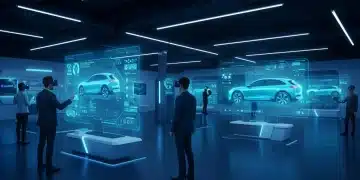
Modern online configurators go far beyond simple color and trim choices. They offer detailed 3D renderings, augmented reality (AR) views that place a car in your driveway, and virtual reality (VR) experiences that allow potential buyers to “sit” inside a vehicle and explore its features from any angle. This level of immersion builds confidence and excitement.
These tools also provide transparent pricing, including options, accessories, and even financing estimates, all upfront. This eliminates much of the guesswork and anxiety associated with traditional car buying, aligning with consumer demands for honesty and clarity.
- 3D/AR/VR Experiences: Offer immersive and detailed product exploration from home.
- Transparent Pricing: Clear, upfront costs for vehicles and options.
- Personalized Customization: Allows buyers to build their ideal vehicle with ease.
Logistics and Delivery Solutions
The ability to efficiently deliver a newly purchased vehicle directly to a customer’s home or a convenient pickup location is a cornerstone of the D2C model. Advanced logistics networks, often leveraging partnerships with specialized transport companies, ensure a smooth and timely delivery process.
Furthermore, digital platforms are integrating with these logistics systems, allowing customers to track their vehicle’s journey from the factory to their doorstep. This transparency further enhances the customer experience and builds trust in the D2C purchasing process.
The continuous evolution of technology, from interactive online platforms to efficient delivery systems, is playing a pivotal role in accelerating the adoption and success of direct-to-consumer sales models within the automotive sector.
Impact on Traditional Dealerships and the Future Landscape
As direct-to-consumer models gain traction, the traditional dealership ecosystem faces significant challenges and opportunities for adaptation. While some may view D2C as an existential threat, many dealerships are exploring ways to co-exist or even integrate with these new sales paradigms.
The future automotive retail landscape is likely to be a hybrid one, where physical dealerships evolve their roles to focus more on service, vehicle handovers, and experiential brand interactions, rather than solely on sales transactions.
Evolving Role of Dealerships
Traditional dealerships possess invaluable assets: physical locations, established service infrastructure, and local market knowledge. In a D2C-dominated future, these assets can be repurposed. Dealerships could become authorized service centers for D2C brands, offering maintenance, repairs, and warranty work.
They might also serve as experience centers, where potential buyers can test drive vehicles, receive product education, and engage with the brand in a physical space, without the pressure of a sales pitch. This allows manufacturers to maintain a lean D2C sales operation while leveraging existing physical networks for critical customer touchpoints.
Hybrid Models and Partnerships
Some manufacturers are exploring hybrid models where dealerships become ‘agency’ partners, facilitating the sale but with prices set by the manufacturer. This allows dealers to earn commission for their services without the inventory risk or the need for extensive negotiation, potentially aligning their interests more closely with the brand’s.
- Service Hubs: Dealerships transition to primary service and maintenance providers.
- Experience Centers: Physical locations for test drives and brand immersion without sales pressure.
- Agency Model: Dealers act as facilitators, earning commissions on manufacturer-set prices.
- Used Car Specialists: Focus on the burgeoning used car market, a segment less impacted by D2C new car sales.
The impact of D2C models on traditional dealerships will necessitate innovation and adaptation, potentially leading to a more specialized and service-oriented role for physical retail locations within the evolving automotive ecosystem.
Key Players and Market Share Projections for 2025
The direct-to-consumer automotive market is currently spearheaded by a few prominent players, but the landscape is rapidly expanding as more traditional manufacturers explore or commit to D2C strategies. Understanding these key players and their projected growth is crucial for analyzing the 5% market share gain by 2025.
While Tesla remains the quintessential D2C automotive brand, newer entrants and established manufacturers are adopting variations of the model, signaling a broader industry acceptance and a diversified approach to reaching consumers directly.
Dominant D2C Brands
Tesla’s success has undeniably paved the way for the D2C model in automotive. Their integrated approach to sales, service, and charging infrastructure provides a benchmark for others. Rivian and Lucid Motors are also pure-play D2C electric vehicle manufacturers, demonstrating the viability of this model for new brands.
These companies have built their entire business around direct sales, allowing them to control every aspect of the customer journey, from initial inquiry to post-purchase support. Their growth trajectories provide strong evidence that consumers are willing to embrace this new way of buying cars.
- Tesla: The pioneer and market leader in D2C automotive sales.
- Rivian: Successfully launched electric trucks and SUVs with a direct model.
- Lucid Motors: High-end electric vehicle manufacturer utilizing D2C.
Traditional Manufacturers’ D2C Initiatives
Established automakers are not sitting idly by. Mercedes-Benz, Volvo, and General Motors (with certain EV models) are experimenting with or implementing D2C or agency models in various markets. These initiatives are often pilot programs, designed to test the waters and understand the complexities of shifting away from decades of dealership-centric sales.
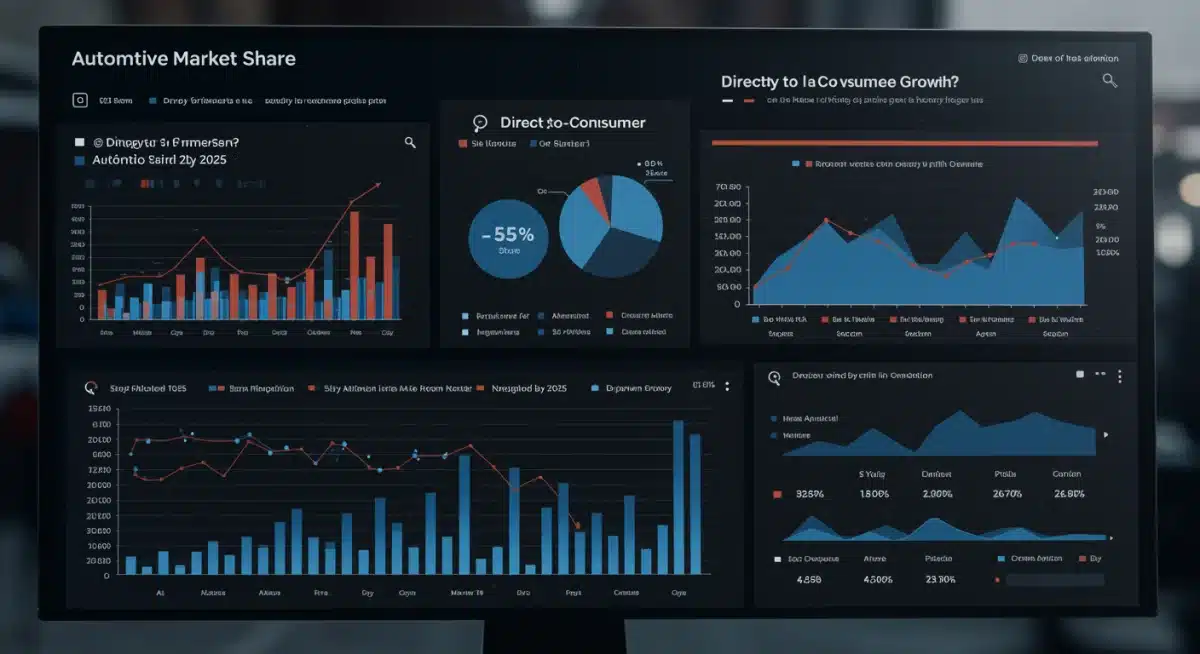
The collective efforts of these brands, both new and old, are expected to contribute significantly to the projected 5% direct-to-consumer market share by 2025. This growth will be driven by increased consumer acceptance, continued technological innovation, and gradual legislative shifts.
The direct-to-consumer automotive market is projected to grow significantly by 2025, fueled by the continued success of established D2C brands and the increasing adoption of direct sales strategies by traditional automotive manufacturers.
Consumer Behavior and Preferences Driving D2C Growth
The shift towards direct-to-consumer automotive sales is fundamentally rooted in evolving consumer behavior and preferences. Modern buyers, especially younger generations, prioritize convenience, transparency, and a personalized experience over traditional sales processes. These preferences are reshaping expectations across all retail sectors, including high-value purchases like automobiles.
The digital native generation, in particular, expects seamless online interactions and a straightforward path to purchase, mirroring their experiences with other e-commerce platforms. This demographic is less tied to the conventional dealership visit and more open to innovative purchasing methods.
Demand for Convenience and Simplicity
Consumers are increasingly time-poor and value processes that are efficient and hassle-free. The ability to research, configure, purchase, and even arrange delivery of a vehicle from the comfort of their home or office is a powerful draw for the D2C model.
The simplification of the buying process, removing complex negotiations and multiple visits to a dealership, resonates strongly with a segment of the population that views traditional car buying as a cumbersome and often unpleasant experience. This desire for simplicity is a major catalyst for D2C growth.
- Online Research: Extensive vehicle information readily available virtually.
- Streamlined Transactions: Reduced paperwork and faster purchase completion.
- Home Delivery Options: Ultimate convenience for busy lifestyles.
Transparency and Trust
One of the most frequently cited frustrations with traditional car buying is the lack of price transparency and the feeling of being negotiated against. D2C models often feature fixed, non-negotiable pricing, which builds trust and eliminates the anxiety associated with haggling.
Furthermore, the direct relationship with the manufacturer allows for a more consistent brand message and a perception of authenticity. Consumers feel they are dealing directly with the source, leading to greater confidence in their purchase and the after-sales support.
The evolving preferences of consumers, particularly their demand for convenience, simplicity, transparency, and trust, are powerful drivers behind the accelerating growth of direct-to-consumer automotive sales models in the U.S. market.
Challenges and Opportunities for D2C Models
While the direct-to-consumer model presents significant opportunities for automotive manufacturers, it also comes with its own set of challenges. Successfully scaling D2C operations requires careful consideration of infrastructure, customer service, and market perception.
Addressing these challenges effectively will be key to realizing the projected 5% market share gain by 2025 and establishing D2C as a sustainable and integral part of the automotive retail landscape.
Building Robust Infrastructure
Transitioning to D2C means manufacturers must take on responsibilities traditionally handled by dealerships, including local service, parts distribution, and vehicle preparation. Building this infrastructure from scratch is a massive undertaking, requiring substantial investment and strategic planning.
Manufacturers need to establish service centers, mobile service fleets, and efficient parts supply chains that can cater to a dispersed customer base. The quality and accessibility of these services will be critical to customer satisfaction and brand reputation.
- Service Network Development: Establishing or partnering for maintenance and repair.
- Parts Logistics: Ensuring timely availability of spare parts.
- Vehicle Preparation & Delivery: Managing final checks and handover processes efficiently.
Maintaining Customer Satisfaction and Brand Reputation
In a D2C model, every customer interaction directly reflects on the manufacturer. This places a heightened emphasis on delivering exceptional customer service at every touchpoint, from the initial online inquiry to post-purchase support and warranty claims.
Any failure in service or delivery can have a magnified impact on brand reputation, especially in the age of social media. Therefore, investing in highly trained customer service teams and robust digital support systems is paramount.
The challenges for D2C models primarily revolve around building comprehensive support infrastructure and consistently delivering high levels of customer satisfaction, while the opportunities lie in greater brand control and a direct, transparent relationship with the consumer.
| Key Aspect | Brief Description |
|---|---|
| Market Share Growth | D2C auto sales projected to reach 5% of U.S. market by 2025. |
| Key Drivers | Consumer demand for convenience, transparency, and technological advancements. |
| Challenges Faced | Navigating state franchise laws and building robust service infrastructure. |
| Future Outlook | Hybrid retail models and evolving dealership roles are anticipated. |
Frequently Asked Questions About D2C Auto Sales
A D2C auto sales model allows vehicle manufacturers to sell directly to customers, bypassing traditional franchised dealerships. This approach typically involves online sales platforms, brand-owned showrooms, and direct delivery, giving manufacturers full control over the customer experience and pricing.
This growth is driven by evolving consumer preferences for convenience, transparency, and online purchasing, coupled with manufacturers’ desires for greater brand control and direct customer relationships. Technological advancements in online platforms and logistics also play a crucial role in enabling this expansion.
Many U.S. states have laws protecting existing franchised dealerships, prohibiting manufacturers from selling directly to consumers. D2C brands must navigate these complex regulations through lobbying, legal challenges, or by implementing hybrid models that comply with local statutes, such as separating sales from physical presence.
Traditional dealerships are expected to evolve, potentially becoming specialized service centers, experience hubs for test drives, or agency partners for manufacturers. Their physical infrastructure and local presence remain valuable for maintenance, repairs, and facilitating vehicle handovers, rather than solely focusing on sales transactions.
Consumers benefit from increased transparency in pricing, a more convenient and simplified purchasing process, and the option for home delivery. The D2C model often removes the need for lengthy negotiations and provides a more direct, consistent brand experience, enhancing overall customer satisfaction.
Conclusion
The automotive industry is undergoing a transformative period, with direct-to-consumer sales models rapidly gaining prominence. The projection of a 5% market share for D2C in the U.S. by 2025 signifies a clear shift in consumer expectations and manufacturer strategies. While legal and infrastructural hurdles remain, the allure of enhanced brand control, improved customer insights, and a streamlined purchasing experience is too strong to ignore. The future of auto retail will likely be a blend of innovative D2C approaches and evolved traditional dealership roles, ultimately benefiting consumers with more choices and transparent buying processes.