Smart Buyer’s 2026 Checklist: 10 Essential Steps
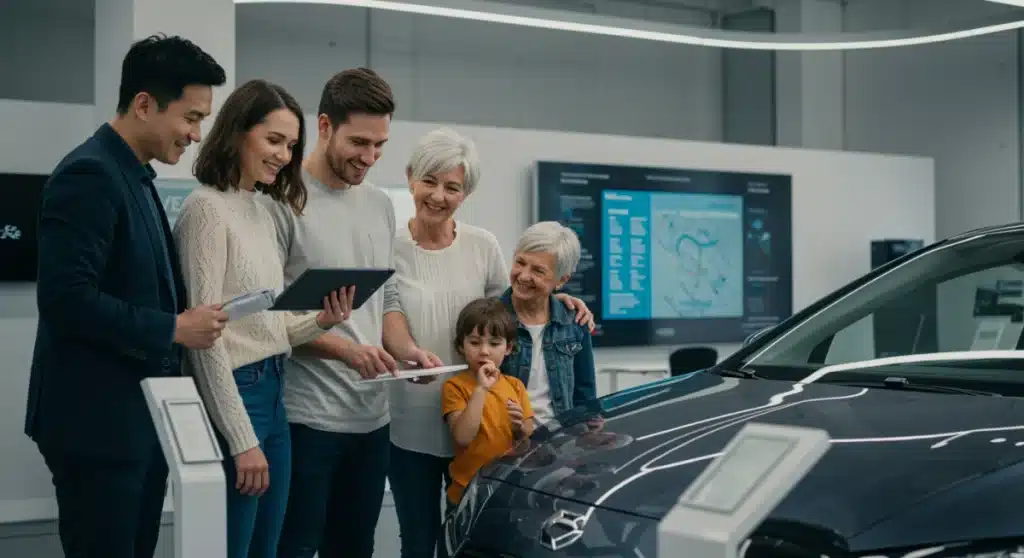
The smart buyer’s checklist 2026 offers a comprehensive guide for navigating the evolving automotive market, detailing 10 crucial steps and practical solutions to ensure a confident and informed vehicle purchase experience.
Are you ready to purchase a new vehicle in 2026? The automotive landscape is continuously evolving, making informed decisions more critical than ever. This guide provides
the smart buyer’s checklist for 2026: 10 essential steps before signing (practical solutions), ensuring you navigate the complexities of car buying with confidence and secure the best deal possible.
Understanding the 2026 Automotive Landscape
The year 2026 promises an automotive market shaped by rapid technological advancements, shifting consumer preferences, and evolving regulatory frameworks.
Buyers will encounter a wider array of electric vehicles (EVs), advanced driver-assistance systems (ADAS), and increasingly integrated digital experiences.
Understanding these overarching trends is the foundational step for any smart purchase decision. The dynamics of supply chains, influenced by global events,
also play a crucial role in vehicle availability and pricing, necessitating a flexible approach to car shopping.
Furthermore, the emphasis on sustainability is driving innovation in materials and manufacturing processes, impacting vehicle longevity and environmental footprint.
Consumers are becoming more conscious of these factors, making them integral to the purchasing criteria.
Dealership models are also adapting, with more online purchasing options and streamlined in-person experiences becoming the norm.
The Rise of Electric and Autonomous Vehicles
Electric vehicles are no longer a niche market; they are mainstream. By 2026, the variety of EVs will be extensive, offering options across all segments
from compact cars to large SUVs and trucks. Autonomous features, though not yet fully self-driving, will be more sophisticated, with advanced adaptive cruise control,
lane-keeping assist, and automated parking becoming standard in many new models. These technologies demand a new level of understanding from buyers.
- Battery Technology: Longer ranges and faster charging times are becoming standard.
- Charging Infrastructure: Expanding rapidly, but understanding local access is key.
- Software Updates: Over-the-air updates enhance vehicle features and performance post-purchase.
The integration of these technologies means that a vehicle’s value is not solely based on its mechanical components but also on its software and digital capabilities.
This shift requires buyers to consider the long-term technological support and upgradeability of their chosen vehicle, moving beyond traditional metrics of car ownership.
In conclusion, the 2026 automotive market is dynamic and complex, offering exciting opportunities alongside new considerations.
A smart buyer must stay abreast of these changes, particularly concerning electrification, automation, and digital integration, to make an informed decision.
Step 1: Define Your Needs and Budget with Precision
Before even glancing at a dealership lot or browsing online inventories, the first and most critical step in
the smart buyer’s checklist for 2026 is to meticulously define your needs and establish a realistic budget.
This foundational work prevents impulse purchases and ensures your new vehicle truly fits your lifestyle and financial capacity.
Consider your daily commute, family size, cargo requirements, and specific features that are non-negotiable.
Your budget should encompass not just the purchase price, but also ongoing costs like insurance, maintenance, charging or fuel,
and potential future repairs. For electric vehicles, factor in the cost of home charging installation if applicable.
A comprehensive financial picture avoids future surprises and solidifies your purchasing power.
Assessing Your Lifestyle and Driving Habits
Think about how you use a car on a daily, weekly, and yearly basis. Do you frequently transport passengers or cargo?
Do you live in an urban environment with limited parking or a rural area requiring all-wheel drive?
These questions directly influence the body style, powertrain, and feature set that will best serve you.
- Daily Commute: Consider fuel efficiency or EV range.
- Family Needs: Seating capacity, child seat anchors, and safety features.
- Hobbies and Activities: Towing capacity, cargo space, or off-road capabilities.
Understanding these personal use cases helps narrow down the vast options available in 2026. For instance,
a city dweller might prioritize a compact EV with advanced parking assist, while a suburban family might need a larger SUV with ample cargo space and robust safety features.
In summary, a precise understanding of your personal and financial needs forms the bedrock of a successful car purchase.
This initial self-assessment empowers you to approach the market strategically, rather than reactively.
Step 2: Thorough Research and Model Comparison
With your needs and budget clearly defined, the next crucial step is to dive deep into research.
The 2026 market offers an unprecedented array of models, powertrains, and technologies, making thorough comparison essential.
Utilize online resources, automotive reviews, and consumer reports to identify vehicles that align with your initial criteria.
Pay close attention to reliability ratings, safety scores, and owner satisfaction surveys, as these provide invaluable insights beyond spec sheets.
Beyond traditional reviews, explore forums and social media groups dedicated to specific models.
These communities often share real-world experiences, common issues, and practical tips that official reviews might miss.
Understanding the nuances of different models, especially their technological ecosystems and long-term support, is vital for a 2026 purchase.
Leveraging Online Tools and Expert Reviews
The internet is your most powerful tool for car research. Websites offering detailed specifications, comparison tools,
and expert video reviews can significantly streamline the process. Focus on objective data and expert opinions,
but also cross-reference information to ensure accuracy. Look for reviews that specifically address the 2026 model year changes.
- Comparison Websites: Pit models head-to-head on key features and price.
- Safety Ratings: Check NHTSA and IIHS scores for crashworthiness and ADAS effectiveness.
- EV Range Calculators: Understand real-world range based on driving conditions.
Don’t overlook the importance of understanding the software ecosystem of modern vehicles.
Infotainment interfaces, connectivity options, and potential for over-the-air updates can significantly impact your ownership experience.
A vehicle with a robust and user-friendly digital platform will likely retain its value better and provide greater satisfaction.

In conclusion, comprehensive research and diligent model comparison are indispensable.
This step ensures you are not only aware of what’s available but also fully understand the pros and cons of your top choices,
preparing you for informed test drives and negotiations.
Step 3: Explore Financing Options and Pre-Approval
Securing favorable financing is as important as choosing the right car, and it’s a key component of
the smart buyer’s checklist for 2026. Before stepping into a dealership, it is highly advisable to explore various financing options and, ideally, get pre-approved for a loan.
This empowers you with a clear understanding of your borrowing capacity and interest rates, giving you a significant advantage during negotiations.
Lenders can include banks, credit unions, and online financial institutions, each offering potentially different terms and rates.
Interest rates can vary widely based on your credit score, loan term, and the current economic climate.
A small difference in interest rate can translate to thousands of dollars over the life of a loan.
Therefore, comparing offers from multiple lenders is crucial. Don’t solely rely on dealership financing without having alternative quotes.
The Benefits of Loan Pre-Approval
Pre-approval transforms you into a cash buyer in the eyes of a dealership, simplifying the negotiation process.
It separates the car price from the financing terms, allowing you to focus on getting the best deal on the vehicle itself.
Moreover, pre-approval provides a tangible limit to your spending, reinforcing your budget and preventing overspending.
- Negotiating Power: Approach dealerships with a solid financing offer in hand.
- Budget Clarity: Know exactly how much you can afford before falling for a car outside your range.
- Faster Process: Streamlines the paperwork at the dealership, reducing time spent.
Be mindful of the loan term; while longer terms mean lower monthly payments, they also result in more interest paid over time.
Balance affordability with the total cost of the loan. Also, inquire about any prepayment penalties, though these are less common with modern auto loans.
In conclusion, proactive engagement with financing options and securing pre-approval is a powerful strategy.
It not only saves money but also provides peace of mind and control throughout the car buying journey.
Step 4: The Strategic Test Drive
The test drive is more than just a quick spin around the block; it’s a critical evaluation of how a vehicle performs and feels in real-world conditions.
For the smart buyer’s checklist for 2026, a strategic test drive involves assessing not just the driving dynamics but also the integration of technology,
comfort, and practicality. Plan your route to include a variety of road conditions: city streets, highways, and even some rougher patches if applicable.
Bring family members or frequent passengers to get their input on comfort and space.
Pay close attention to acceleration, braking, steering responsiveness, and overall ride quality.
For electric vehicles, note the regenerative braking feel. Test all the driver-assistance features,
such as adaptive cruise control and lane-keeping assist, to understand their functionality and how they integrate into your driving style.
Don’t hesitate to spend ample time in the car, adjusting seats, checking visibility, and exploring the infotainment system.
Evaluating Technology and Ergonomics
Modern vehicles are packed with technology, and the test drive is your chance to interact with it.
Is the infotainment system intuitive? Are the physical controls easily accessible?
How do the digital displays convey information? These ergonomic considerations are vital for long-term satisfaction.
- Infotainment System: Test navigation, Apple CarPlay/Android Auto, and voice commands.
- Driver-Assistance: Experience features like blind-spot monitoring and automatic emergency braking.
- Comfort and Space: Assess seat comfort, legroom, headroom, and cargo accessibility.
Take note of cabin noise levels, especially at highway speeds, and how well the climate control system performs.
For EVs, listen for any unusual sounds that might be masked by internal combustion engine noise in traditional cars.
The goal is to simulate your typical driving experience as much as possible to uncover any potential issues or discomforts.
In conclusion, a strategic test drive is indispensable for confirming that a vehicle not only meets your practical needs but also resonates with your personal driving preferences and technological expectations. It’s the ultimate real-world validation.
Step 5: Negotiate Like a Pro
Negotiation is an art, and mastering it is a cornerstone of
the smart buyer’s checklist for 2026. Armed with research, a clear budget, and pre-approved financing, you are in a strong position.
Always aim to negotiate the out-the-door price of the vehicle, which includes all fees and taxes, rather than just the monthly payment.
This prevents dealerships from manipulating terms to make a higher price seem more palatable. Be prepared to walk away if the deal isn’t right;
this is your most powerful negotiating tool.
Start by making an offer below the asking price, but within a reasonable range based on your market research.
Be polite but firm. Highlight any comparable offers you’ve received or any minor imperfections you’ve noticed in the vehicle.
Remember that everything is negotiable, from the price of the car to extended warranties and optional accessories.
Understanding Dealer Fees and Add-ons
Dealerships often add various fees and optional products that can significantly inflate the final price.
Common add-ons include extended warranties, paint protection, fabric guard, and VIN etching.
While some might offer value, many are high-profit items for the dealership. Scrutinize each one and be prepared to decline those you don’t need.
- Documentation Fees: Often non-negotiable but inquire about the amount.
- Extended Warranties: Compare dealer offers with third-party providers.
- Unnecessary Add-ons: Politely decline items like nitrogen in tires or superfluous protection packages.
Also, be wary of negotiation tactics that focus solely on your trade-in value or monthly payment.
Keep the negotiation centered on the total purchase price of the new vehicle.
If you have a trade-in, negotiate its value separately or consider selling it privately for a better return.
In conclusion, effective negotiation requires preparation, confidence, and a clear understanding of all costs involved.
By focusing on the total price and being ready to walk away, you can secure a deal that truly benefits you.
Step 6: The Pre-Purchase Inspection and Final Review
Even with a new car, a pre-purchase inspection (PPI) by an independent mechanic can be invaluable, especially for used vehicles,
and forms a critical last step in
the smart buyer’s checklist for 2026. For new cars, while less common, it can still catch rare manufacturing defects.
For used cars, it’s non-negotiable. An unbiased expert can identify underlying issues that might not be apparent during a test drive,
saving you from costly repairs down the line. This step underscores the importance of due diligence before finalizing any deal.
Beyond the mechanical inspection, conduct a meticulous final review of all paperwork.
Ensure that all agreed-upon terms, pricing, and features are accurately reflected in the contract.
Check for any discrepancies in VIN numbers, mileage (for used cars), and the spelling of names and addresses.
A small error in paperwork can lead to significant headaches later on.
What to Check During a Final Review
Before signing, take your time to read every single line of the purchase agreement.
Do not feel rushed by the dealership. Verify that there are no unexpected fees or charges that were not discussed during negotiation.
Confirm that all accessories or services promised are listed. Ensure the warranty terms are as agreed.
- Purchase Agreement: Verify final price, trade-in value, and financing terms.
- Warranty Details: Understand coverage, duration, and exclusions for new and extended warranties.
- Vehicle Title and Registration: Confirm accurate ownership details and proper processing.
For electric vehicles, specifically confirm details about battery warranty and any software update agreements.
Understand how future technology integration might be handled.
This final review is your last opportunity to catch any errors or miscommunications before the sale is complete.
In conclusion, a pre-purchase inspection and a thorough final review of all documentation are essential safeguards.
These steps protect your investment and ensure that the vehicle you’re buying is exactly what you expect, both mechanically and contractually.
| Key Step | Brief Description |
|---|---|
| Define Needs & Budget | Clearly outline vehicle requirements and financial limits to avoid impulse buys. |
| Thorough Research | Compare models, read reviews, and understand 2026 automotive trends. |
| Secure Financing | Get pre-approved for a loan to strengthen negotiation power and clarify budget. |
| Strategic Test Drive | Evaluate vehicle performance, technology, comfort, and practicality in varied conditions. |
Frequently Asked Questions About Buying a Car in 2026
The 2026 car market is heavily influenced by the widespread adoption of electric vehicles, advanced driver-assistance systems (ADAS), and increased digital integration. Buyers will find more diverse EV models, sophisticated safety features, and often over-the-air software updates, shifting focus beyond traditional mechanical aspects.
Pre-approval for a car loan remains critically important in 2026. It gives you significant leverage during negotiations, allowing you to focus on the vehicle’s price rather than monthly payments. It also clearly defines your budget and streamlines the purchasing process, saving time at the dealership.
Absolutely. Electric vehicles are a major part of the 2026 market, offering benefits like lower running costs, reduced emissions, and advanced technology. Assess your daily driving needs, access to charging infrastructure, and local incentives to determine if an EV is the right choice for your lifestyle and budget.
Technology is central to 2026 car purchases. This includes advanced infotainment systems, comprehensive driver-assistance suites, and seamless smartphone integration. Evaluate the user-friendliness and reliability of a vehicle’s tech during your test drive, as it greatly impacts the overall ownership experience and potential for future updates.
While less common for new cars, a pre-purchase inspection by an independent mechanic can still uncover rare manufacturing defects or transit damage. For used cars, it’s essential for identifying hidden mechanical issues. This objective assessment safeguards your investment and provides peace of mind before you finalize the purchase.
Conclusion
Navigating the complexities of the 2026 automotive market requires a strategic and informed approach.
By diligently following
the smart buyer’s checklist for 2026: 10 essential steps before signing (practical solutions),
you empower yourself to make a confident and financially sound decision. From meticulously defining your needs and budget to thorough research,
securing pre-approved financing, conducting a strategic test drive, negotiating effectively, and completing a final pre-purchase inspection,
each step is designed to optimize your car buying experience. The evolving landscape, with its emphasis on electric vehicles and advanced technology,
demands a new level of diligence, ensuring that your next vehicle not only meets your current needs but also serves you well into the future.
Approach your purchase with patience and preparation, and you will drive away with the perfect car for you.