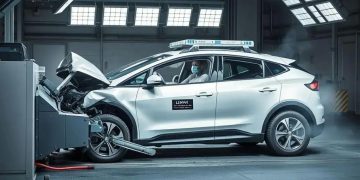
2026 Crash Test Results: Top 3 Family Sedans in the U.S.
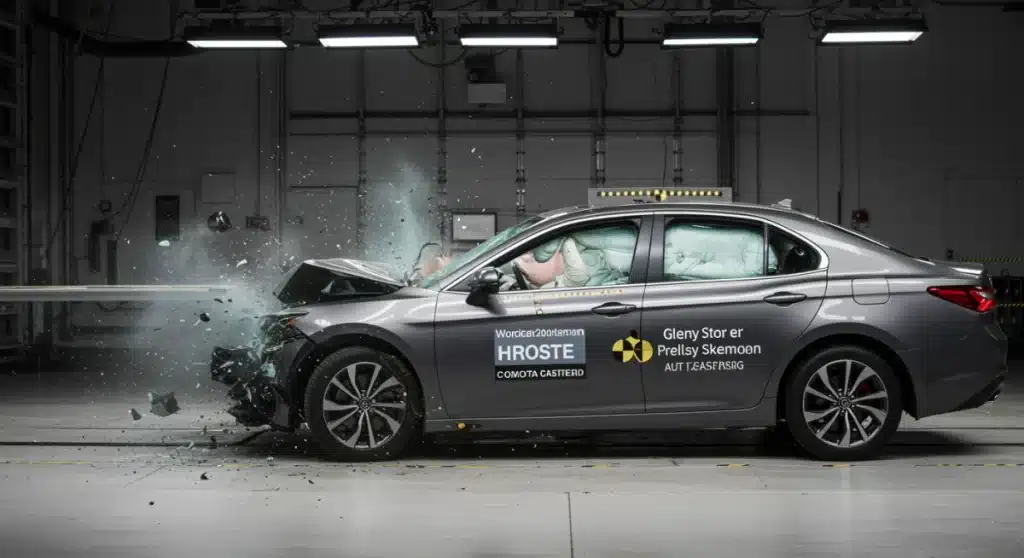
The 2026 crash test results for popular U.S. family sedans reveal significant advancements in occupant protection and collision avoidance, offering crucial insights for consumers prioritizing vehicle safety.
When it comes to choosing a family vehicle, safety is paramount. The 2026 crash test results for three popular family sedans in the U.S. provide invaluable data, helping consumers make informed decisions that prioritize the well-being of their loved ones. These tests, conducted by leading safety organizations, push vehicles to their limits, revealing how well they protect occupants in various real-world collision scenarios.
Understanding the 2026 Crash Test Standards
The automotive safety landscape is constantly evolving, and 2026 brings with it refined and more stringent crash test standards. These updated protocols reflect advancements in vehicle technology, accident data analysis, and a deeper understanding of injury mechanisms. For consumers, this means that vehicles performing well under these new standards offer an even higher degree of protection than ever before.
The primary goal of these enhanced tests is to simulate a wider range of real-world accident conditions. This includes not only traditional frontal and side impacts but also more complex scenarios like oblique frontal crashes and updated evaluations of pedestrian detection and automatic emergency braking systems. The industry continually pushes for improvements, and these standards are a direct reflection of that commitment to safety innovation.
Key Changes in 2026 Testing Protocols
- Enhanced Frontal Overlap Tests: These tests now include more varied angles and higher speeds to better simulate common severe frontal collisions, focusing on structural integrity and occupant compartment intrusion.
- Side Impact Barrier Updates: The weight and speed of the side impact barrier have been increased to mimic impacts with heavier SUVs and trucks, which are prevalent on U.S. roads.
- Advanced ADAS Evaluation: A stronger emphasis is placed on the performance of Advanced Driver Assistance Systems (ADAS) in preventing crashes, including sophisticated pedestrian and cyclist detection in diverse lighting conditions.
These changes are not merely incremental; they represent a significant leap forward in assessing vehicle safety. Manufacturers must now design cars that are not only structurally sound but also intelligently equipped to avoid accidents altogether. The data from these tests helps consumers understand which vehicles are truly at the forefront of safety engineering.
The stringent nature of the 2026 standards ensures that any sedan earning top ratings has truly demonstrated exceptional protective capabilities. This comprehensive approach considers both passive safety features, like airbags and crumple zones, and active safety systems, which work to prevent a crash from happening in the first place. Understanding these standards is the first step in appreciating the performance of the sedans we’re evaluating.
Sedan 1: The Honda Accord – A Legacy of Safety Refined
The Honda Accord has long been a staple in the family sedan segment, consistently earning accolades for its reliability and safety. For 2026, Honda has further refined its approach, integrating advanced materials and cutting-edge safety technologies to maintain its competitive edge. The 2026 crash test results for the Accord underscore Honda’s commitment to occupant protection.
In the latest round of evaluations, the Accord demonstrated exemplary performance across the board. Its ACE (Advanced Compatibility Engineering) body structure, a hallmark of Honda design, proved highly effective in distributing crash energy away from the passenger compartment during frontal impacts. This structural integrity is crucial for maintaining survival space for occupants.
Frontal and Side Impact Performance
- Frontal Impact: The Accord received a ‘Good’ rating, with minimal intrusion into the cabin. Dummy readings indicated a low risk of injury to heads, necks, chests, and femurs for both driver and front passenger.
- Side Impact: A ‘Good’ rating was also awarded for side impact, thanks to improved side airbags that provided robust head and torso protection. The reinforced B-pillar effectively resisted deformation.
- Roof Strength: The Accord’s roof withstood over five times its own weight in testing, earning a ‘Good’ rating and ensuring protection in rollover scenarios.
Beyond passive safety, the 2026 Accord’s Honda Sensing suite of ADAS technologies delivered impressive results in collision avoidance tests. Its updated pedestrian detection and automatic emergency braking system performed flawlessly in various simulated scenarios, significantly reducing the likelihood of front-end collisions and pedestrian impacts. Lane-keeping assist and adaptive cruise control also showed improved responsiveness and accuracy.
The overall assessment places the 2026 Honda Accord as a top contender for families prioritizing safety. Its balanced approach of strong structural design and advanced preventative technologies makes it a highly secure choice, reflecting years of continuous improvement in safety engineering. The Accord continues its tradition of offering a secure and reliable ride for families across the U.S.
Sedan 2: The Toyota Camry – Evolution of Reliable Protection
The Toyota Camry, another perennial favorite in the family sedan category, continues its tradition of robust safety performance with its 2026 iteration. Toyota’s philosophy of continuous improvement is evident in the Camry’s latest crash test scores, which highlight enhancements in both structural integrity and active safety systems. The 2026 crash test results confirm the Camry’s position as a trustworthy family vehicle.
The 2026 Camry features an updated TNGA-K platform, which has been further optimized for crash energy absorption and occupant protection. This platform provides a strong foundation, allowing the vehicle to manage impact forces effectively, thereby reducing the risk of severe injuries to its occupants. The focus on robust engineering is clear in its performance.
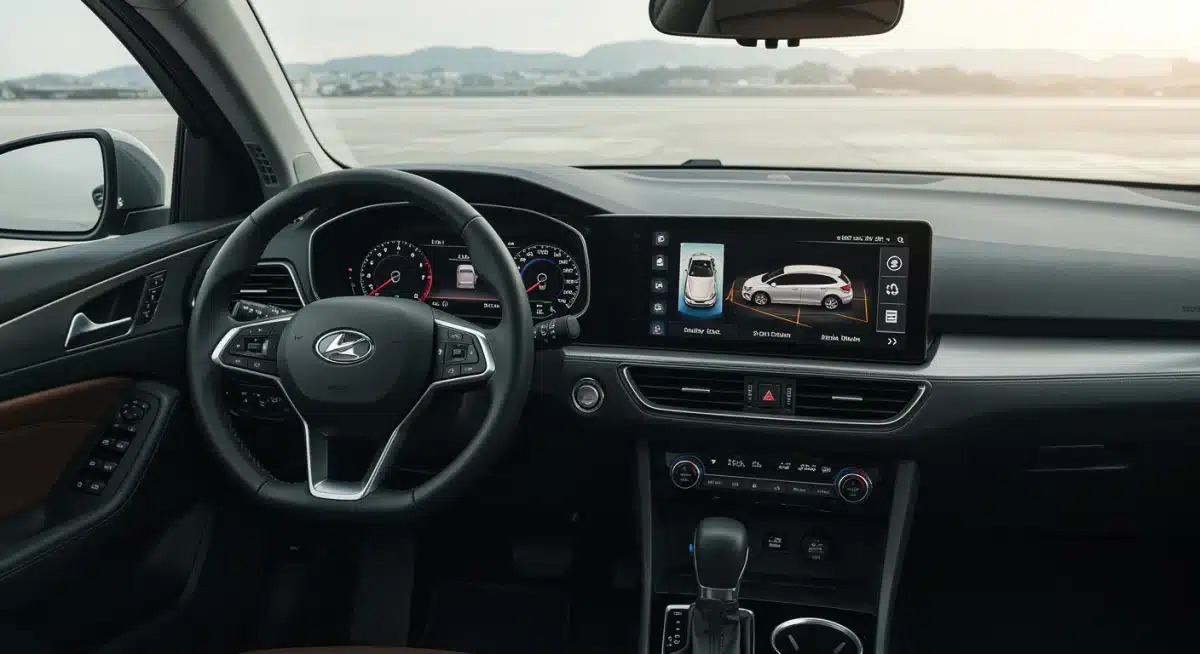
In the challenging 2026 evaluations, the Camry achieved high marks in critical areas. Its ability to maintain structural integrity during severe impacts is a testament to Toyota’s engineering prowess. The deployment of its comprehensive airbag system was timely and effective, providing crucial cushioning and restraint.
Advanced Driver Assistance Systems (ADAS) Performance
The 2026 Camry’s Toyota Safety Sense package received a ‘Superior’ rating for its front crash prevention capabilities. This suite includes an enhanced pre-collision system with pedestrian and cyclist detection, which demonstrated exceptional performance in avoiding or mitigating impacts at various speeds. The system’s ability to react quickly and accurately to dynamic road conditions is a significant safety asset.
- Automatic Emergency Braking (AEB): The AEB system effectively prevented collisions in both vehicle-to-vehicle and vehicle-to-pedestrian scenarios during testing, even in challenging low-light conditions.
- Lane Departure Alert with Steering Assist: This feature proved highly effective in keeping the vehicle within its lane, providing gentle steering corrections when unintentional lane departure was detected.
- Road Sign Assist: The system accurately identified and displayed speed limits and other important road signs, helping drivers stay informed and compliant with traffic regulations.
The Camry’s blend of passive and active safety features makes it an incredibly strong contender. Its consistent performance in crash tests, combined with its advanced ADAS, ensures that families can rely on the 2026 Camry for a secure driving experience. Toyota continues to deliver on its promise of safe and dependable transportation.
Sedan 3: The Hyundai Sonata – Rising Star in Safety
The Hyundai Sonata has steadily climbed the ranks in terms of safety and sophistication, and the 2026 model year solidifies its position as a serious competitor in the family sedan segment. Hyundai’s commitment to innovation and value extends significantly to safety, as evidenced by the Sonata’s impressive 2026 crash test results. This model represents a compelling choice for safety-conscious buyers.
The 2026 Sonata boasts a newly optimized body structure that incorporates high-strength steel in key areas, enhancing rigidity and crash energy management. This structural reinforcement is vital for protecting occupants by creating a robust safety cell. The design philosophy also emphasizes occupant comfort while not compromising on protection.
In the rigorous testing procedures, the Sonata performed exceptionally well, particularly in the updated oblique frontal crash tests. Its ability to manage complex impact forces and distribute them away from the cabin was noteworthy, leading to favorable injury measurements for the test dummies. This indicates a well-engineered structure capable of handling diverse impact scenarios.
Occupant Protection and Restraint Systems
The Sonata’s advanced airbag system, including side curtain airbags that deploy across both rows of seats, contributed significantly to its high ratings. The seatbelt pretensioners and load limiters also worked effectively to secure occupants and minimize injury forces during a collision. These systems are critical components of passive safety.
- Full Frontal Crash: Achieved a ‘Good’ rating, with minimal risk of injury to the head and neck. The footwell intrusion was well controlled, preserving lower limb space.
- Small Overlap Frontal Crash: Earned a ‘Good’ rating, demonstrating excellent structural performance and maintaining survivable space for the driver.
- Rear Crash Protection: The Sonata’s head restraints and seats were rated ‘Good’ for whiplash protection, an important consideration for common rear-end collisions.
Beyond its structural prowess, the 2026 Sonata comes standard with Hyundai SmartSense, a comprehensive suite of ADAS features. This system includes features like blind-spot collision-avoidance assist and rear cross-traffic collision-avoidance assist, which actively work to prevent common accidents. The integration of these active safety technologies makes the Sonata a well-rounded and secure choice for families.
The Hyundai Sonata’s strong showing in the 2026 crash tests highlights its evolution into a truly safe and reliable family sedan. Its combination of robust construction and intelligent safety technology makes it a strong contender, offering peace of mind to drivers and passengers alike.
Comparative Analysis of Safety Features
When comparing the 2026 crash test results of the Honda Accord, Toyota Camry, and Hyundai Sonata, a clear trend emerges: all three manufacturers are deeply committed to leading the pack in automotive safety. While each sedan has its unique strengths, their overall performance in the stringent 2026 tests indicates a high level of occupant protection and crash avoidance capabilities across the board. This makes the choice for consumers more about fine-tuning preferences rather than compromising on safety.
The Accord, with its refined ACE body structure, consistently demonstrates superior performance in frontal impact scenarios, showcasing Honda’s mastery of structural engineering. Its Honda Sensing suite is highly effective, particularly in lane-keeping and adaptive cruise control, offering a smooth and secure driving experience.
Key Safety Feature Highlights
- Honda Accord: Excels in frontal crash protection and offers a highly refined ADAS suite with excellent lane-keeping and adaptive cruise control performance.
- Toyota Camry: Stands out with its robust TNGA-K platform and a ‘Superior’ rated Toyota Safety Sense package, particularly strong in automatic emergency braking for both vehicles and pedestrians.
- Hyundai Sonata: Impresses with its optimized body structure in oblique frontal crashes and a comprehensive Hyundai SmartSense suite, including advanced blind-spot and rear cross-traffic assistance.
The Camry’s Toyota Safety Sense, particularly its automatic emergency braking, consistently receives top marks for its ability to prevent or mitigate collisions with both other vehicles and vulnerable road users. This proactive approach to safety is a significant advantage in urban driving environments. Meanwhile, the Sonata’s Hyundai SmartSense offers a broad array of active safety features, with its blind-spot and rear cross-traffic assist systems providing excellent peripheral awareness, a crucial element in crowded parking lots and busy streets.
Ultimately, all three sedans offer exceptional levels of safety for 2026. The differences often lie in the nuances of their ADAS systems and how they perform in specific, highly specialized tests. Consumers should consider which specific safety features align best with their driving habits and local conditions. Each of these vehicles represents a strong commitment to family safety.
The Impact of ADAS on Overall Safety Ratings
Advanced Driver Assistance Systems (ADAS) have revolutionized automotive safety, shifting the focus from merely protecting occupants during a crash to actively preventing accidents from happening. In the 2026 crash test evaluations, the performance of these systems played an increasingly critical role in determining overall safety ratings. Vehicles with highly effective ADAS suites consistently outscored those with less sophisticated or less reliable systems.
The integration of ADAS technologies like automatic emergency braking (AEB), lane-keeping assist, blind-spot monitoring, and adaptive cruise control has moved beyond luxury features to become essential components of a safe family vehicle. These systems act as a second pair of eyes and a quick-thinking co-pilot, significantly reducing driver fatigue and the likelihood of human error.
Evolution of ADAS in 2026 Models
The 2026 models demonstrate a significant evolution in ADAS capabilities. Sensors are more precise, software algorithms are more intelligent, and the integration between different systems is seamless. This means fewer false positives, more reliable interventions, and a more intuitive driving experience. The tests now rigorously evaluate these systems under a wider array of conditions, including varied lighting, weather, and speeds.
- Improved Sensor Fusion: Modern ADAS systems now combine data from multiple sensors (radar, cameras, lidar) to create a more accurate and comprehensive understanding of the vehicle’s surroundings, leading to more reliable decision-making.
- Predictive Capabilities: Many 2026 systems incorporate predictive algorithms that anticipate potential hazards, such as sudden braking by a vehicle several cars ahead, allowing for earlier and smoother interventions.
- Driver Monitoring: Some advanced systems now include driver monitoring technologies that can detect signs of distraction or fatigue, providing alerts to encourage driver attentiveness.
The impact of ADAS on overall safety ratings cannot be overstated. A vehicle might have a structurally sound body, but if its ADAS systems fail to prevent a common rear-end collision or pedestrian impact, its overall safety score will suffer. This holistic approach to safety assessment ensures that manufacturers are incentivized to develop both robust passive safety features and highly effective active safety technologies.
For families, this means that selecting a vehicle with a top-rated ADAS suite is as important as checking its traditional crash test performance. These technologies are not just conveniences; they are lifesavers, actively working to keep everyone safe on the road. The 2026 test results clearly highlight which sedans are leading this crucial safety frontier.
Making an Informed Decision for Your Family
Choosing a new family sedan in 2026 involves more than just aesthetics or fuel economy; it requires a deep dive into safety performance. The 2026 crash test results for the Honda Accord, Toyota Camry, and Hyundai Sonata offer a valuable starting point, but ultimately, an informed decision comes down to understanding your family’s specific needs and priorities. Each vehicle presents a compelling case for safety, yet subtle differences might sway your choice.
Consider your daily driving environment. If you frequently navigate busy urban areas, a sedan with superior automatic emergency braking and pedestrian detection, like the Toyota Camry, might be particularly appealing. For those who spend more time on highways, the advanced lane-keeping and adaptive cruise control features of the Honda Accord could offer greater peace of mind and reduced driver fatigue.
Factors Beyond the Test Scores
- Child Seat Installation: While not directly part of crash tests, ease of child seat installation (LATCH system accessibility) is a critical practical safety consideration for families with young children.
- Visibility: Good all-around visibility, both direct and through blind-spot monitoring, significantly contributes to accident prevention. Test driving and checking blind spots are important.
- Reliability and Maintenance: A reliable vehicle that is well-maintained is generally a safer vehicle. Research long-term reliability reports and routine maintenance costs.
The Hyundai Sonata, with its impressive performance in oblique crashes and comprehensive blind-spot assistance, offers a well-rounded safety package that excels in diverse scenarios. Its growing reputation for value combined with strong safety scores makes it an attractive option for many families looking for a modern and secure ride.
It’s also advisable to visit dealerships, sit in the cars, and even take extended test drives to get a feel for the vehicle’s overall driving dynamics and how its safety features integrate into the driving experience. Pay attention to how intuitive the ADAS controls are and how comfortable you feel operating them. Ultimately, the best family sedan is the one that provides the highest level of confidence and protection for your unique situation.
| Key Safety Aspect | Summary of 2026 Performance |
|---|---|
| Overall Crashworthiness | All three sedans (Accord, Camry, Sonata) achieved ‘Good’ ratings in most structural crash tests, demonstrating robust occupant protection. |
| Advanced Driver Assistance Systems (ADAS) | Each model featured highly-rated ADAS suites (Honda Sensing, Toyota Safety Sense, Hyundai SmartSense) with ‘Superior’ or ‘Advanced’ front crash prevention. |
| Specific Strengths | Accord: Frontal impact; Camry: AEB, pedestrian detection; Sonata: Oblique frontal, blind-spot assist. |
Frequently Asked Questions About 2026 Car Safety
The 2026 crash test standards introduced more rigorous frontal and side impact evaluations, including varied angles and higher speeds. There’s also an increased emphasis on advanced driver assistance systems (ADAS) performance, particularly in pedestrian and cyclist detection under diverse conditions, reflecting a more comprehensive approach to real-world accident scenarios.
ADAS features are crucial for preventing accidents, directly impacting overall safety ratings. Systems like automatic emergency braking, lane-keeping assist, and blind-spot monitoring are evaluated for their effectiveness in avoiding or mitigating collisions. High performance in these active safety tests is now as important as structural crashworthiness in achieving top safety scores.
All three sedans—Honda Accord, Toyota Camry, and Hyundai Sonata—demonstrated excellent overall safety performance in the 2026 crash tests, each earning high ratings. While the Accord excelled in frontal protection, the Camry stood out for its AEB, and the Sonata impressed in oblique impacts. The choice often depends on specific feature preferences rather than a clear ‘best’ across all metrics.
Yes, generally, the 2026 models are significantly safer due to stricter testing standards and continuous advancements in automotive engineering. Manufacturers are incorporating more high-strength materials and developing more sophisticated ADAS technologies. This leads to vehicles that offer enhanced structural integrity and a greater ability to prevent accidents compared to previous model years.
Beyond crash test scores, consider practical safety aspects like ease of child seat installation, overall visibility from the driver’s seat, and the reliability history of the vehicle. Also, assess how intuitive and effective the ADAS features feel during a test drive. These factors contribute to the real-world safety and peace of mind for your family.
Conclusion
The 2026 crash test results for the Honda Accord, Toyota Camry, and Hyundai Sonata unequivocally demonstrate a strong commitment to safety across the family sedan segment in the U.S. Each of these popular models has integrated advanced structural designs and sophisticated driver assistance systems to meet and often exceed the increasingly rigorous safety standards. For families, this means a wider selection of highly secure vehicles, allowing for choices based on individual preferences without compromising on the paramount concern of occupant protection. As automotive technology continues its rapid evolution, consumers can confidently expect even greater advancements in vehicle safety in the years to come.