Solid-State Batteries 2026: Revolutionizing EV Range by 30%
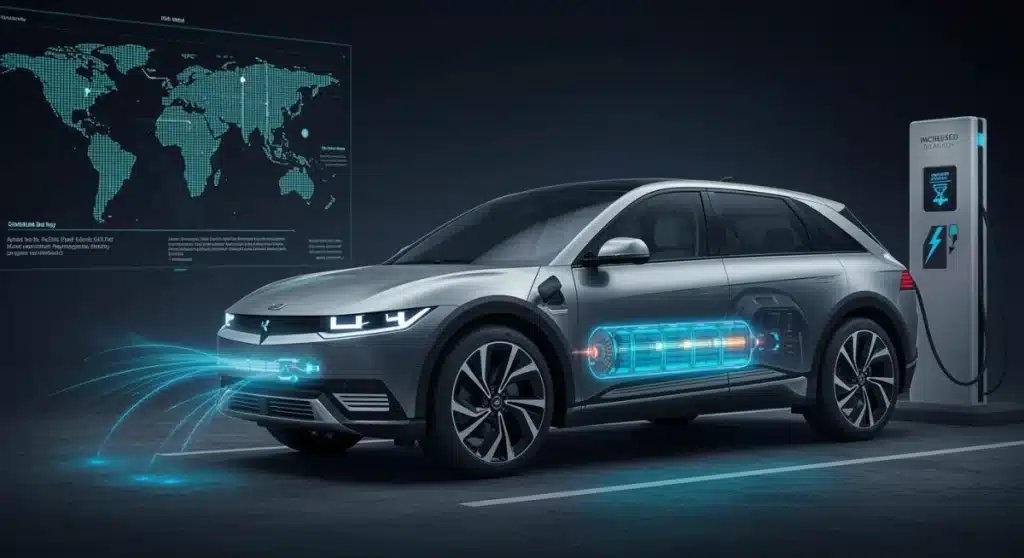
Solid-state batteries are on track to increase electric vehicle range by 30% by 2026, with US manufacturers leading the charge in this groundbreaking technological advancement.
The automotive world is constantly evolving, pushing the boundaries of what’s possible, especially in the realm of electric vehicles (EVs). A significant leap forward is expected by 2026 with the widespread adoption of solid-state battery 2026 technology. This revolutionary advancement promises to redefine electric vehicle performance, offering a substantial increase in range and safety that could finally address some of the most persistent concerns for potential EV buyers. This article delves into the exciting prospects of solid-state batteries and highlights three prominent US manufacturers at the forefront of this transformative innovation.
The promise of solid-state batteries for electric vehicles
Solid-state batteries represent a fundamental shift from traditional lithium-ion batteries. Unlike their liquid electrolyte counterparts, solid-state batteries utilize a solid electrolyte, offering numerous advantages that could dramatically enhance electric vehicle capabilities. This change isn’t merely incremental; it’s a paradigm shift that promises to unlock new levels of performance and safety.
The core benefit lies in the solid electrolyte’s ability to prevent dendrite formation, a common issue in liquid lithium-ion batteries that can lead to short circuits and thermal runaway. This inherent safety improvement allows for denser energy packaging, meaning more power can be stored in a smaller, lighter footprint. This directly translates to increased range and potentially faster charging times, fundamentally altering the EV ownership experience.
Enhanced energy density and safety
One of the most compelling aspects of solid-state technology is its potential for significantly higher energy density. This means that for the same volume or weight, a solid-state battery can store considerably more energy than a conventional lithium-ion battery. This is crucial for EVs, as it directly impacts how far a vehicle can travel on a single charge.
- Increased range: Vehicles could see their range extended by 30% or more, alleviating range anxiety.
- Faster charging: The solid electrolyte can often handle higher charging rates without degradation.
- Improved safety: Elimination of flammable liquid electrolytes drastically reduces fire risks.
- Longer lifespan: Less degradation over charge cycles means a longer operational life for the battery.
The promise of solid-state batteries extends beyond mere numbers; it’s about creating a more robust, efficient, and ultimately safer energy storage solution for the next generation of electric vehicles. The industry is racing to commercialize this technology, recognizing its potential to reshape the entire automotive landscape.
QuantumScape: pioneering solid-state breakthroughs
QuantumScape, a California-based company, has long been a frontrunner in the solid-state battery race. Backed by Volkswagen and Bill Gates, among others, their approach focuses on a ceramic solid electrolyte that promises to deliver exceptional performance. Their technology aims to address the critical challenges of cycle life and power delivery, which have historically hindered the commercialization of solid-state batteries.
The company has made significant strides in demonstrating high energy density and fast-charging capabilities in their prototypes. Their proprietary solid-state separator is designed to withstand the stresses of repeated charging and discharging, a key factor for automotive applications. This innovation is pivotal for achieving the durability and reliability required for mass-market electric vehicles.
Key advancements and strategic partnerships
QuantumScape’s progress is not just theoretical; they have released data demonstrating their cells can retain over 80% of their capacity after 800 cycles, even at demanding fast-charging rates. This level of performance is crucial for meeting automotive industry standards and instilling confidence in consumers.
- Ceramic separator: A proprietary solid electrolyte that is both stable and highly conductive.
- High energy density: Capable of storing more energy per unit volume than current lithium-ion batteries.
- Fast charging: Demonstrated ability to charge from 10% to 80% in under 15 minutes.
- Automotive partnerships: Strong collaboration with Volkswagen for integration into future EV models.
The partnership with Volkswagen is particularly strategic, providing QuantumScape with a direct pathway to mass production and real-world vehicle integration. This collaboration underscores the automotive industry’s serious commitment to solid-state technology and QuantumScape’s perceived leadership in the field.
Solid Power: Bridging the gap to mass production
Solid Power, another US-based innovator, is taking a different yet equally promising approach to solid-state battery development. Their focus is on sulfide-based solid electrolytes, which offer high ionic conductivity and are more amenable to existing manufacturing processes. This could significantly accelerate the timeline for mass production and widespread adoption.
The company has secured significant investments and partnerships with automotive giants like BMW and Ford, signaling strong industry confidence in their technology. Solid Power’s strategy involves producing larger format cells that are compatible with current battery manufacturing infrastructure, reducing the need for entirely new production lines.
Manufacturing scalability and industry collaborations
Solid Power’s strength lies in its emphasis on manufacturability. By developing a technology that can be integrated into existing battery production facilities, they aim to overcome one of the biggest hurdles to solid-state adoption: scaling up production. This pragmatic approach positions them as a strong contender for commercial deployment by 2026.
- Sulfide-based electrolyte: Offers high performance and compatibility with current manufacturing.
- Large-format cell development: Progressing towards cells suitable for EV packs.
- Automotive backing: Partnerships with Ford and BMW validate their technology and scalability.
- Pilot production line: Established facilities to ramp up sample cell production for partners.
The ability to adapt existing manufacturing processes is a huge advantage, potentially allowing Solid Power to bring their solid-state batteries to market more quickly and at a lower cost than competitors requiring entirely new production methodologies. Their focus on practical, scalable solutions makes them a crucial player in the solid-state revolution.
Factorial Energy: a balanced approach to innovation
Factorial Energy, headquartered in Massachusetts, is emerging as a significant force in the solid-state battery landscape. Their technology centers around a proprietary solid electrolyte that they claim offers enhanced safety and performance without compromising on cost or manufacturability. They are working on a solid-state electrolyte that can operate at room temperature, a critical factor for practical EV applications.
Factorial has attracted attention and investment from major automakers such as Mercedes-Benz and Stellantis, indicating a broad industry belief in their balanced approach. Their goal is to deliver a solid-state battery that not only boosts range and safety but also fits seamlessly into the current automotive supply chain, making it an attractive option for large-scale integration.
Room-temperature operation and diverse partnerships
A key differentiator for Factorial Energy is their focus on achieving stable performance at a wide range of temperatures. Many early solid-state battery designs required elevated temperatures to function optimally, which adds complexity and cost to vehicle integration. Factorial’s advancements in this area are crucial for real-world EV applications.
- Proprietary solid electrolyte: Designed for stable performance across various temperatures.
- Enhanced safety features: Non-flammable components significantly reduce fire risk.
- Major OEM collaborations: Partnerships with Mercedes-Benz and Stellantis for testing and integration.
- Scalable manufacturing: Efforts to ensure their technology can be mass-produced efficiently.
Factorial Energy’s commitment to developing a solid-state battery that is both high-performing and practical for mass production positions them as a strong contender. Their ability to secure partnerships with diverse global automakers further validates their promising technology and its potential impact on the EV market.
The impact of solid-state batteries on EV range by 2026
The introduction of solid-state batteries by 2026 is not just about a new component; it’s about fundamentally transforming the electric vehicle experience. The projected 30% increase in EV range is a game-changer, directly addressing one of the primary barriers to widespread EV adoption: range anxiety. This improvement means more travel flexibility, fewer charging stops, and a driving experience that more closely mirrors traditional gasoline vehicles.
Beyond range, the enhanced safety profile of solid-state batteries will build consumer confidence. Concerns about battery fires, while statistically rare, have been a psychological hurdle for some buyers. The inherent non-flammability of solid electrolytes significantly mitigates this risk, making EVs even safer.
Consumer confidence and infrastructure implications
A significant increase in range directly impacts the perception of EVs. With longer distances between charges, the need for ubiquitous charging infrastructure, while still important, becomes slightly less urgent for daily commutes and medium-distance travel. This could accelerate the transition to EVs even in regions with less developed charging networks.
- Reduced range anxiety: Longer distances on a single charge make EVs more practical for all types of journeys.
- Faster adoption rates: Improved performance and safety will attract a wider consumer base.
- Potential for smaller battery packs: Achieving the same range with a smaller, lighter battery pack could lead to more efficient and affordable EVs.
- New vehicle designs: Lighter, more compact batteries open up possibilities for innovative EV designs.
The ripple effect of solid-state batteries will extend throughout the entire EV ecosystem, from design and manufacturing to consumer perception and charging infrastructure development. By 2026, we can expect to see the beginnings of this profound transformation, driven by the advancements of these pioneering US manufacturers.
Challenges and the road ahead for solid-state technology
While the promise of solid-state batteries is immense, the path to mass commercialization is not without its challenges. Scaling production to meet the demands of the global automotive industry requires overcoming significant engineering and manufacturing hurdles. The precise control needed for manufacturing solid electrolytes and integrating them into robust battery packs is complex.
Cost remains another critical factor. Currently, solid-state battery technology is more expensive to produce than traditional lithium-ion batteries. Manufacturers are working diligently to drive down these costs through economies of scale and optimized production processes. The balance between performance, safety, and affordability will ultimately determine the speed of adoption.
Overcoming technical and economic hurdles
The transition from laboratory prototypes to millions of commercial units is a monumental task. Each of the highlighted companies is investing heavily in pilot production lines and refining their manufacturing techniques. The robustness and longevity of these batteries in real-world driving conditions also need extensive validation.
- Manufacturing scalability: Developing processes to produce millions of batteries annually.
- Cost reduction: Driving down production costs to compete with existing battery technologies.
- Long-term durability: Ensuring consistent performance over many years and diverse operating conditions.
- Supply chain development: Establishing robust supply chains for new materials and components.
Despite these challenges, the rapid pace of innovation and the significant investments from both startups and established automotive players suggest that these hurdles are surmountable. The collaborative efforts between battery developers and vehicle manufacturers are crucial for navigating this complex landscape and bringing solid-state batteries to the mass market by 2026.
| Key Aspect | Brief Description |
|---|---|
| Projected Range Increase | EV range expected to increase by 30% or more by 2026 with solid-state technology. |
| Key US Manufacturers | QuantumScape, Solid Power, and Factorial Energy are leading the innovation. |
| Core Advantages | Higher energy density, enhanced safety (non-flammable), and faster charging. |
| Commercialization Target | Aiming for significant market presence and integration into EVs by 2026. |
Frequently asked questions about solid-state batteries
A solid-state battery uses a solid electrolyte instead of the liquid or gel electrolyte found in traditional lithium-ion batteries. This fundamental difference allows for higher energy density, faster charging, and significantly improved safety by eliminating flammable liquid components, reducing the risk of thermal runaway.
Industry projections and manufacturer claims suggest that solid-state batteries could increase electric vehicle range by 30% or more by 2026. This substantial boost will help alleviate range anxiety and make EVs a more practical option for longer journeys for many consumers.
Three prominent US manufacturers at the forefront of solid-state battery development are QuantumScape, Solid Power, and Factorial Energy. Each company employs distinct technological approaches and has secured significant partnerships with major global automotive manufacturers.
For consumers, the primary advantages include significantly extended vehicle range, reduced charging times, and enhanced safety due to the absence of flammable liquid electrolytes. These improvements aim to make electric vehicles more appealing, convenient, and secure for everyday use.
Key challenges include scaling up manufacturing processes to meet global demand, reducing production costs to be competitive with current battery technologies, and ensuring long-term durability and reliability under various real-world operating conditions. These hurdles require continuous innovation and investment.
Conclusion
The horizon for electric vehicles is brighter than ever, with solid-state battery technology poised to be a pivotal force in its evolution. By 2026, the efforts of pioneering US manufacturers like QuantumScape, Solid Power, and Factorial Energy are expected to bring about a monumental shift, delivering EVs with significantly increased range, enhanced safety, and faster charging capabilities. While challenges remain, the collective drive for innovation and the strategic partnerships forged across the automotive industry suggest that the era of the solid-state battery is rapidly approaching, promising a more efficient, sustainable, and enjoyable electric driving experience for all.