2026 EV Manufacturing: 7 Innovations Cutting Costs by 10%
The global automotive industry is in the midst of a profound paradigm shift, with electric vehicles (EVs) leading the charge towards a sustainable future. While consumer demand for EVs continues to surge, the cost of production remains a significant hurdle for widespread adoption. However, a wave of innovation is poised to reshape the landscape of EV manufacturing cost reduction, promising a substantial 10% decrease in production expenses by 2026. This monumental shift will not only make electric cars more affordable but also accelerate the transition away from fossil fuels, pushing us closer to a greener tomorrow.
The journey to achieve this 10% cost reduction in EV manufacturing is multifaceted, involving breakthroughs across various stages of the production process. From raw material sourcing and battery technology to assembly line automation and supply chain management, every aspect is being scrutinized and optimized. This article will delve into seven pivotal innovations that are at the forefront of this revolution, explaining how each contributes to the overarching goal of making EVs more accessible and competitive.
Understanding these innovations is crucial for industry stakeholders, policymakers, and consumers alike. For manufacturers, it offers a roadmap to efficiency and profitability. For governments, it highlights areas for strategic investment and policy support. And for consumers, it signifies a future where high-quality, eco-friendly transportation is within closer reach. Let’s explore the cutting-edge technologies and strategies that are driving this exciting evolution in EV manufacturing cost reduction.
The Urgency of EV Manufacturing Cost Reduction
The electric vehicle market, while growing rapidly, still faces challenges related to price parity with traditional internal combustion engine (ICE) vehicles. Battery costs, complex manufacturing processes, and supply chain vulnerabilities have historically kept EV prices higher. This price differential acts as a barrier for many potential buyers, limiting the pace of EV adoption. Therefore, achieving significant EV manufacturing cost reduction is not just a desirable outcome; it’s a strategic imperative for the industry’s long-term success and for meeting global climate targets.
Governments worldwide are setting ambitious targets for EV sales and phasing out ICE vehicles, creating immense pressure on manufacturers to scale up production while simultaneously driving down costs. A 10% reduction by 2026 would be a game-changer, potentially unlocking new market segments and accelerating the mass-market appeal of electric cars. This reduction would not only benefit consumers through lower purchase prices but also enhance manufacturers’ profit margins, allowing for further investment in research and development.
Moreover, reducing production costs also has significant environmental implications. More affordable EVs mean faster fleet electrification, leading to a quicker reduction in carbon emissions from the transportation sector. It’s a virtuous cycle: innovation drives down costs, which drives up adoption, which in turn drives further innovation and economies of scale. The innovations we are about to discuss are the engines of this transformative process, directly addressing the core challenges of EV manufacturing cost reduction.
Innovation 1: Advanced Battery Chemistry and Manufacturing Processes
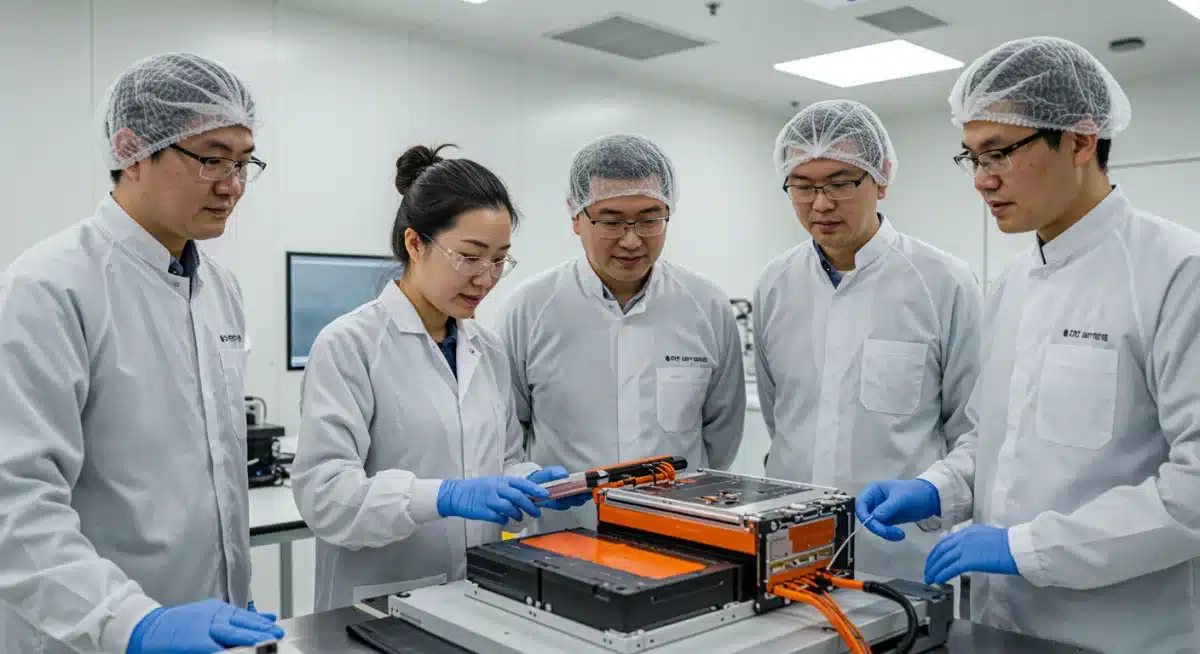
Batteries are the heart of any electric vehicle, and historically, they have also been the single most expensive component. Significant strides in battery technology and manufacturing are pivotal for EV manufacturing cost reduction. By 2026, we anticipate a substantial shift towards new battery chemistries and more efficient production methods.
Solid-State Batteries: The Holy Grail
Solid-state batteries are often hailed as the ‘holy grail’ of EV battery technology. Unlike traditional lithium-ion batteries that use liquid electrolytes, solid-state batteries utilize solid electrolytes. This fundamental change offers several advantages: higher energy density (meaning more range for the same size/weight), faster charging times, enhanced safety (reduced risk of thermal runaway), and critically, potentially lower production costs in the long run. While still in advanced development, mass production techniques for solid-state batteries are expected to mature significantly by 2026, contributing to overall EV manufacturing cost reduction.
Sodium-Ion Batteries: A Cost-Effective Alternative
Another promising avenue is the development and scaling of sodium-ion batteries. Sodium is far more abundant and cheaper than lithium, making sodium-ion batteries a highly attractive option for lower-cost EVs, particularly for urban use or as supplementary power sources. Although they currently offer lower energy density than lithium-ion, rapid advancements are closing this gap. The ability to source cheaper raw materials without compromising performance for certain applications will be a key driver in EV manufacturing cost reduction.
Gigafactories and Optimized Production Lines
Beyond chemistry, the sheer scale and efficiency of battery manufacturing are being revolutionized by gigafactories. These massive facilities leverage advanced automation, artificial intelligence, and streamlined processes to produce batteries at unprecedented volumes. Innovations in cell-to-pack and cell-to-chassis integration further reduce complexity and material usage, directly impacting costs. By integrating battery production more tightly with vehicle assembly, manufacturers can eliminate redundant steps and logistical overheads, leading to significant EV manufacturing cost reduction.
Innovation 2: Advanced Materials and Lightweighting
Reducing the weight of an EV directly translates to better efficiency, longer range, and smaller battery requirements, all of which contribute to EV manufacturing cost reduction. The automotive industry is increasingly adopting advanced, lightweight materials.
High-Strength, Low-Weight Alloys
The use of advanced high-strength steels (AHSS), aluminum alloys, and magnesium alloys is becoming more prevalent. These materials offer superior strength-to-weight ratios compared to traditional steel, allowing for thinner gauges and lighter components without compromising safety or structural integrity. As manufacturing processes for these alloys become more refined and scalable, their cost-effectiveness improves, playing a crucial role in overall EV manufacturing cost reduction.
Composites and Sustainable Materials
Carbon fiber reinforced polymers (CFRP) and other composite materials, once exclusive to high-performance and luxury vehicles, are finding their way into more mainstream EV applications. Advances in composite manufacturing, such as automated fiber placement and resin transfer molding, are making these materials more affordable. Furthermore, the development of sustainable, bio-based composites and recycled materials is gaining traction, promising both environmental benefits and long-term cost stability, further aiding EV manufacturing cost reduction.
Additive Manufacturing (3D Printing) for Prototyping and Tooling
While not yet for mass production of entire vehicle components, additive manufacturing, or 3D printing, is revolutionizing prototyping and tooling. It allows for rapid iteration of designs, creating complex parts with optimized geometries that would be difficult or impossible with traditional methods. This significantly reduces lead times and costs associated with developing new components and manufacturing tools, indirectly contributing to EV manufacturing cost reduction by accelerating product development cycles and optimizing designs before mass production.
Innovation 3: Gigacasting and Modular Platforms
Revolutionizing the structural integrity and assembly process of EVs, gigacasting and modular platforms are set to dramatically impact EV manufacturing cost reduction.
Gigacasting: Simplifying the Chassis
Pioneered by Tesla, gigacasting involves casting large sections of a vehicle’s underbody as single pieces, replacing dozens or even hundreds of smaller stamped and welded parts. This process significantly reduces assembly time, the number of robots required on the production line, and the overall complexity of the body-in-white structure. The savings in labor, materials, and capital expenditure for welding equipment are immense, making gigacasting a powerful force for EV manufacturing cost reduction.
The adoption of gigacasting is expected to become more widespread by 2026 as other manufacturers invest in the necessary large-scale die-casting machines and expertise. While the initial investment is substantial, the long-term operational savings are undeniable, leading to a quicker path to profitability for EV models.
Modular EV Platforms
Modular platforms, like Volkswagen’s MEB or Hyundai’s E-GMP, involve designing a common architecture that can underpin a wide range of EV models, from compact cars to SUVs. This approach allows manufacturers to achieve economies of scale by standardizing components like battery packs, electric motors, and control units across multiple vehicles. Instead of designing unique components for each model, they can leverage shared parts and manufacturing processes.
This standardization drastically reduces R&D costs, supply chain complexity, and production line retooling requirements. It also simplifies maintenance and parts availability for consumers. The widespread adoption and refinement of these modular platforms will be a cornerstone of EV manufacturing cost reduction in the coming years.
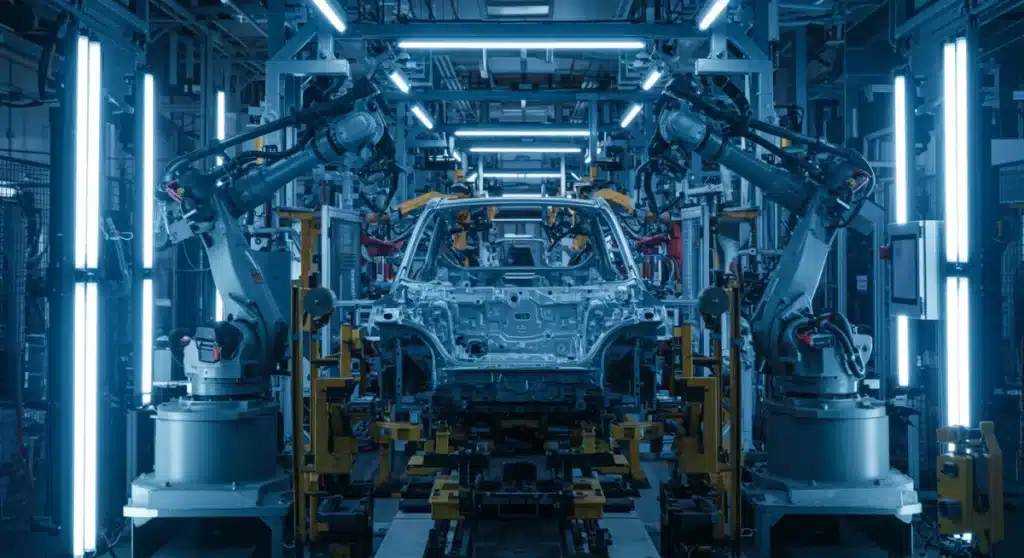
Innovation 4: Advanced Robotics and Automation
The role of robotics and automation in manufacturing is not new, but its application in EV manufacturing cost reduction is reaching unprecedented levels of sophistication and integration.
Collaborative Robots (Cobots)
Traditional industrial robots often operate in cages, separated from human workers for safety. Collaborative robots, or cobots, are designed to work alongside humans, assisting with tasks that require precision, repetitive motions, or heavy lifting. This human-robot collaboration enhances efficiency, reduces physical strain on workers, and allows for more flexible production lines. Cobots can be reprogrammed quickly for different tasks, making them ideal for agile EV manufacturing environments seeking EV manufacturing cost reduction.
AI-Powered Vision Systems and Quality Control
AI-powered vision systems are becoming indispensable for quality control and process optimization. These systems can inspect components for defects with far greater speed and accuracy than human eyes, identifying anomalies that might otherwise go unnoticed. By catching defects early in the production process, manufacturers can prevent costly rework or recalls, directly contributing to EV manufacturing cost reduction.
Furthermore, AI algorithms can analyze production data in real-time to identify bottlenecks, predict equipment failures, and optimize robot movements for maximum efficiency. This predictive maintenance and optimization reduce downtime and improve throughput, translating into significant savings.
Innovation 5: Digital Twins and Predictive Maintenance
The integration of digital technologies, particularly digital twins, is revolutionizing how EVs are designed, manufactured, and maintained, offering substantial benefits for EV manufacturing cost reduction.
Comprehensive Digital Twins
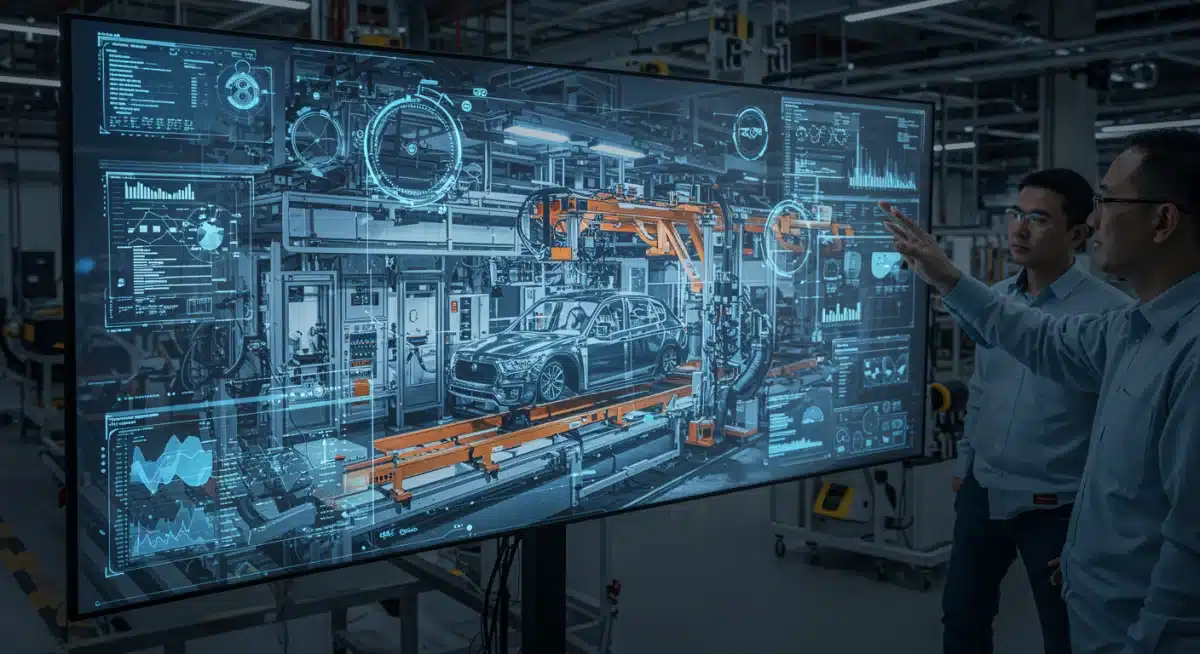
A digital twin is a virtual replica of a physical object, process, or system. In EV manufacturing, this means creating digital models of entire factories, individual production lines, and even every single vehicle component. These digital twins are fed real-time data from sensors on the factory floor and in vehicles, allowing engineers to simulate, analyze, and optimize every aspect of production and performance.
Before any physical production begins, manufacturers can use digital twins to simulate different assembly scenarios, identify potential issues, and optimize workflows. This simulation-driven approach drastically reduces the need for expensive physical prototypes and retooling, leading to significant EV manufacturing cost reduction in the design and engineering phases.
Predictive Maintenance for Equipment and Vehicles
Beyond the factory, digital twins enable highly effective predictive maintenance. By continuously monitoring the performance of manufacturing equipment and even individual EVs in the field, AI algorithms can predict when a component is likely to fail. This allows for proactive maintenance schedules, preventing costly unscheduled downtime on the production line and reducing warranty claims for vehicles. For EV manufacturing cost reduction, preventing failures is far more economical than repairing them after they occur.
Innovation 6: Supply Chain Optimization and Localization
The global EV supply chain is complex and often vulnerable to disruptions. Optimizing this chain and localizing production are critical strategies for EV manufacturing cost reduction.
Regionalized Supply Chains
Reliance on distant suppliers, particularly for critical components like batteries and rare earth minerals, introduces geopolitical risks, logistical complexities, and higher transportation costs. A key trend for 2026 will be the increasing regionalization of supply chains. By establishing battery factories and component suppliers closer to EV assembly plants, manufacturers can reduce shipping costs, minimize lead times, and mitigate the impact of global disruptions. This strategic shift directly contributes to EV manufacturing cost reduction.
Vertical Integration and Strategic Partnerships
Many EV manufacturers are pursuing greater vertical integration, bringing more of the component production in-house, especially for batteries and electric motors. This gives them greater control over quality, cost, and intellectual property. Alternatively, strategic partnerships and joint ventures with key suppliers can secure stable pricing and supply, further enhancing EV manufacturing cost reduction efforts.
Blockchain for Supply Chain Transparency
Blockchain technology is emerging as a powerful tool for supply chain transparency and traceability. By creating an immutable record of every transaction and movement of materials, blockchain can help verify the ethical sourcing of raw materials, track components from mine to factory, and ensure compliance with environmental and labor standards. While not a direct cost reducer, it can prevent costly delays, reputational damage, and regulatory fines, indirectly supporting EV manufacturing cost reduction.
Innovation 7: Energy Efficiency and Circular Economy Principles
Sustainable practices are not just good for the environment; they are increasingly crucial for EV manufacturing cost reduction, especially in the long term.
Renewable Energy in Manufacturing
Powering EV factories with renewable energy sources like solar and wind power significantly reduces operational costs associated with electricity, especially as carbon taxes and energy prices fluctuate. Many manufacturers are investing in on-site renewable energy generation or purchasing renewable energy credits, leading to more stable and lower energy bills. This transition to green energy is a direct contributor to EV manufacturing cost reduction and enhances corporate sustainability profiles.
Material Recycling and Reuse
The circular economy concept is gaining momentum in EV manufacturing. This involves designing vehicles for easier disassembly, recycling valuable materials (particularly from batteries), and reusing components wherever possible. Innovations in battery recycling technologies are making it more cost-effective to recover lithium, cobalt, nickel, and other precious metals. This reduces the reliance on virgin materials, which can be volatile in price and supply, thereby contributing significantly to EV manufacturing cost reduction.
Furthermore, the ‘second life’ application of EV batteries, where they are repurposed for stationary energy storage after their automotive life, adds another layer of economic value and reduces overall lifecycle costs. This holistic approach to resource management is vital for sustainable and cost-effective EV production.
The Road Ahead: Achieving the 10% Cost Reduction by 2026
The convergence of these seven innovations paints a clear picture of how the EV industry plans to achieve a substantial 10% EV manufacturing cost reduction by 2026. This isn’t a single silver bullet, but rather a synergistic approach where advancements in battery technology, material science, automation, digital integration, and supply chain management all contribute to the overarching goal.
The impact of this cost reduction will be profound. For consumers, it means more affordable entry points into the EV market, making electric cars a viable option for a wider demographic. For manufacturers, it translates to healthier profit margins, enabling further investment in R&D and accelerating the pace of innovation. For the planet, it signifies a faster transition to sustainable transportation, with significant reductions in greenhouse gas emissions.
However, achieving this target will require continued investment, collaboration across the industry, and supportive government policies. The race is on, and the next few years will be crucial in solidifying these innovations and scaling them to meet global demand. The future of EV manufacturing is not just about producing more electric cars; it’s about producing them smarter, more efficiently, and more affordably. The 10% EV manufacturing cost reduction by 2026 is an ambitious yet achievable goal, and its realization will mark a significant milestone in our collective journey towards a sustainable future.
Challenges and Opportunities
While the outlook for EV manufacturing cost reduction is optimistic, several challenges remain. The volatility of raw material prices, particularly for lithium and other battery components, can impact cost projections. Geopolitical tensions can disrupt supply chains, and the rapid pace of technological change requires continuous adaptation and investment. Skilled labor shortages in advanced manufacturing also pose a hurdle.
Despite these challenges, the opportunities are enormous. Governments are offering incentives for EV adoption and domestic manufacturing, creating a favorable environment for growth. The increasing consumer awareness of environmental issues is driving demand. Furthermore, the continuous innovation cycle means that solutions to current challenges are constantly being developed. The industry’s ability to navigate these complexities while embracing the outlined innovations will be key to unlocking the full potential of EV manufacturing cost reduction.
Manufacturers who strategically invest in these areas – from next-generation battery plants and advanced material research to AI-driven automation and localized supply chains – will be best positioned to thrive in the competitive EV market of 2026 and beyond. The collective effort to drive down costs is not just about business; it’s about shaping a more sustainable and accessible future for transportation worldwide.