AI in Auto Manufacturing: Reshaping US Production by 2026
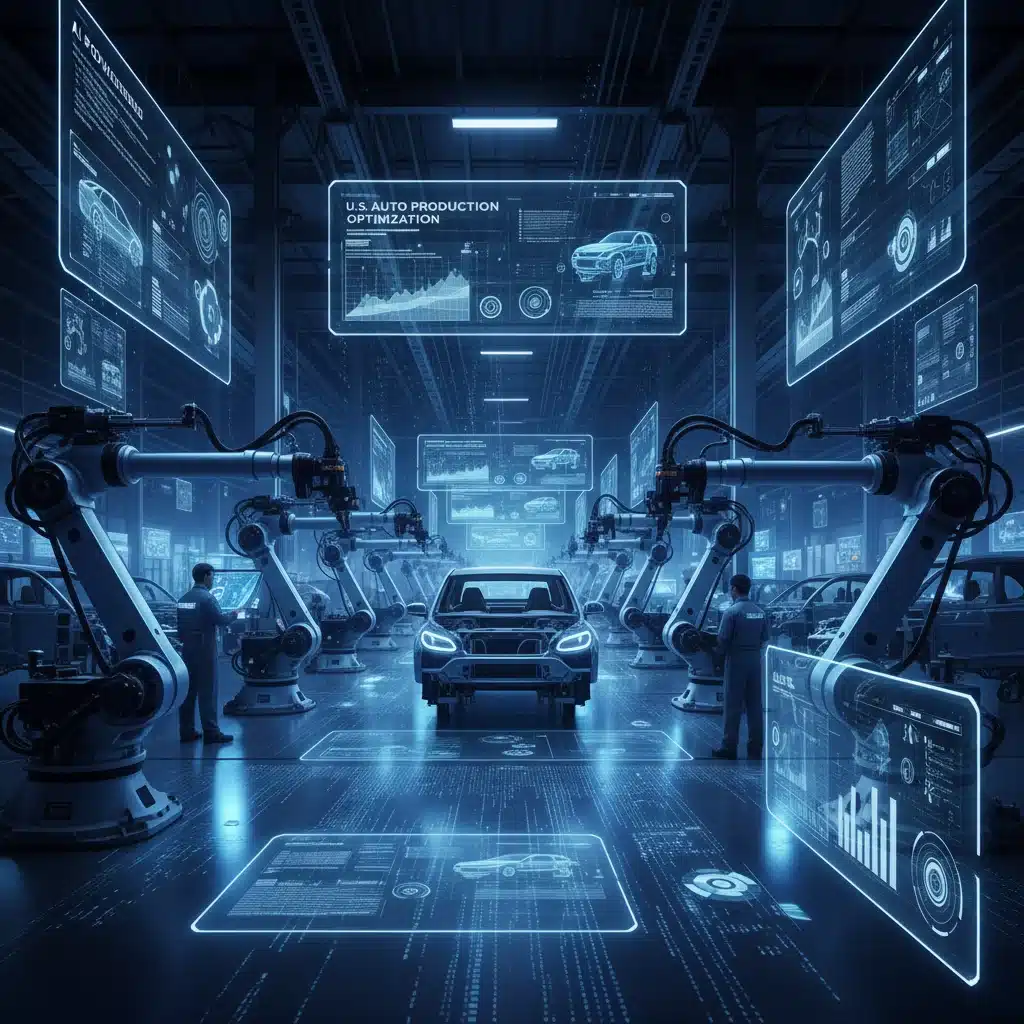
The automotive industry has always been a beacon of innovation, constantly evolving to meet the demands of a dynamic market and technological advancements. As we approach 2026, the United States auto manufacturing sector is undergoing a profound transformation, largely driven by the pervasive integration of Artificial Intelligence (AI) and Machine Learning (ML). This isn’t merely an incremental upgrade; it’s a fundamental reshaping of how vehicles are designed, produced, and delivered. The impact of AI integration in U.S. auto production is setting the stage for a new era of efficiency, precision, and sustainability.
For decades, car manufacturing has relied on sophisticated automation, but AI takes this to an unprecedented level. Traditional automation follows predefined rules, whereas AI possesses the ability to learn, adapt, and make informed decisions based on vast datasets. This cognitive leap is what makes AI auto manufacturing a game-changer. From the initial design phase to the final quality check, AI is optimizing every single step, leading to significant improvements in productivity, cost-effectiveness, and product quality.
The shift towards intelligent factories, often termed ‘smart factories’ or ‘Industry 4.0,’ is already well underway. These facilities leverage interconnected systems, real-time data analysis, and AI-powered robotics to create highly agile and responsive production environments. The ultimate goal is to achieve a level of operational excellence that was previously unimaginable, ensuring that U.S. auto manufacturers remain competitive on the global stage. This comprehensive exploration will delve into the multifaceted ways AI is revolutionizing U.S. auto production, highlighting the key technologies, benefits, challenges, and the future outlook for 2026 and beyond.
The Dawn of Smart Factories: AI in Auto Manufacturing
The concept of a ‘smart factory’ is central to understanding the future of AI auto manufacturing. These factories are characterized by their ability to self-optimize production processes through continuous data analysis and AI-driven insights. Sensors embedded throughout the production line collect massive amounts of data on everything from machine performance and material flow to environmental conditions and product quality. AI algorithms then process this data in real-time, identifying patterns, predicting potential issues, and suggesting optimal adjustments.
One of the most significant applications of AI in smart factories is predictive maintenance. Instead of adhering to fixed maintenance schedules, AI systems can analyze machine data to predict when a component is likely to fail. This allows manufacturers to perform maintenance proactively, before a breakdown occurs, thereby minimizing downtime and reducing costly repairs. For instance, an AI system might detect subtle vibrations or temperature changes in a robotic arm that indicate impending wear, prompting a scheduled replacement rather than an unexpected halt in production.
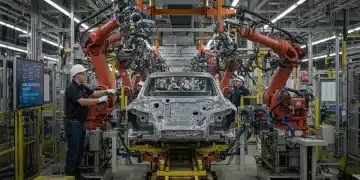
Furthermore, AI-powered robotics are becoming increasingly sophisticated. Beyond simply performing repetitive tasks, these robots can now learn from their environments, collaborate with human workers, and adapt to variations in production. This flexibility is crucial in an industry that demands high customization and rapid response to market changes. The integration of computer vision and machine learning enables robots to inspect parts for defects with unparalleled accuracy, often surpassing human capabilities in speed and consistency. This enhanced quality control is a cornerstone of the AI auto manufacturing revolution.
The U.S. auto industry’s embrace of these smart factory principles is driven by the need to enhance operational efficiency and reduce manufacturing costs. By automating complex decision-making processes and optimizing resource allocation, AI helps manufacturers streamline their operations, leading to higher throughput and better utilization of assets. This translates directly into a stronger competitive position for American car makers in the global market.
Optimizing the Assembly Line with Machine Learning
The assembly line, a hallmark of automotive production since Henry Ford, is being fundamentally reimagined by machine learning. Every stage, from stamping and welding to painting and final assembly, benefits from ML algorithms that learn from historical data and real-time feedback to improve performance. This optimization extends beyond individual machines to the entire flow of production, creating a more harmonious and efficient system.
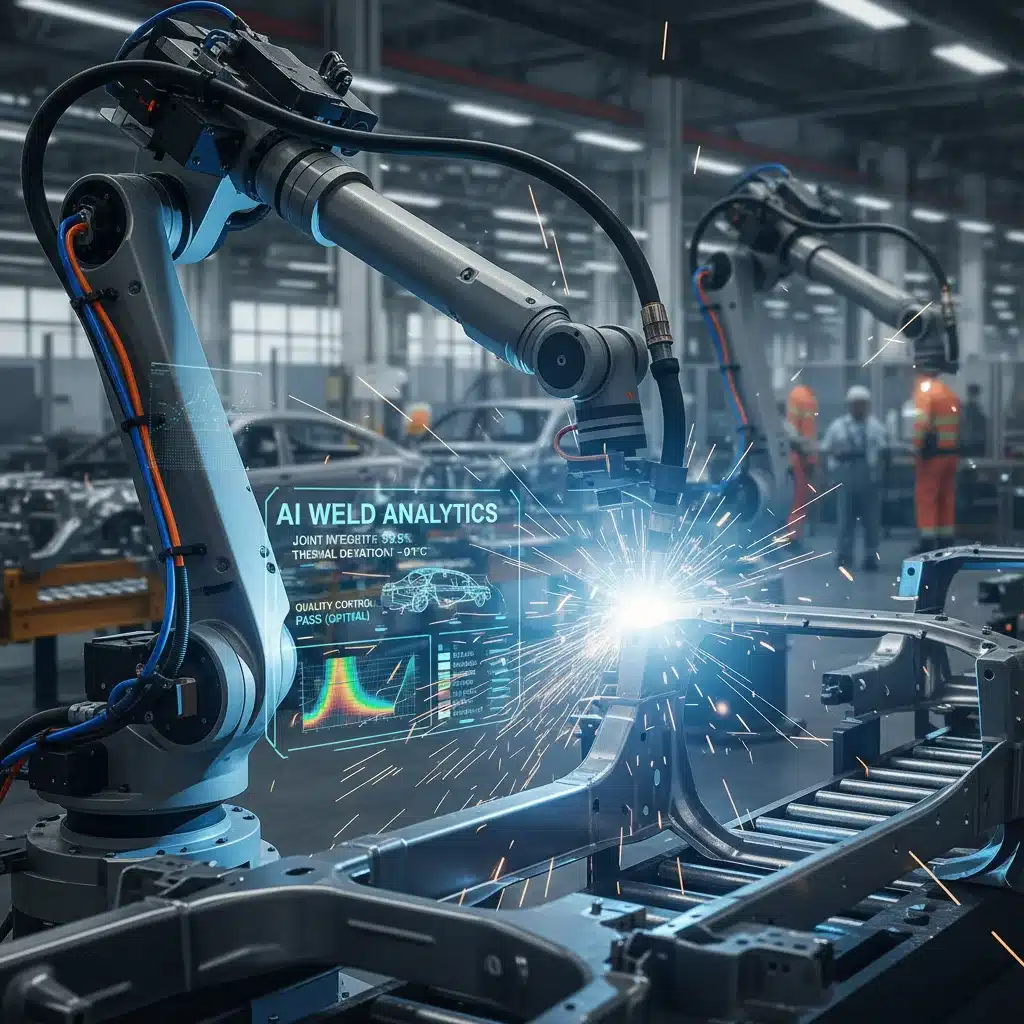
For example, in the welding process, ML algorithms can analyze data from sensors to adjust welding parameters (e.g., current, voltage, speed) in real-time to achieve optimal weld quality for different materials and geometries. This not only improves the structural integrity of the vehicle but also reduces material waste and rework. Similarly, in the paint shop, ML can predict the ideal paint thickness and application patterns to minimize overspray and ensure a flawless finish, adapting to environmental factors like temperature and humidity.
Another critical area where machine learning shines is in quality control. Traditional quality checks often involve manual inspection or rule-based vision systems that can miss subtle defects. ML-powered vision systems, however, can be trained on vast datasets of both flawless and defective parts. This allows them to identify anomalies and defects with incredible precision and speed, often detecting flaws invisible to the human eye. This proactive identification of defects at earlier stages of production is crucial for reducing scrap rates and ensuring a higher overall product quality, directly impacting customer satisfaction and brand reputation.
The ability of ML to continuously learn and improve means that as more data is collected, the assembly line becomes even more efficient and precise. This iterative improvement cycle is a core advantage of AI auto manufacturing. By 2026, it is expected that a significant portion of quality control and process optimization on U.S. assembly lines will be driven by sophisticated machine learning models, leading to a substantial reduction in manufacturing errors and recalls.
AI’s Role in Supply Chain and Logistics
Beyond the factory floor, AI is also revolutionizing the intricate web of supply chain and logistics that underpins U.S. auto production. Managing the flow of thousands of components from various suppliers to multiple assembly plants is an enormous challenge, and AI provides the tools to optimize this complex process, ensuring timely delivery and minimizing disruptions.
Predictive analytics, powered by machine learning, is being used to forecast demand for specific parts with greater accuracy. By analyzing historical sales data, market trends, economic indicators, and even social media sentiment, AI can anticipate future demand patterns, allowing manufacturers to optimize inventory levels. This reduces the risk of both stockouts (which can halt production) and overstocking (which ties up capital and incurs storage costs).
Furthermore, AI algorithms are optimizing transportation routes and schedules, taking into account factors like traffic conditions, weather forecasts, and delivery deadlines. This leads to more efficient logistics, lower fuel consumption, and reduced carbon emissions. In an industry with tight margins, these efficiencies can translate into significant cost savings. Real-time tracking and visibility, enhanced by AI, allow manufacturers to monitor the location and status of every component, enabling rapid responses to unexpected delays or disruptions.
The resilience of the supply chain is also being bolstered by AI. By analyzing potential risks, such as geopolitical instability, natural disasters, or supplier financial health, AI can help identify vulnerabilities and suggest alternative sourcing strategies. This proactive risk management is becoming increasingly vital in a globalized and often unpredictable world. By 2026, AI-driven supply chain management will be a standard practice in U.S. auto manufacturing, ensuring a more robust and responsive operational framework.
Designing the Future: Generative Design and Simulation
The impact of AI in auto manufacturing begins even before a single component is produced, extending into the research and development phase. Generative design, a cutting-edge application of AI, is transforming how automotive components are conceived and engineered. Instead of engineers manually designing parts, generative design algorithms explore thousands of design possibilities based on specified parameters such as material, weight, strength, and manufacturing constraints. The AI then presents optimal designs that meet or exceed these requirements, often resulting in innovative and highly efficient structures that human designers might not have considered.
This approach can lead to lighter, stronger, and more aerodynamic components, which are crucial for improving fuel efficiency and electric vehicle range. For example, a bracket that traditionally might be a solid block of metal could be redesigned by AI into a complex lattice structure that uses less material but offers superior strength-to-weight ratio. This not only reduces material costs but also contributes to overall vehicle performance.
Beyond generative design, AI is also enhancing simulation and virtual testing. Complex simulations of crash tests, aerodynamic performance, and material stress can be run much faster and with greater accuracy using AI. Machine learning models can predict how a vehicle will perform under various conditions, allowing engineers to iterate on designs virtually before physical prototypes are ever built. This significantly reduces the time and cost associated with the design and testing phases, accelerating time-to-market for new models.
By leveraging AI for design and simulation, U.S. auto manufacturers can innovate faster, reduce development cycles, and bring more advanced and efficient vehicles to market. This capability is paramount in an industry characterized by rapid technological advancement and fierce competition. The integration of AI into these early stages of product development ensures that the foundational elements of future vehicles are optimized from the outset.
Workforce Transformation: Human-AI Collaboration
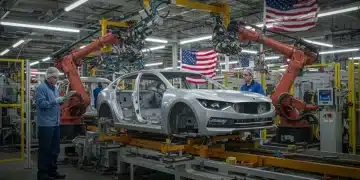
The widespread adoption of AI in auto manufacturing naturally raises questions about its impact on the workforce. While some fear job displacement, the reality is that AI is more likely to transform job roles rather than eliminate them entirely. The future of U.S. auto production will increasingly involve a collaborative environment where humans and AI work side-by-side, each leveraging their unique strengths.
Repetitive, dangerous, or physically demanding tasks are increasingly being handled by AI-powered robots, freeing human workers to focus on more complex, creative, and supervisory roles. For instance, human operators might oversee multiple robotic cells, troubleshoot AI systems, or engage in advanced quality control that requires nuanced judgment. The demand for data scientists, AI specialists, and robotics engineers within the automotive sector is already surging, indicating a shift in the required skill sets.
Furthermore, AI can augment human capabilities. AI-powered tools can provide real-time assistance to technicians, offering diagnostic insights or guiding them through complex repair procedures. Training programs are being developed to upskill the existing workforce, equipping them with the knowledge and abilities needed to operate and manage AI-driven systems. This emphasis on continuous learning and adaptation is crucial for a successful transition to an AI-integrated manufacturing landscape.
The goal is not to replace humans but to empower them with advanced tools that enhance their productivity and enable them to perform higher-value tasks. By 2026, U.S. auto factories will likely feature a highly integrated human-AI workforce, where AI handles the data processing and repetitive actions, and humans provide the critical thinking, problem-solving, and adaptability that only human intelligence can offer. This symbiotic relationship will be a key driver of innovation and efficiency.

Challenges and Considerations for AI Integration
While the benefits of AI in auto manufacturing are substantial, the path to full integration is not without its challenges. One of the primary concerns is the initial investment required for AI infrastructure, including specialized hardware, software, and the hiring or training of skilled personnel. This can be a significant barrier for smaller manufacturers or those with limited capital.
Data privacy and cybersecurity are also critical considerations. As factories become more interconnected and data-driven, the risk of cyberattacks increases. Protecting sensitive manufacturing data, intellectual property, and operational systems from malicious actors is paramount. Robust cybersecurity protocols and continuous monitoring are essential to safeguard these intelligent factories.
Another challenge lies in the complexity of integrating diverse AI systems and ensuring interoperability across different platforms and vendors. Manufacturers often use a variety of legacy systems, and seamlessly integrating new AI technologies requires careful planning and execution. The standardization of data formats and communication protocols will be crucial for scalable AI adoption.
Ethical considerations surrounding AI, such as algorithmic bias and accountability, also need to be addressed. Ensuring that AI systems make fair and transparent decisions, particularly in areas like quality control or worker scheduling, is vital. Manufacturers must establish clear guidelines and oversight mechanisms to prevent unintended consequences and maintain trust.
Despite these challenges, the overwhelming advantages of AI auto manufacturing are compelling enough to drive continued investment and innovation. By proactively addressing these hurdles, U.S. auto manufacturers can pave the way for a more resilient, efficient, and technologically advanced production ecosystem.
The Future Outlook: U.S. Auto Production in 2026 and Beyond
Looking ahead to 2026, the landscape of U.S. auto production will be significantly transformed by AI. We can expect to see highly automated and intelligent factories where AI and machine learning are deeply embedded in every operational layer. The focus will be on achieving hyper-efficiency, unparalleled quality, and extreme flexibility to respond to evolving consumer preferences and market dynamics.
Personalization will become a key differentiator, with AI enabling manufacturers to offer a wider range of customization options without compromising production efficiency. From tailored interior finishes to specific performance characteristics, AI will facilitate the agile manufacturing of bespoke vehicles, catering to individual customer demands at scale.
The drive towards sustainability will also be amplified by AI. By optimizing energy consumption, reducing waste, and improving resource utilization, AI will help manufacturers minimize their environmental footprint. Predictive maintenance will extend the lifespan of machinery, and AI-driven design will lead to more eco-friendly materials and manufacturing processes. This commitment to green manufacturing will not only benefit the environment but also enhance brand reputation and appeal to environmentally conscious consumers.
Furthermore, the data generated by AI-powered factories will create new opportunities for continuous improvement and innovation. Manufacturers will be able to analyze vast datasets to identify new efficiencies, discover emerging trends, and develop next-generation vehicles with unprecedented speed and precision. This data-driven approach will foster a culture of continuous learning and adaptation, ensuring that U.S. auto manufacturers remain at the forefront of technological advancement.
The competitive advantage gained through advanced AI auto manufacturing will be substantial. U.S. companies that effectively integrate AI into their operations will be better positioned to compete with global rivals, attract top talent, and deliver superior products to consumers. The journey to 2026 is one of profound transformation, promising a future where American-made vehicles are synonymous with cutting-edge technology, exceptional quality, and sustainable production.
Conclusion: The Irreversible Shift to AI-Powered Automotive Future
The integration of AI and machine learning into U.S. auto production is not merely a trend; it’s an irreversible shift towards a more intelligent, efficient, and responsive manufacturing paradigm. By 2026, the impact of AI will be evident across every facet of the automotive value chain, from generative design and smart assembly lines to optimized supply chains and human-AI collaboration.
The benefits are clear: enhanced productivity, superior product quality, reduced costs, and greater sustainability. While challenges such as investment, cybersecurity, and workforce adaptation exist, the industry’s commitment to overcoming these hurdles underscores the strategic importance of AI. The future of AI auto manufacturing in the U.S. promises a landscape of innovation, where cutting-edge technology drives the creation of advanced vehicles that meet the evolving demands of a global market.
As the U.S. auto industry continues to embrace these transformative technologies, it will solidify its position as a global leader in automotive innovation, delivering not just cars, but a vision of the future that is smarter, safer, and more sustainable. The journey has just begun, and the destination is a fully intelligent and interconnected automotive ecosystem, powered by the boundless capabilities of Artificial Intelligence.