Autonomous EV Technology in 2026: What Level 3 Integration Means for Daily Commutes
The automotive industry is on the cusp of an unprecedented transformation, driven by the convergence of electric vehicles (EVs) and autonomous driving capabilities. As we peer into the near future, specifically 2026, the discussion invariably turns to the widespread integration of Autonomous EV Technology, particularly at Level 3. This isn’t merely about cars that can park themselves; it’s about a fundamental shift in how we perceive and experience daily commutes. The promise of Level 3 autonomy is tantalizing: hands-off driving in specific conditions, allowing drivers to engage in other activities, thereby reclaiming valuable time.
But what exactly does Level 3 integration entail for the average commuter? How will it reshape our urban landscapes, our personal routines, and even the very concept of car ownership? This comprehensive exploration will delve into the intricacies of Autonomous EV Technology by 2026, examining the technological advancements, regulatory hurdles, infrastructure demands, and the profound societal and economic impacts that Level 3 will bring to our daily lives. Prepare to navigate the future of mobility, where your car isn’t just a mode of transport, but a connected, intelligent, and increasingly independent companion.
Understanding Autonomous Driving Levels: A Primer for 2026
Before we dive deep into the implications of Level 3 Autonomous EV Technology, it’s crucial to understand the standardized classification of autonomous driving. The Society of Automotive Engineers (SAE) has established a six-level system, from Level 0 (no automation) to Level 5 (full automation). By 2026, while Level 5 remains a distant dream for widespread adoption, Level 3 is poised to become a significant reality for many drivers.
SAE Levels of Autonomous Driving:
- Level 0: No Automation – The human driver performs all driving tasks.
- Level 1: Driver Assistance – The vehicle can assist with either steering or braking/acceleration, but not both simultaneously (e.g., adaptive cruise control or lane-keeping assist).
- Level 2: Partial Automation – The vehicle can assist with both steering and braking/acceleration simultaneously under specific conditions, but the driver must remain engaged and supervise the system (e.g., Tesla Autopilot, GM Super Cruise).
- Level 3: Conditional Automation – This is where the game changes. The vehicle can perform all driving tasks under specific conditions (e.g., highway driving, traffic jams) and the driver is not required to monitor the environment constantly. However, the driver must be ready to take over when prompted by the system. This is often referred to as ‘eyes-off’ but ‘mind-on’.
- Level 4: High Automation – The vehicle can perform all driving tasks and monitor the driving environment under specific conditions. The driver is not expected to take over, even if they don’t respond to a takeover request. The vehicle will safely come to a minimal risk condition if the driver fails to respond.
- Level 5: Full Automation – The vehicle can perform all driving tasks under all conditions. No human intervention is required, and the vehicle can operate in all situations a human driver could.
In 2026, the focus on Level 3 Autonomous EV Technology signifies a pivotal moment. It represents the first stage where drivers can genuinely disengage from the driving task for extended periods, albeit with the critical caveat of needing to be prepared to intervene. This conditional automation offers a taste of the fully autonomous future, providing both convenience and a unique set of challenges.
The Technological Leap: What Makes Level 3 Autonomous EV Technology Possible by 2026?
Achieving Level 3 autonomy by 2026 is not a matter of simple upgrades; it’s the culmination of years of relentless innovation across multiple technological domains. The sophistication required for a vehicle to accurately perceive its environment, predict the actions of others, and make safe driving decisions autonomously is immense. Several key technologies are converging to make this a reality.
Advanced Sensor Suites:
Modern autonomous EVs are equipped with an array of sensors that act as the vehicle’s ‘eyes and ears’. By 2026, these suites will be even more refined and integrated:
- Lidar (Light Detection and Ranging): Essential for creating high-resolution 3D maps of the vehicle’s surroundings, crucial for precise localization and obstacle detection, especially in varying light conditions.
- Radar: Excellent for detecting the speed and distance of objects, particularly effective in adverse weather conditions like rain, fog, and snow where cameras might struggle.
- Cameras: Provide rich visual data, enabling the vehicle to identify traffic lights, lane markings, pedestrians, and other road users. Advanced computer vision algorithms are key to processing this data.
- Ultrasonic Sensors: Primarily used for short-range detection, vital for parking maneuvers and low-speed obstacle avoidance.
High-Performance Computing and AI:
The sheer volume of data generated by these sensors requires powerful on-board computing platforms. By 2026, AI algorithms, particularly deep learning and neural networks, will be far more advanced, enabling:
- Real-time Data Fusion: Combining data from all sensors to create a comprehensive and accurate understanding of the environment.
- Object Recognition and Classification: Accurately identifying and categorizing objects (e.g., distinguishing a pedestrian from a sign).
- Behavior Prediction: Anticipating the movements of other vehicles, pedestrians, and cyclists to ensure safe and smooth driving.
- Decision Making: Using AI to make driving decisions that mimic or even surpass human capabilities in complex scenarios.
High-Definition Mapping and Localization:
Level 3 autonomy relies heavily on highly detailed, frequently updated maps. These maps include not just roads, but also lane configurations, speed limits, traffic signs, and even temporary construction zones. Precise localization, knowing exactly where the vehicle is on these maps, is critical for safe operation.
Vehicle-to-Everything (V2X) Communication:
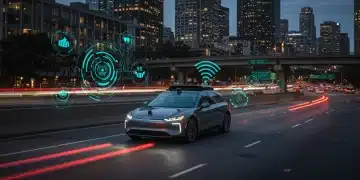
While still in development, V2X communication (including V2V – vehicle-to-vehicle and V2I – vehicle-to-infrastructure) will play an increasingly important role by 2026. This technology allows vehicles to communicate with each other and with roadside infrastructure, sharing information about traffic, hazards, and road conditions, thus enhancing situational awareness and safety.
The synergy of these technologies forms the bedrock of reliable Level 3 Autonomous EV Technology. The continuous refinement and integration of these systems are what will drive the industry forward, making hands-off driving a practical reality for many daily commutes.
Reshaping the Daily Commute: Benefits of Level 3 Autonomous EV Technology
The integration of Level 3 Autonomous EV Technology promises a significant transformation of the daily commute, offering a multitude of benefits that extend beyond mere convenience.
Increased Productivity and Relaxation:
The most immediate and tangible benefit for commuters is the ability to reclaim time otherwise spent actively driving. In Level 3 systems, during designated operational domains (ODDs) like highway driving, drivers can engage in other activities: catching up on emails, reading a book, watching a show, or simply relaxing. This shift from ‘driver’ to ‘occupant’ can significantly reduce commuter stress and increase personal productivity, especially in congested urban areas.
Enhanced Safety:
Human error is a primary cause of road accidents. Autonomous systems, free from distraction, fatigue, or impairment, have the potential to dramatically improve road safety. Level 3 Autonomous EV Technology, with its advanced sensor arrays and rapid decision-making capabilities, can react faster and more consistently than human drivers in many situations, potentially preventing thousands of accidents annually. While the driver is still the ultimate fallback, the system’s ability to handle routine driving tasks reduces the likelihood of human-induced errors.
Optimized Traffic Flow and Reduced Congestion:
Autonomous vehicles, especially when operating in concert, can communicate and coordinate their movements more efficiently than human-driven cars. This can lead to smoother traffic flow, reduced stop-and-go driving, and ultimately, less congestion. Imagine a future where cars accelerate and decelerate in perfect harmony, forming platoons that maximize road capacity. This efficiency also translates to reduced fuel consumption (or battery drain for EVs) and lower emissions.
Accessibility for All:
For individuals who currently cannot drive due to age, disability, or other reasons, Level 3 Autonomous EV Technology offers a new degree of personal mobility. While not fully autonomous in all conditions, it can significantly expand the opportunities for independent travel, improving quality of life and social inclusion for millions.
Environmental Benefits:
The combination of autonomous capabilities with electric powertrains is a powerful duo for environmental sustainability. EVs produce zero tailpipe emissions, and autonomous driving can further enhance their efficiency by optimizing routes and driving patterns, leading to reduced energy consumption and a smaller carbon footprint.
The collective impact of these benefits paints a picture of a more efficient, safer, and more enjoyable commuting experience. However, realizing this vision is not without its challenges.
Challenges and Hurdles for Widespread Level 3 Adoption by 2026
Despite the immense potential, the widespread adoption of Level 3 Autonomous EV Technology by 2026 faces several significant challenges that require careful consideration and innovative solutions.
The Handover Problem (Driver Engagement):
This is perhaps the most critical challenge for Level 3. The system operates autonomously, but the driver must be ready to take over when the system encounters a situation it cannot handle (a ‘disengagement’). The transition time and the driver’s state of readiness are crucial. If a driver is deeply engrossed in another activity, their ability to take control quickly and safely might be compromised, leading to dangerous situations. Designing intuitive and effective handover mechanisms is paramount.
Regulatory and Legal Frameworks:
The legal landscape for autonomous vehicles is still evolving. Questions of liability in the event of an accident, data privacy, and the definition of a ‘driver’ in a Level 3 scenario need clear and consistent answers across different jurisdictions. By 2026, many regions will need to have robust frameworks in place to facilitate safe deployment and build public trust.
Public Trust and Acceptance:
For Autonomous EV Technology to succeed, the public must trust it. High-profile accidents, even rare ones, can severely erode public confidence. Education, transparent communication about system capabilities and limitations, and a proven track record of safety are essential to overcome skepticism and foster widespread acceptance.
Infrastructure Requirements:
While Level 3 systems are designed to operate independently, they benefit greatly from smart infrastructure. This includes high-definition mapping, reliable GPS, and potentially V2I communication that provides real-time information on road conditions, traffic, and hazards. Investment in such infrastructure will be crucial for optimizing Level 3 performance and expanding its operational domains.
Cybersecurity Concerns:
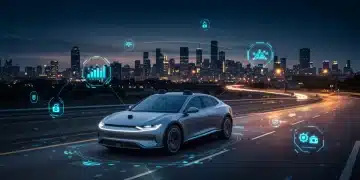
As vehicles become more connected and software-dependent, they become potential targets for cyberattacks. Ensuring the robust security of Autonomous EV Technology systems against hacking and malicious interference is paramount to prevent catastrophic failures and protect sensitive data.
Cost and Affordability:
Initially, Level 3 autonomous features will likely be available on premium vehicles, making them inaccessible to a large segment of the population. For widespread adoption by 2026 and beyond, the cost of these advanced systems needs to decrease significantly, making them more affordable for mainstream consumers.
Addressing these challenges requires a collaborative effort from automakers, technology providers, governments, and urban planners. Only through concerted action can the full promise of Level 3 Autonomous EV Technology be realized.
The Regulatory Landscape and Industry Standards for 2026
The journey towards widespread Level 3 Autonomous EV Technology is inextricably linked to the development of robust regulatory frameworks and industry standards. By 2026, we anticipate clearer guidelines to emerge, though complete harmonization across all global markets may still be a work in progress.
National and International Regulations:
Different countries and regions are adopting varied approaches to regulating autonomous vehicles. In the EU, for example, the UNECE (United Nations Economic Commission for Europe) has been instrumental in developing regulations for Level 3 systems, particularly concerning ALKS (Automated Lane Keeping Systems). These regulations often specify conditions for activation, minimum risk maneuvers, and driver availability monitoring. The United States, with its state-by-state approach, presents a more fragmented regulatory environment, though federal agencies like NHTSA (National Highway Traffic Safety Administration) are actively working on guidelines.
Certification and Testing Protocols:
For Level 3 Autonomous EV Technology to be deployed safely, rigorous testing and certification protocols are essential. This includes extensive simulations, closed-course testing, and real-world road testing under various conditions. By 2026, industry standards will likely mandate comprehensive validation processes to ensure the reliability and safety of these systems before they reach consumers.
Data Recording and Event Data Recorders (EDRs):
In the event of an incident, understanding who was in control (human or machine) is critical for liability and accident investigation. Regulations will increasingly require advanced EDRs in Level 3 vehicles to record key operational data, including the system’s status, driver engagement, and sensor inputs, immediately before and during a collision. This data will be vital for forensic analysis and for continuous improvement of the technology.
Cybersecurity Standards:
Given the connectivity of autonomous EVs, cybersecurity is a paramount concern. International standards like ISO/SAE 21434 are emerging to govern cybersecurity engineering for road vehicles, aiming to protect against unauthorized access, manipulation, and data breaches. By 2026, adherence to such standards will be a non-negotiable requirement for any deployed Autonomous EV Technology.
Consumer Information and Education:
Regulators also play a role in ensuring that consumers are well-informed about the capabilities and limitations of Level 3 systems. Clear labeling, user manuals, and mandatory training or familiarization programs could become standard to ensure drivers understand their responsibilities and how to safely interact with the technology.
The evolving regulatory landscape is a dynamic space, but by 2026, we expect a more mature and harmonized approach to allow for the responsible deployment and scaling of Level 3 Autonomous EV Technology, fostering both innovation and safety.
The Impact on Urban Planning and Infrastructure
The widespread adoption of Level 3 Autonomous EV Technology by 2026 will profoundly influence urban planning and infrastructure development. Cities will need to adapt to accommodate these intelligent vehicles, leading to significant changes in design and policy.
Smart City Integration:
Autonomous EVs are integral to the concept of smart cities. Their ability to communicate with infrastructure (V2I) and other vehicles (V2V) can be leveraged to optimize traffic light timings, manage parking spaces more efficiently, and provide real-time information on road conditions. This data-driven approach can create more responsive and efficient urban environments.
Dedicated Lanes and Infrastructure:
While Level 3 systems are designed to operate on existing roads, certain conditions, such as dedicated autonomous vehicle lanes or enhanced digital infrastructure, could significantly improve their performance and safety. By 2026, we might see pilot programs or designated zones where Autonomous EV Technology can operate with even greater efficiency.
Parking Solutions:
Autonomous parking capabilities, even at Level 3, could revolutionize urban parking. Cars might drop off passengers and then autonomously find and park themselves in designated areas, potentially even outside prime urban centers, reducing the need for expensive, centrally located parking garages. This could free up valuable urban land for other uses.
Traffic Management and Predictive Analytics:
The data generated by fleets of autonomous EVs can be used for advanced traffic management. Predictive analytics can anticipate congestion, reroute vehicles, and optimize public transport schedules, leading to a more fluid and less stressful urban commute for everyone.
Charging Infrastructure for EVs:
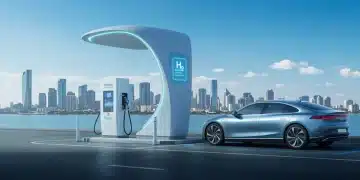
As Autonomous EV Technology proliferates, the demand for robust charging infrastructure will skyrocket. Urban planners must strategically deploy charging stations, including fast-charging options, to support the growing fleet of electric vehicles. The autonomy aspect could even enable self-parking and self-charging scenarios, further streamlining the process.
Public Transportation Integration:
Autonomous EVs are not just about private car ownership. They can also enhance public transportation by providing on-demand last-mile services or operating as autonomous shuttles in specific areas, seamlessly integrating with existing public transit networks and expanding accessibility.
The synergy between Autonomous EV Technology and urban planning will be crucial in shaping the cities of tomorrow, creating more sustainable, efficient, and livable environments for their inhabitants.
Societal and Economic Implications of Autonomous EV Technology in 2026
The integration of Level 3 Autonomous EV Technology by 2026 will extend its influence far beyond the immediate driving experience, triggering profound societal and economic shifts.
Job Market Transformation:
One of the most debated impacts is on the job market. While new jobs in software development, AI engineering, and maintenance of autonomous systems will emerge, jobs related to professional driving (e.g., taxi drivers, truck drivers, delivery personnel) could face significant disruption in the long term, although Level 3 still requires a human driver for supervision. This transition will necessitate retraining and workforce adaptation programs.
Insurance Industry Evolution:
The traditional model of car insurance, largely based on human fault, will need to evolve. As the responsibility shifts from the driver to the vehicle’s manufacturer or software provider in autonomous modes, insurance policies will become more complex, focusing on product liability rather than individual driving records. New insurance products tailored to autonomous vehicles are likely to emerge.
Changes in Car Ownership Models:
As autonomous capabilities increase, the incentive for individual car ownership might decrease, especially in urban areas. Ride-sharing and on-demand mobility services utilizing fleets of autonomous EVs could become more prevalent, offering a cost-effective and convenient alternative to owning a private vehicle. This could lead to fewer cars on the road and reduced parking demand.
Increased Leisure Time and Economic Activity:
By freeing up commuters’ time, Level 3 Autonomous EV Technology could boost productivity and create new economic opportunities. The time saved during commutes could be used for work, education, or leisure, potentially stimulating local economies and improving overall quality of life.
Real Estate and Urban Sprawl:
If commutes become less burdensome and more productive, people might be more willing to live further from urban centers. This could influence real estate trends, potentially encouraging suburban and exurban development, and reshaping the geographical distribution of populations and businesses.
Ethical Considerations:
Autonomous vehicles raise complex ethical dilemmas, particularly in unavoidable accident scenarios. How should an autonomous system prioritize lives? These ‘trolley problems’ require careful consideration and societal consensus. While Level 3 still places ultimate responsibility on the human driver, the underlying ethical programming of the autonomous system remains a critical area of development and debate.
The societal and economic ripple effects of Level 3 Autonomous EV Technology will be far-reaching, necessitating proactive planning and adaptive policies to harness its benefits while mitigating potential negative consequences.
The Road Ahead: Beyond 2026 and Towards Full Autonomy
While 2026 marks a significant milestone with the increasing integration of Level 3 Autonomous EV Technology, it is merely a stepping stone on the path towards a fully autonomous future. The advancements made in Level 3 systems will lay the groundwork for the more complex challenges of Level 4 and Level 5 autonomy.
Continuous Improvement and Learning:
Autonomous systems are designed to continuously learn and improve. The vast amount of data collected from Level 3 vehicles operating in real-world conditions will be invaluable for refining algorithms, enhancing sensor capabilities, and expanding the operational design domains of future autonomous systems. This iterative process of data collection, analysis, and system updates will be crucial for progress.
Expansion of Operational Design Domains (ODDs):
Initially, Level 3 autonomy is restricted to specific ODDs, such as highways or traffic jams. As the technology matures and confidence grows, these ODDs will gradually expand to include more complex environments like urban streets, varied weather conditions, and construction zones. This expansion is central to progressing towards higher levels of autonomy.
Enhanced Human-Machine Interface (HMI):
For Level 3 and beyond, intuitive and reliable HMIs are paramount. The interface must clearly communicate the system’s status, its limitations, and any requests for driver intervention. As autonomy increases, the HMI will evolve to manage more complex interactions, ensuring a seamless and safe transition between human and autonomous control.
Integration with Smart Infrastructure:
The full potential of Autonomous EV Technology will be unlocked through deeper integration with smart city infrastructure. Imagine vehicles that receive real-time updates on road hazards from sensors embedded in the asphalt, or traffic signals that dynamically adapt to the flow of autonomous vehicles. This interconnected ecosystem will be a hallmark of future mobility.
Autonomous Fleets and Services:
Beyond individual ownership, the development of autonomous fleets for ride-hailing, delivery, and logistics will continue to accelerate. These services, initially operating at Level 3 and progressing to Level 4 and 5, will redefine urban transportation and freight movement, offering unparalleled efficiency and accessibility.
The road beyond 2026 is one of relentless innovation and gradual, but transformative, change. Level 3 Autonomous EV Technology is not merely an incremental upgrade; it is a foundational step towards a future where driving, as we know it, will be fundamentally reimagined.
Conclusion: Embracing the Future of Daily Commutes with Autonomous EV Technology
The year 2026 stands as a significant marker in the evolution of personal transportation, with Level 3 Autonomous EV Technology poised to make a tangible impact on daily commutes. This conditional automation represents a thrilling leap forward, promising a future where our time in transit can be reclaimed, safety can be significantly enhanced, and urban environments can become more efficient and sustainable.
However, the journey to widespread Level 3 integration is a complex one, fraught with technological challenges, regulatory intricacies, and societal adjustments. The ‘handover problem,’ the need for robust legal frameworks, the necessity of public trust, and the demands on urban infrastructure all represent critical areas that require ongoing innovation and collaborative effort. Yet, the benefits – from increased productivity and relaxation to improved safety and accessibility – are compelling enough to drive this transformation forward.
As we move towards 2026, the convergence of electric powertrains and sophisticated autonomous capabilities will not only reshape our vehicles but also redefine our relationship with mobility itself. The Autonomous EV Technology at Level 3 is not just about a smarter car; it’s about a smarter way of living, commuting, and interacting with our world. The future of daily commutes is intelligent, electric, and increasingly autonomous, offering a glimpse into a connected and efficient tomorrow.