Autonomous Vehicle Fleets: 20% Growth Projected by 2026

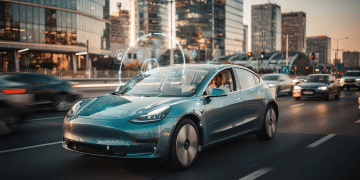
The U.S. is anticipating a substantial transformation in its transportation landscape, with a projected 20% growth in autonomous vehicle fleets by 2026, signaling a significant shift towards smart, self-driving mobility solutions.
The future of mobility is rapidly approaching, and at its forefront is the undeniable rise of autonomous vehicles. We are on the cusp of a profound shift, with analysts projecting a remarkable 20% growth in autonomous vehicle fleets across the U.S. by 2026. This isn’t merely a technological fantasy; it’s a tangible reality that promises to redefine how we travel, commute, and interact with our urban environments. This article delves into the forces driving this expansion, the innovations making it possible, and the potential impact it will have on American society.
The driving forces behind autonomous fleet expansion
The anticipated surge in autonomous vehicle fleets is not a singular phenomenon but rather the culmination of several powerful trends converging. Understanding these drivers is crucial to grasping the magnitude of the transformation ahead. From economic incentives to societal demands, various factors are accelerating the adoption of self-driving technology in commercial and public sectors.
economic efficiency and operational benefits
One of the primary catalysts for the growth of autonomous fleets is the promise of unparalleled economic efficiency. Businesses, particularly in logistics and ride-sharing, stand to gain significantly from reduced operational costs.
- Labor cost reduction: Eliminating the need for human drivers can drastically cut expenses related to salaries, benefits, and training.
- Optimized fuel consumption: Autonomous systems can drive more efficiently, leading to lower fuel usage and maintenance costs.
- Increased asset utilization: Vehicles can operate almost continuously, maximizing their productive hours and return on investment.
These financial advantages make a compelling case for companies to invest heavily in autonomous solutions, pushing the market forward at an accelerated pace.
technological advancements and infrastructure readiness
Beyond economics, the relentless march of technological innovation is a key enabler. Significant breakthroughs in artificial intelligence, sensor technology, and connectivity are making autonomous operation safer and more reliable than ever before.
Modern autonomous vehicles integrate sophisticated systems that allow them to perceive their environment, predict potential hazards, and navigate complex traffic scenarios with increasing proficiency. Furthermore, efforts to upgrade national infrastructure, including the deployment of 5G networks and smart city initiatives, are creating a more conducive environment for these vehicles to operate seamlessly. This synergy between vehicle intelligence and external infrastructure is vital for widespread adoption.
The confluence of economic benefits and advanced technology forms the bedrock of the projected growth, creating an irresistible momentum for autonomous vehicle fleet expansion across the U.S.
Key technologies powering self-driving vehicles
The journey towards fully autonomous vehicle fleets is underpinned by a sophisticated array of technologies that work in concert to replicate and surpass human driving capabilities. These innovations are continually evolving, pushing the boundaries of what’s possible in vehicle autonomy.
sensor fusion and perception systems
At the heart of every autonomous vehicle lies its perception system, a complex network of sensors designed to ‘see’ and interpret the surrounding world. This involves a technique known as sensor fusion, where data from multiple sensor types is combined to create a comprehensive and robust understanding of the environment.
- Lidar (light detection and ranging): Provides precise 3D mapping of the surroundings, crucial for object detection and distance measurement.
- Radar: Excellent for detecting objects and their velocities in adverse weather conditions, complementing lidar and cameras.
- Cameras: Offer high-resolution visual data, essential for recognizing traffic lights, signs, and lane markings.
- Ultrasonic sensors: Used for short-range detection, especially helpful for parking and low-speed maneuvers.
By fusing data from these diverse sensors, autonomous vehicles can achieve a highly accurate and redundant perception of their operational domain, enhancing safety and reliability.
artificial intelligence and machine learning algorithms
The raw data collected by sensors is meaningless without intelligent processing. This is where artificial intelligence (AI) and machine learning (ML) algorithms come into play. These advanced computational techniques enable autonomous vehicles to learn from vast datasets, make real-time decisions, and adapt to unforeseen circumstances.
AI models are trained on millions of miles of driving data, allowing them to recognize patterns, predict the behavior of other road users, and navigate complex situations. Machine learning algorithms continuously refine their understanding, improving performance over time. This adaptive intelligence is critical for handling the unpredictable nature of real-world driving environments and for ensuring the safety and efficiency of autonomous operations.

The continuous advancement in sensor fusion and AI/ML algorithms is directly fueling the expansion of autonomous vehicle fleets, moving us closer to a future where self-driving is commonplace and highly reliable.
Regulatory landscape and policy implications
While technological advancements are crucial, the growth of autonomous vehicle fleets is equally dependent on a supportive and clear regulatory framework. Governments at both federal and state levels are grappling with how to safely and effectively integrate these revolutionary vehicles into existing transportation systems.
federal guidelines and state-level initiatives
In the U.S., the regulatory approach to autonomous vehicles has been a mix of federal guidance and state-led initiatives. The National Highway Traffic Safety Administration (NHTSA) has issued voluntary guidelines, focusing on safety assessments and best practices, rather than prescriptive regulations. This allows for innovation while encouraging a safety-first approach.
However, many of the specific operational rules and licensing requirements fall to individual states. This has resulted in a patchwork of regulations across the country, with some states being more permissive and proactive than others in allowing autonomous vehicle testing and deployment. Harmonizing these diverse state laws will be essential for the seamless interstate operation of autonomous fleets.
addressing public safety and liability concerns
Perhaps the most significant challenge in the regulatory sphere is addressing public safety and liability. The introduction of vehicles that operate without direct human control raises complex questions about accountability in the event of an accident. Who is responsible when an autonomous vehicle is involved in a collision? Is it the manufacturer, the software developer, the fleet operator, or a combination?
- Data recording requirements: Mandating robust data recorders (like black boxes) to reconstruct events leading to an incident.
- Cybersecurity protocols: Ensuring autonomous systems are protected from hacking and unauthorized access.
- Standardized testing and certification: Developing rigorous testing procedures and certification processes for autonomous driving systems.
Policymakers are actively working to establish clear legal frameworks that assign liability, ensure public trust, and foster continued innovation. The success of autonomous vehicle fleets hinges on the ability to navigate these complex regulatory waters effectively and build public confidence.
Economic impact and job market shifts
The widespread adoption of autonomous vehicle fleets is poised to create significant economic ripples, transforming industries and reshaping the job market. While some sectors will experience disruption, new opportunities are also expected to emerge, leading to a dynamic period of transition.
transformation of logistics and transportation industries
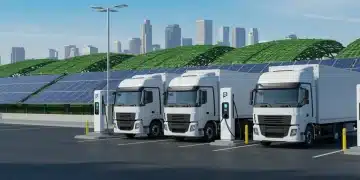
The logistics and transportation sectors are among the first to feel the profound impact of autonomous technology. Self-driving trucks, delivery vans, and robotaxis promise to revolutionize how goods are moved and people are transported. This could lead to:
- Reduced shipping costs: Lower operational expenses for freight carriers could translate to more affordable goods for consumers.
- Increased delivery speed: Autonomous vehicles can operate almost continuously, potentially shortening delivery times.
- Optimized routing: AI-powered systems can plan the most efficient routes, further enhancing speed and cost-effectiveness.
Ride-sharing services are also expected to undergo a radical transformation, potentially offering more affordable and accessible transportation options to a wider demographic.
new job creation and workforce retraining
While concerns about job displacement, particularly for professional drivers, are valid, the rise of autonomous fleets is also anticipated to create a wave of new jobs. These roles will primarily be in areas such as:
- Autonomous system development: Engineers, AI specialists, and software developers to design and refine the technology.
- Fleet management and maintenance: Technicians specializing in servicing and maintaining complex autonomous vehicles.
- Data analysis and cybersecurity: Experts to manage the vast amounts of data generated and protect systems from threats.
- Remote monitoring and support: Human operators providing oversight and intervention for autonomous operations.
The challenge lies in preparing the current workforce for these new roles through retraining and education programs. Governments and educational institutions will play a critical role in facilitating this transition to ensure a smooth adaptation to the evolving economic landscape shaped by autonomous vehicle fleets.
Environmental benefits and urban planning
Beyond economic and technological considerations, the widespread deployment of autonomous vehicle fleets holds significant promise for environmental sustainability and the reimagining of urban spaces. These benefits could address long-standing challenges associated with traditional transportation.
reduced emissions and energy consumption
A major environmental advantage of autonomous fleets stems from their inherent efficiency. Many autonomous vehicles are designed to be electric, contributing directly to a reduction in tailpipe emissions. Even for internal combustion engine vehicles, autonomous driving can lead to more efficient operation:
- Smoother acceleration and braking: Minimizes fuel waste associated with erratic human driving.
- Optimized traffic flow: Autonomous vehicles can communicate with each other and infrastructure to reduce congestion, which is a major contributor to emissions.
- Route optimization: AI-driven navigation ensures the shortest and most efficient paths, reducing overall travel distance and energy use.
These efficiencies contribute to cleaner air and a reduced carbon footprint, aligning with global efforts to combat climate change.
reclaiming urban spaces and smart city integration
The impact of autonomous fleets on urban planning could be transformative. With fewer privately owned vehicles and more shared, on-demand autonomous services, cities could see a significant reduction in the need for parking spaces. This freed-up land could be repurposed for parks, housing, or other community amenities.
Furthermore, autonomous vehicles are a cornerstone of the smart city concept. Their ability to communicate with urban infrastructure, such as smart traffic lights and public transport systems, can lead to a more harmonized and efficient urban environment. This integration could result in:
- Reduced traffic congestion: Intelligent routing and coordinated movement of vehicles.
- Improved public safety: Fewer human errors on the road.
- Enhanced accessibility: On-demand mobility for populations currently underserved by traditional transport.
The environmental and urban planning benefits underscore the potential for autonomous vehicle fleets to not only change how we move but also how we live within our cities.
Challenges and societal considerations
While the prospect of a 20% growth in autonomous vehicle fleets by 2026 is exciting, it’s crucial to acknowledge the significant challenges and societal considerations that must be addressed for this future to be truly successful and equitable.
public acceptance and trust
One of the most critical hurdles is gaining widespread public acceptance and trust. Despite advances in technology, many individuals remain skeptical or apprehensive about riding in or sharing roads with self-driving vehicles. High-profile incidents, even if rare, can significantly erode public confidence.
Overcoming this will require:
- Transparent communication: Clearly explaining the safety measures and operational capabilities of autonomous systems.
- Extensive public education: Familiarizing the public with the technology and its benefits.
- Demonstrated safety records: Accumulating billions of safe miles to build undeniable proof of reliability.
Without public trust, even the most advanced technology will struggle to achieve mass adoption.
ethical dilemmas and algorithmic bias
Autonomous vehicles face complex ethical dilemmas, particularly in unavoidable accident scenarios where difficult choices must be made. Programming these vehicles to prioritize certain outcomes over others raises profound moral questions that society is still grappling with. Furthermore, there’s the risk of algorithmic bias, where the AI systems might inadvertently discriminate or perform suboptimally for certain demographics due to biases in their training data.
Addressing these ethical considerations requires:
- Diverse and representative data sets: Ensuring AI is trained on data that reflects the full spectrum of driving conditions and populations.
- Ethical guidelines for programming: Developing clear principles for how autonomous systems should make decisions in critical situations.
- Public discourse and consensus: Engaging society in conversations about the values and priorities embedded in autonomous vehicle behavior.
Successfully navigating these challenges will be paramount to realizing the full potential of autonomous vehicle fleets and ensuring their integration benefits all members of society.
| Key Aspect | Brief Description |
|---|---|
| Projected Growth | U.S. autonomous vehicle fleets expected to grow by 20% by 2026. |
| Key Drivers | Economic efficiency, advanced AI/sensor tech, and evolving regulations. |
| Societal Impact | Job market shifts, environmental benefits, urban planning changes, and ethical debates. |
| Challenges | Public trust, regulatory harmonization, cybersecurity, and ethical programming. |
Frequently asked questions about autonomous vehicle fleets
The growth is primarily driven by the promise of significant economic efficiencies, such as reduced labor and operational costs, coupled with rapid advancements in AI, sensor technology, and connectivity. These factors make autonomous solutions increasingly attractive for commercial and public transportation.
While some jobs, particularly in professional driving, may be displaced, new opportunities are expected to emerge in areas like AI development, fleet maintenance, data analysis, and remote monitoring. Workforce retraining initiatives will be crucial for a smooth transition.
Autonomous fleets, especially electric ones, promise reduced emissions and optimized energy consumption through smoother driving, better traffic flow, and efficient route planning. This contributes to cleaner air and a smaller carbon footprint in urban areas.
Key regulatory challenges include harmonizing diverse state-level laws, establishing clear liability frameworks for accidents, ensuring robust cybersecurity, and developing standardized testing and certification processes to guarantee public safety and trust.
Cities could see a reduction in the need for vast parking spaces, allowing for repurposing land for other uses. Autonomous vehicles will also integrate with smart city infrastructure to improve traffic flow, enhance public safety, and increase accessibility for residents.
Conclusion
The projected 20% growth in autonomous vehicle fleets across the U.S. by 2026 represents more than just a technological upgrade; it signals a fundamental transformation of our transportation ecosystem. Driven by compelling economic benefits, relentless technological innovation, and a growing emphasis on environmental sustainability, this shift promises a future of enhanced efficiency, safety, and connectivity. While significant challenges remain, particularly in regulatory harmonization, public trust, and ethical considerations, the momentum towards autonomous mobility is undeniable. As stakeholders continue to collaborate on solutions, the vision of smarter, self-driving fleets becoming an integral part of American life is rapidly moving from concept to reality, ushering in a new era of mobility.