EV Tax Credit 2026: Impact on US Manufacturing & Incentives
The $7,500 EV Tax Credit in 2026: A Deep Dive into its Influence on US Manufacturing
The landscape of the automotive industry is undergoing a monumental transformation, driven significantly by the global push towards electrification. At the heart of this shift, particularly within the United States, lies the federal electric vehicle (EV) tax credit. As we look ahead to 2026, the $7,500 EV tax credit stands as a pivotal incentive, not just for consumers eyeing a cleaner ride, but more profoundly, for the revitalization and reorientation of US manufacturing. This comprehensive exploration will delve into the intricacies of the EV tax credit 2026, examining its eligibility requirements, its intended and actual impact on domestic production, and the broader implications for the American economy and its workforce. Understanding this credit is crucial for manufacturers, policymakers, and consumers alike, as it shapes the future of sustainable transportation.
The Inflation Reduction Act (IRA) of 2022 fundamentally reshaped the federal EV tax credit, introducing stringent requirements designed to bolster domestic manufacturing and reduce reliance on foreign supply chains, especially from countries deemed problematic. These changes are not static; they evolve, with 2026 being a significant benchmark year. The full $7,500 credit is segmented, with half contingent on battery component sourcing and the other half on critical mineral extraction and processing. This dual requirement creates a powerful incentive for automakers to localize their supply chains, fostering a robust ecosystem of EV-related manufacturing within the United States.
The primary objective behind these stringent criteria is clear: to stimulate the growth of a self-sufficient and resilient domestic EV supply chain. This includes everything from mining and processing critical minerals, to manufacturing battery cells and packs, and finally, assembling the vehicles themselves on American soil. By tying the tax credit directly to these domestic content requirements, the government aims to create jobs, reduce geopolitical vulnerabilities, and ensure that the economic benefits of the EV revolution accrue within the United States. The implications of the EV tax credit 2026 extend far beyond merely incentivizing purchases; it’s a strategic industrial policy designed to reindustrialize America around the technology of the future.
Understanding the $7,500 EV Tax Credit: 2026 Criteria Explained
For consumers to qualify for the full $7,500 federal tax credit for new clean vehicles in 2026, several key criteria must be met, primarily revolving around the vehicle’s manufacturing origin and its battery components. These requirements are a direct result of the Inflation Reduction Act (IRA) and are designed to accelerate the development of a domestic EV supply chain.
Vehicle Assembly Requirements
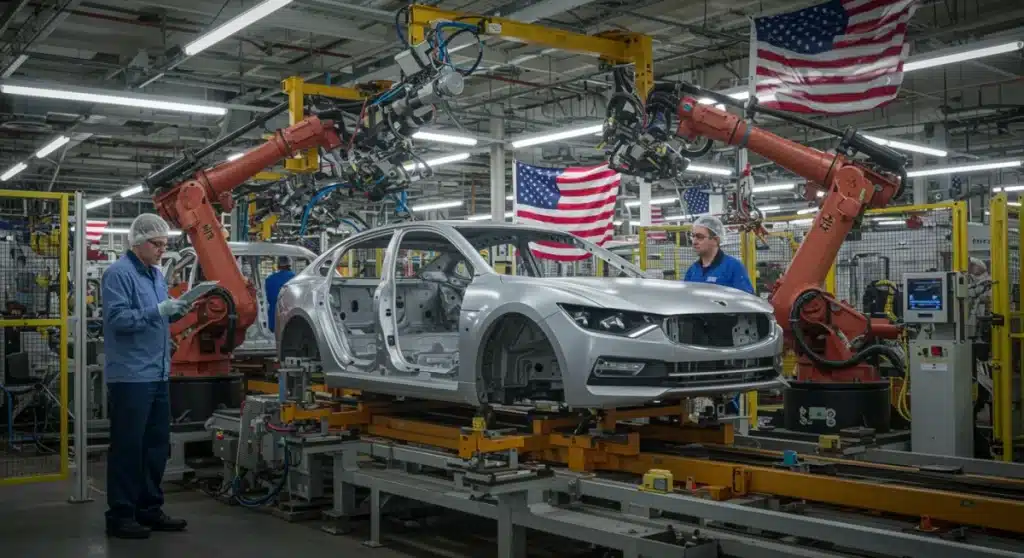
First and foremost, the vehicle must undergo final assembly in North America. This stipulation has already prompted numerous automakers to shift or expand their production facilities within the US, Canada, and Mexico. For example, companies like General Motors, Ford, and Hyundai have announced significant investments in North American assembly plants to ensure their eligible models meet this criterion. This requirement aims to create manufacturing jobs and strengthen the regional automotive industry.
Battery Component Sourcing
The tax credit is split into two halves, each worth $3,750, based on different aspects of the battery. The first half, $3,750, is contingent on the percentage of battery components manufactured or assembled in North America. For vehicles placed in service in 2026, a significant percentage of the value of battery components must be manufactured or assembled in North America. This percentage threshold increases annually, making 2026 a critical year for supply chain adjustments. The goal here is to reduce reliance on foreign battery manufacturers and foster a robust domestic battery manufacturing industry.
Critical Mineral Sourcing
The second $3,750 portion of the credit depends on the percentage of the value of critical minerals contained in the battery that were extracted or processed in the United States, or in a country with which the United States has a free trade agreement, or recycled in North America. Similar to battery components, this percentage also escalates each year. This is arguably the most challenging requirement for automakers, as the global supply chain for critical minerals like lithium, cobalt, and nickel is highly concentrated outside of North America and its free-trade partners. Meeting this criterion necessitates significant investments in domestic mining, refining, and recycling infrastructure, or forging new strategic partnerships.
Manufacturer’s Suggested Retail Price (MSRP) Limits
Beyond the manufacturing and sourcing requirements, there are also MSRP limitations. For vans, SUVs, and pickup trucks, the MSRP cannot exceed $80,000. For other vehicles, the limit is $55,000. These price caps ensure that the tax credit benefits a broader range of consumers and promotes the production of more affordable EVs.
Buyer Income Limitations
To ensure the credit benefits middle- and lower-income individuals, there are income thresholds for purchasers. For married couples filing jointly, the modified adjusted gross income (MAGI) cannot exceed $300,000. For heads of households, it’s $225,000, and for all other filers, it’s $150,000. These limitations aim to make the tax credit more equitable and prevent it from disproportionately benefiting high-income earners.
These evolving criteria for the EV tax credit 2026 underscore a deliberate governmental strategy to not only accelerate EV adoption but, more importantly, to anchor the entire EV ecosystem firmly within North America.
Boosting US Manufacturing: The Core Objective of the EV Tax Credit
The primary impetus behind the stringent requirements of the EV tax credit 2026 is a strategic commitment to invigorate and reorient US manufacturing. This isn’t merely about assembling cars; it’s about building an entirely new industrial base, from the ground up, that can compete globally in the burgeoning EV market. The incentives are designed to foster an ecosystem where every stage of EV production, from raw materials to finished vehicles, has a significant presence on American soil.
Incentivizing Domestic Production and Assembly
The requirement for final assembly in North America has already led to a surge in investment in US automotive plants. Companies are expanding existing facilities and constructing new ones, creating thousands of direct manufacturing jobs. This localization reduces transportation costs, shortens supply chains, and makes production more resilient to global disruptions. Furthermore, it ensures that the economic benefits of vehicle production, including wages, taxes, and related services, remain within the domestic economy. The emphasis on North American assembly is a foundational step in securing a competitive edge in the global EV market.
Strengthening the Battery Supply Chain
Perhaps the most transformative aspect of the credit lies in its focus on battery components and critical minerals. Historically, the US has been heavily reliant on East Asian countries for battery manufacturing and the processing of critical minerals. The EV tax credit 2026 aims to reverse this trend by making domestic sourcing a prerequisite for the incentive. This has spurred an unprecedented wave of investment in US-based battery gigafactories and mineral processing facilities.
For example, companies are investing billions in new lithium extraction and processing plants, nickel refineries, and graphite anode facilities across the US. This not only creates high-paying jobs in advanced manufacturing but also significantly de-risks the EV supply chain from geopolitical tensions and trade disputes. By 2026, the expectation is that a substantial portion of the batteries powering eligible EVs will be made with components and minerals sourced and processed within North America or its free-trade partners, creating a more secure and sustainable supply chain.
Job Creation and Economic Impact
The ripple effect of these investments is substantial. Beyond direct manufacturing jobs in assembly plants and battery factories, there’s a significant increase in demand for skilled labor in related industries: engineering, research and development, logistics, construction, and maintenance. The growth of the domestic EV supply chain also stimulates local economies, boosting demand for goods and services from supporting businesses. This comprehensive approach to industrial policy is designed to foster a virtuous cycle of investment, job creation, and economic growth, positioning the US as a leader in the global EV transition.
The long-term vision is to create a robust, self-sufficient, and innovative manufacturing base that can not only meet domestic demand but also become a global exporter of EV technology and components. The EV tax credit 2026 is a powerful tool in achieving this vision, transforming the industrial landscape of the United States.
Challenges and Opportunities for Automakers and Suppliers
While the EV tax credit 2026 presents significant opportunities for bolstering US manufacturing, it also introduces a myriad of challenges for automakers and their extensive network of suppliers. Navigating these complexities will determine which companies thrive in the evolving EV landscape.
Supply Chain Restructuring: A Herculean Task
The most immediate and formidable challenge is the wholesale restructuring of global supply chains. Automakers have spent decades optimizing their supply networks for efficiency and cost-effectiveness, often relying on global sourcing. The IRA’s requirements demand a rapid pivot towards North American and free-trade partner sourcing for critical minerals and battery components. This involves:
- Identifying and Securing Domestic Sources: Finding adequate and cost-competitive sources for critical minerals like lithium, cobalt, nickel, and graphite within the US or its free-trade partners is a massive undertaking. The US has significant mineral reserves, but developing new mines and processing facilities is time-consuming, capital-intensive, and often faces environmental and community opposition.
- Building New Infrastructure: Establishing new battery cell and pack manufacturing facilities, as well as mineral processing plants, requires enormous capital investment and a skilled workforce that may not yet exist in sufficient numbers. The lead time for such projects can be several years, making the 2026 deadlines particularly challenging.
- Geopolitical Considerations: The definition of a ‘foreign entity of concern’ (FEOC) further complicates sourcing, effectively excluding certain countries from the supply chain for eligible vehicles. This necessitates careful vetting of all suppliers, down to the raw material level.
Cost Implications and Price Competitiveness
Localizing supply chains can initially increase production costs. While the tax credit aims to offset these costs for consumers, automakers must balance domestic sourcing with maintaining competitive pricing, especially as the EV market becomes more saturated. The efficiency gains from established global supply chains are hard to replicate quickly, and new domestic facilities may operate at higher costs in their initial phases. This could put pressure on profit margins and potentially impact the affordability of some EV models.
Technological Advancements and Innovation
The requirements also present an opportunity for technological innovation. Companies are investing in advanced battery chemistries that use fewer critical minerals or are easier to recycle. There’s also a push towards more efficient and environmentally friendly mining and processing techniques. This drive for innovation could lead to breakthroughs that make the entire EV supply chain more sustainable and cost-effective in the long run.
Workforce Development
The expansion of US manufacturing requires a significant increase in a skilled labor force. This includes engineers, technicians, and factory workers trained in EV-specific production processes, battery manufacturing, and advanced robotics. Educational institutions, vocational schools, and government programs will need to collaborate with industry to develop the necessary talent pipeline. This represents a substantial opportunity for job creation and workforce reskilling across the nation.
Ultimately, the EV tax credit 2026 acts as a powerful catalyst, forcing a rapid evolution within the automotive sector. Those companies that can adapt quickly, invest strategically in domestic capabilities, and innovate their supply chains will be best positioned to capitalize on the benefits and secure a leading role in the future of electric mobility.
Consumer Adoption and Market Dynamics in 2026
The federal EV tax credit has always been a significant factor in consumer purchasing decisions, and its evolution towards 2026 will continue to shape market dynamics. The changes introduced by the IRA, particularly regarding eligibility, are designed to not only boost US manufacturing but also to guide consumer choices towards domestically produced and sourced electric vehicles.
Impact on Vehicle Availability and Price
As the domestic content requirements for the EV tax credit 2026 become stricter, the pool of eligible vehicles may initially shrink, especially for models from manufacturers that have been slower to localize their supply chains. This could lead to a temporary reduction in consumer choice for the full $7,500 credit. However, as automakers adapt and bring more compliant models to market, the availability of eligible EVs is expected to increase significantly.
The interplay between manufacturing costs and the tax credit will also influence pricing. While domestic production might initially be more expensive, the $7,500 credit provides a substantial price reduction for eligible vehicles, making them more competitive against internal combustion engine (ICE) cars and non-compliant EVs. This could accelerate the price parity point between EVs and ICE vehicles, making electric options more attractive to a broader segment of the population.
Consumer Awareness and Decision-Making
A key challenge will be ensuring consumer awareness of the complex eligibility criteria. The dynamic nature of the credit – with different models becoming eligible or ineligible based on their component sourcing – can create confusion. Clear communication from automakers, dealerships, and government agencies will be crucial to help consumers understand which vehicles qualify for the full credit and why.
The income limitations also mean that the credit is targeted more effectively. This ensures that the incentive supports a broader demographic, potentially expanding the market beyond early adopters and high-income buyers. As charging infrastructure continues to expand and battery ranges improve, combined with the financial incentive, consumer confidence in EVs is expected to grow.
The Role of Point-of-Sale Rebates
A significant change implemented in 2024, which will continue into 2026, is the ability to transfer the tax credit to the dealership at the point of sale. This effectively turns the credit into an immediate rebate, making EVs instantly more affordable. This immediate financial benefit removes the burden of waiting until tax season to realize the savings, which is a powerful driver for consumer adoption. It simplifies the purchasing process and makes the financial benefit more tangible, further accelerating the transition to electric vehicles.
The EV tax credit 2026, with its evolving rules and immediate rebate option, is poised to play a critical role in normalizing EV ownership. As more compliant, affordable, and desirable electric vehicles become available, supported by a robust domestic manufacturing base, the US market is expected to see sustained growth in EV adoption.
The Broader Economic and Environmental Impact
The strategic deployment of the EV tax credit 2026 extends far beyond the automotive sector, promising profound economic and environmental benefits for the United States. It represents a coordinated effort to address climate change, enhance national security, and stimulate long-term economic growth.
Economic Resilience and National Security
By fostering a domestic EV supply chain, the US significantly enhances its economic resilience. Reduced reliance on foreign sources for critical minerals and battery components mitigates vulnerabilities to geopolitical instability, trade disruptions, and price volatility. This strategic independence is a crucial aspect of national security, ensuring that a vital industry for the 21st century is controlled and sustained within its borders.
The investments in mining, processing, and manufacturing create new industries and diversify the American economy. This diversification makes the economy less susceptible to downturns in traditional sectors and positions the US as a leader in green technology. The influx of capital and innovation also stimulates ancillary industries, from software development for EV charging networks to advanced materials research.
Environmental Benefits and Climate Goals
The overarching environmental goal of promoting EVs is to reduce greenhouse gas emissions from the transportation sector, which is a major contributor to climate change. By incentivizing the purchase of EVs, the tax credit directly supports the transition away from fossil fuel dependence. As the electricity grid becomes cleaner through increased renewable energy sources, the environmental benefits of EVs will only amplify.
Furthermore, the focus on domestic sourcing and recycling of critical minerals can lead to more environmentally responsible practices. While mining always carries an environmental footprint, stricter US regulations and innovative technologies can ensure that extraction and processing are conducted with higher environmental standards compared to some overseas operations. The emphasis on recycling also promotes a circular economy, reducing the need for new raw materials and minimizing waste.
Global Competitiveness
The aggressive industrial policy embedded within the EV tax credit 2026 is not just about domestic benefits; it’s about positioning the United States as a global leader in the EV revolution. By building a robust domestic manufacturing base and fostering innovation, the US aims to compete effectively with other major automotive manufacturing nations, particularly China and European countries, which also have their own aggressive EV industrial policies. This competition can drive further innovation, improve product quality, and ultimately accelerate the global transition to sustainable transportation.
In essence, the EV tax credit 2026 is more than just a consumer rebate; it’s a strategic national investment. It’s a policy instrument designed to reshape the American industrial landscape, create a sustainable economic future, and contribute significantly to global climate goals, all while enhancing national security and fostering economic independence.
The Future Outlook: Beyond 2026
While 2026 is a critical year for the EV tax credit and its associated manufacturing requirements, the trajectory of the electric vehicle industry and related policies extends far beyond this immediate horizon. The framework established by the IRA is designed to be a long-term catalyst, continuously adapting to technological advancements, market demands, and geopolitical shifts.
Continued Evolution of Requirements
It is highly probable that the specific percentages for battery component and critical mineral sourcing will continue to evolve past 2026, likely increasing in stringency to further solidify domestic supply chains. Policymakers may also introduce new criteria or adapt existing ones to address emerging challenges, such as the scalability of certain mineral extraction processes or the development of next-generation battery technologies.
The definition of ‘foreign entity of concern’ could also be subject to review, potentially impacting sourcing strategies. Automakers will need to maintain agility and foresight in their long-term planning, continuously monitoring legislative developments and adjusting their supply chain investments accordingly.
Technological Advancements and Their Influence
The pace of innovation in battery technology is rapid. Solid-state batteries, sodium-ion batteries, and other novel chemistries could significantly alter the demand for specific critical minerals. Policies like the EV tax credit 2026 will need to remain flexible enough to encourage these advancements without inadvertently penalizing new, more sustainable technologies that might have different material requirements or production processes. The goal should be to foster innovation while maintaining the core objective of domestic industrial growth.
Infrastructure Development and Grid Modernization
Beyond vehicle manufacturing, the long-term success of the EV transition hinges on robust charging infrastructure and a modernized electricity grid. Future policies will likely continue to support the expansion of charging networks, particularly in underserved areas, and incentivize investments in grid upgrades and renewable energy generation to ensure that the increased demand from EVs is met sustainably. The synergy between EV adoption and a clean energy grid is paramount for realizing the full environmental benefits.
Global Competition and Collaboration
The US will not be alone in pursuing aggressive EV industrial policies. Other nations will continue to implement their own incentives and regulations, leading to a dynamic global competitive landscape. Future US policy might involve strategic international collaborations to secure access to critical resources or to standardize charging technologies, balancing domestic industrial interests with global partnerships.
Consumer Behavior and Market Maturation
As the EV market matures, consumer preferences will also evolve. Factors like vehicle range, charging speed, design, and vehicle-to-grid (V2G) capabilities will become increasingly important. Future iterations of incentives or regulations might shift focus from purely purchase incentives to supporting these broader aspects of EV ownership, ensuring a seamless and appealing user experience. The ultimate goal is to reach a point where EVs are the default choice for consumers, even without significant direct financial incentives, driven by their superior performance, lower running costs, and environmental benefits.
In conclusion, the EV tax credit 2026 is a significant waypoint in a much longer journey towards a fully electrified transportation system and a revitalized American manufacturing sector. Its design reflects a proactive approach to industrial policy, aiming to secure economic independence, foster innovation, and accelerate the transition to a sustainable future. The continuous adaptation of these policies will be key to navigating the complexities and harnessing the full potential of the electric vehicle revolution.