Hydrogen Fuel Cell EVs 2026: Viable Alternative to Battery Electric by 2030?
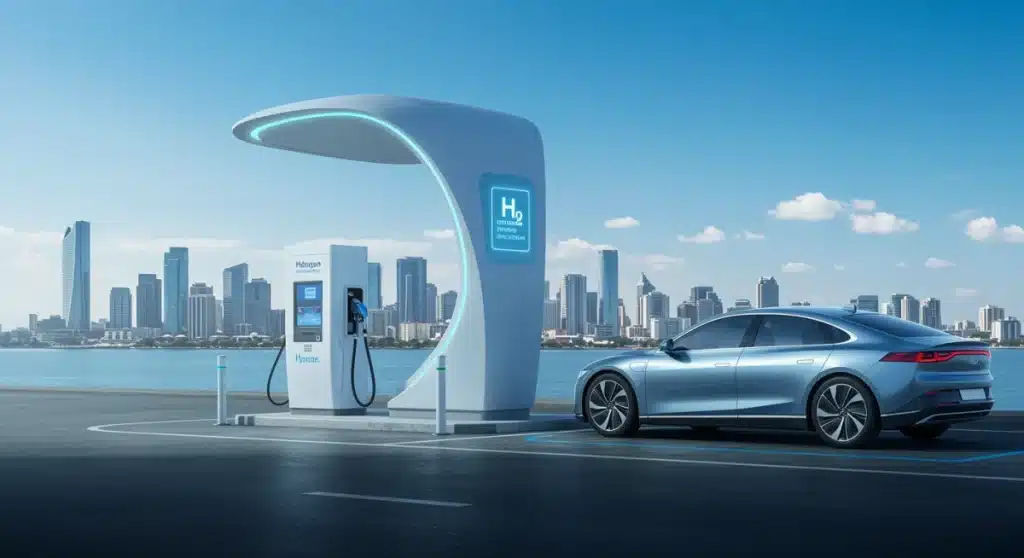
Hydrogen Fuel Cell EVs 2026: Viable Alternative to Battery Electric by 2030?
The automotive industry is in the midst of a profound transformation, driven by the urgent need to decarbonize transportation and combat climate change. At the forefront of this revolution are electric vehicles (EVs), broadly categorized into Battery Electric Vehicles (BEVs) and Hydrogen Fuel Cell Electric Vehicles (FCEVs). While BEVs have dominated headlines and sales figures in recent years, the discussion around the long-term viability and potential of hydrogen fuel cell EVs is gaining significant traction, especially as we look towards 2026 and beyond to 2030.
For years, the debate between BEVs and FCEVs has been akin to a technological chess match, with each side presenting compelling arguments. BEVs boast simpler powertrains, established charging infrastructure (albeit still expanding), and impressive acceleration. However, they are often constrained by range anxiety, long charging times, and the environmental impact of battery production and disposal. On the other hand, hydrogen fuel cell EVs offer quick refueling times comparable to gasoline cars, longer ranges, and emit only water vapor. Yet, they face challenges related to hydrogen production, storage, distribution, and the high cost of fuel cell technology.
As we approach 2026, the landscape is evolving rapidly. Significant investments are being made in hydrogen infrastructure, technological advancements are reducing costs and improving efficiency, and governments worldwide are exploring hydrogen as a key component of their clean energy strategies. This article aims to delve deep into the current state and future prospects of hydrogen fuel cell EVs. We will analyze whether they are poised to become a truly viable alternative to BEVs by 2030, examining the technological breakthroughs, infrastructure development, economic factors, environmental considerations, and potential market adoption that will shape their trajectory.
Understanding this dynamic is crucial for consumers, policymakers, and investors alike. Will the 2020s be the decade where hydrogen truly takes its place alongside batteries in the electric vehicle revolution? Or will it remain a niche, specialized solution? Let’s explore the multifaceted world of hydrogen fuel cell EVs and their journey towards a sustainable future.
The Core Technology: How Hydrogen Fuel Cell EVs Work
To understand the potential of hydrogen fuel cell EVs, it’s essential to grasp the fundamental technology behind them. Unlike BEVs, which store electricity in large battery packs, FCEVs generate electricity on board through a chemical reaction between hydrogen and oxygen. This process occurs in a device called a fuel cell stack.
The Fuel Cell Stack: The Heart of the FCEV
At its core, a fuel cell is an electrochemical device that converts the chemical energy of a fuel (hydrogen) and an oxidant (oxygen from the air) into electricity, water, and heat. The most common type used in automotive applications is the Proton Exchange Membrane (PEM) fuel cell. Inside the PEM fuel cell:
- Hydrogen gas (H2) is fed to the anode, where a catalyst separates it into protons (H+) and electrons (e-).
- The protons pass through a special membrane (the proton exchange membrane) to the cathode side.
- The electrons, unable to pass through the membrane, are forced to travel through an external circuit, creating an electric current that powers the electric motor.
- At the cathode, oxygen from the air combines with the protons and electrons to form water (H2O), which is the only emission.
This electricity then drives an electric motor, similar to a BEV. FCEVs also typically include a small battery pack to capture regenerative braking energy and provide a power boost during acceleration, acting as a buffer.
Advantages of FCEV Technology
The inherent design of hydrogen fuel cell EVs offers several compelling advantages:
- Rapid Refueling: One of the most significant benefits is the refueling time, which is comparable to filling a gasoline car – typically 3 to 5 minutes. This is a major differentiator from BEVs, where even fast charging can take 20-30 minutes for an 80% charge.
- Longer Range: FCEVs generally offer longer driving ranges on a single tank of hydrogen compared to most BEVs on a single charge. This can alleviate range anxiety for long-distance drivers.
- Zero Tailpipe Emissions: Like BEVs, FCEVs produce zero tailpipe emissions, only emitting water vapor, making them excellent candidates for improving urban air quality.
- Consistent Performance in Varied Climates: The performance of fuel cells is less affected by extreme cold weather than traditional lithium-ion batteries, which can see significant range degradation in low temperatures.
- Reduced Reliance on Critical Minerals: While fuel cells use platinum as a catalyst, the reliance on other rare earth metals and cobalt, common in BEV batteries, is mitigated.
Challenges and Ongoing Developments
Despite these advantages, hydrogen fuel cell EVs face significant hurdles:
- Hydrogen Production: Currently, a large percentage of hydrogen is produced from natural gas (grey hydrogen), a carbon-intensive process. The future hinges on scaling up ‘green hydrogen’ production, which uses renewable energy to split water.
- Storage: Storing hydrogen, especially in vehicles, requires high-pressure tanks (700 bar) or cryogenic temperatures for liquid hydrogen, adding complexity and cost.
- Distribution and Infrastructure: A widespread network of hydrogen refueling stations is still nascent, particularly compared to the growing network of EV charging stations. Building out this infrastructure is a chicken-and-egg problem: few FCEVs mean little incentive for stations, and few stations mean little incentive for FCEVs.
- Cost: The cost of fuel cell stacks and hydrogen storage tanks remains relatively high, impacting the purchase price of FCEVs.
However, significant research and development are addressing these challenges. Advancements in catalyst materials aim to reduce platinum usage, new methods for hydrogen storage are being explored, and large-scale green hydrogen projects are emerging globally. These developments are critical for hydrogen fuel cell EVs to become a truly viable alternative.
BEVs vs. FCEVs: A Head-to-Head Comparison for 2030
To assess the viability of hydrogen fuel cell EVs as an alternative to BEVs by 2030, a direct comparison across key metrics is essential. Both technologies are striving for the same goal – sustainable, emission-free transportation – but they approach it from different angles.
Performance and Driving Experience
Both BEVs and FCEVs offer a smooth, quiet driving experience due to their electric powertrains. BEVs often boast instant torque and rapid acceleration, making them feel sporty. FCEVs also provide excellent acceleration, and their power delivery is consistent throughout the drive. For long-haul applications, FCEVs’ consistent range and quick refueling are particularly attractive, whereas BEVs might require more frequent and longer stops for charging.
Refueling/Recharging Infrastructure
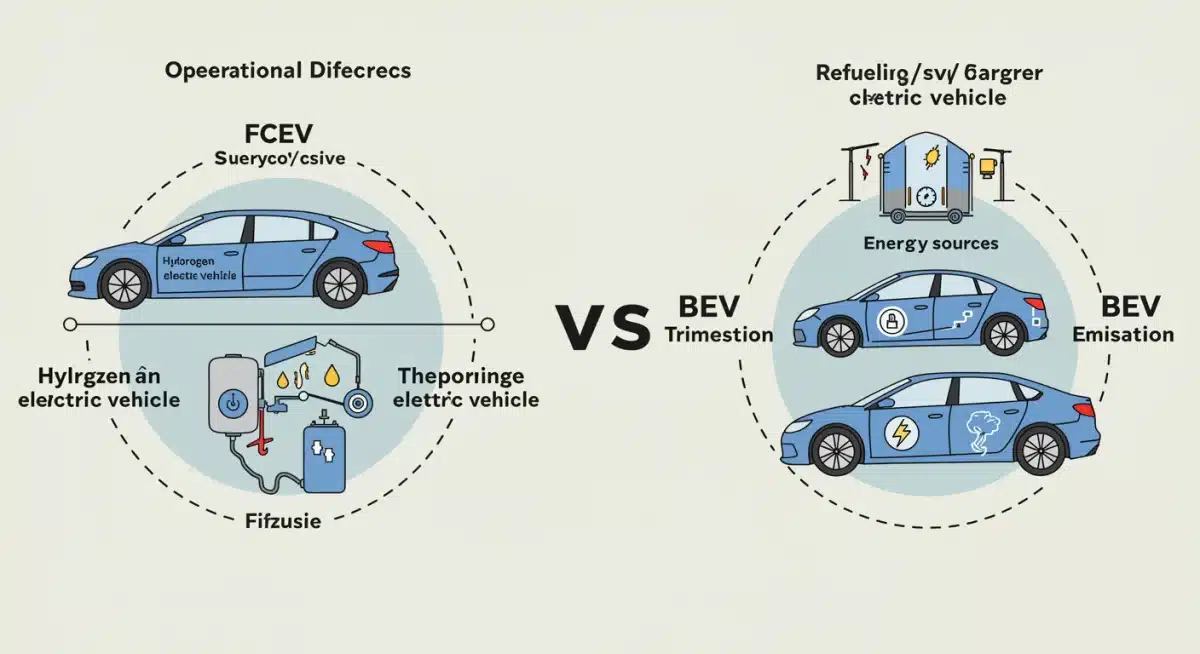
This is arguably the most significant battleground. BEV charging infrastructure has seen exponential growth, with a mix of home charging, public Level 2 chargers, and DC fast chargers. While still needing expansion, the options are becoming increasingly ubiquitous. Hydrogen fuel cell EVs, conversely, rely on a very limited network of hydrogen refueling stations. Building a comprehensive hydrogen infrastructure requires substantial investment and coordination, and it’s a race against time to catch up with BEV charging. By 2030, while BEV charging will be widespread, hydrogen infrastructure is likely to still be in its growth phase, potentially limiting FCEV adoption in many regions.
Cost of Ownership
Currently, FCEVs generally have a higher purchase price than comparable BEVs, primarily due to the complex fuel cell stack and high-pressure hydrogen storage tanks. The cost of hydrogen fuel itself can also be a factor, varying significantly based on production methods and regional availability. While the price of BEV batteries is decreasing, making BEVs more affordable, the cost reduction for FCEV components is also ongoing. By 2030, technological advancements could narrow this price gap, but BEVs are likely to retain a cost advantage in many consumer segments.
Environmental Impact: From Production to Disposal
Both BEVs and FCEVs are zero-emission at the tailpipe. However, their true environmental footprint depends on the entire lifecycle. For BEVs, the production of batteries, particularly the mining of raw materials like lithium, cobalt, and nickel, raises environmental and ethical concerns. Battery recycling infrastructure is improving but still needs to scale significantly. For FCEVs, the environmental impact is heavily tied to hydrogen production. ‘Grey hydrogen’ (from natural gas) has a high carbon footprint. The goal is ‘green hydrogen’ (from renewable electrolysis), which is truly clean. By 2030, the proportion of green hydrogen available will be a critical determinant of the FCEV’s overall environmental benefit. Both technologies face challenges in sustainable sourcing and end-of-life management, but the specific issues differ.
Energy Efficiency
From an energy efficiency perspective, BEVs are generally more efficient. The energy conversion chain for a BEV (electricity from grid to battery to motor) is simpler than for an FCEV (electricity from grid to hydrogen production to hydrogen storage to fuel cell to motor). Each conversion step involves some energy loss. However, FCEVs offer advantages in energy density for long-range applications and rapid energy replenishment, which are crucial for heavy-duty transport.
Safety Concerns
Both technologies have robust safety standards. Early concerns about hydrogen’s flammability have largely been addressed through advanced tank designs and safety protocols, making FCEVs as safe as gasoline vehicles in crash tests. Similarly, BEV battery fires, while rare, have led to enhanced safety features in battery packs. Both are considered safe for public use, with continuous improvements in engineering and regulation.
The Hydrogen Ecosystem: Production, Storage, and Distribution
The success of hydrogen fuel cell EVs is inextricably linked to the development of a robust and sustainable hydrogen ecosystem. This ecosystem encompasses how hydrogen is produced, stored, and distributed to refueling stations. Without a mature and efficient ecosystem, FCEVs cannot achieve widespread adoption.
Hydrogen Production: The Green Revolution
Currently, the vast majority of hydrogen is produced using steam methane reforming (SMR) from natural gas, often referred to as ‘grey hydrogen.’ This process is carbon-intensive, negating many of the environmental benefits of FCEVs. The future of hydrogen fuel cell EVs, and hydrogen as a clean energy carrier, depends on scaling up ‘green hydrogen’ production.
- Green Hydrogen: Produced through the electrolysis of water, using electricity generated from renewable sources like solar and wind power. This method results in zero carbon emissions. Significant investments are being poured into large-scale green hydrogen projects globally, with costs steadily decreasing as electrolyzer technology improves and renewable energy becomes cheaper.
- Blue Hydrogen: Produced from natural gas with carbon capture and storage (CCS) technology, which traps the CO2 emissions. While not entirely carbon-free, it represents a lower-carbon alternative to grey hydrogen and can serve as a bridge solution while green hydrogen scales up.
By 2030, the aim is for green hydrogen to be cost-competitive and widely available. Government incentives, carbon pricing, and technological breakthroughs in electrolyzers are critical drivers for this transition.
Storage Solutions: Overcoming Challenges
Storing hydrogen efficiently and safely is a major engineering challenge, both for large-scale infrastructure and in-vehicle applications.
- Compressed Gas: The most common method for vehicles. Hydrogen is stored at very high pressures (700 bar) in strong, lightweight composite tanks. These tanks are incredibly robust and have undergone extensive safety testing.
- Liquid Hydrogen: Requires cryogenic temperatures (-253°C), which is energy-intensive and leads to ‘boil-off’ losses over time. More suitable for very large-scale storage or long-haul heavy-duty applications where density is paramount.
- Solid-State Storage: Research is ongoing into storing hydrogen within solid materials (e.g., metal hydrides). While offering high density and potentially safer storage, these technologies are still in early development for automotive use.
Innovations in material science and tank design are continuously improving the safety, efficiency, and cost-effectiveness of hydrogen storage.
Distribution Networks: The Missing Link
The lack of a widespread distribution network for hydrogen is a significant barrier to FCEV adoption. This network includes pipelines, road tankers, and ultimately, refueling stations.
- Pipelines: Dedicated hydrogen pipelines are the most efficient way to transport large volumes of hydrogen over long distances. Existing natural gas pipelines can sometimes be repurposed or blended with hydrogen, though this presents technical challenges.
- Road Transport: Hydrogen is currently transported to refueling stations primarily via high-pressure tube trailers or cryogenic liquid tankers. This method is less efficient and more costly than pipelines but necessary in the absence of a pipeline network.
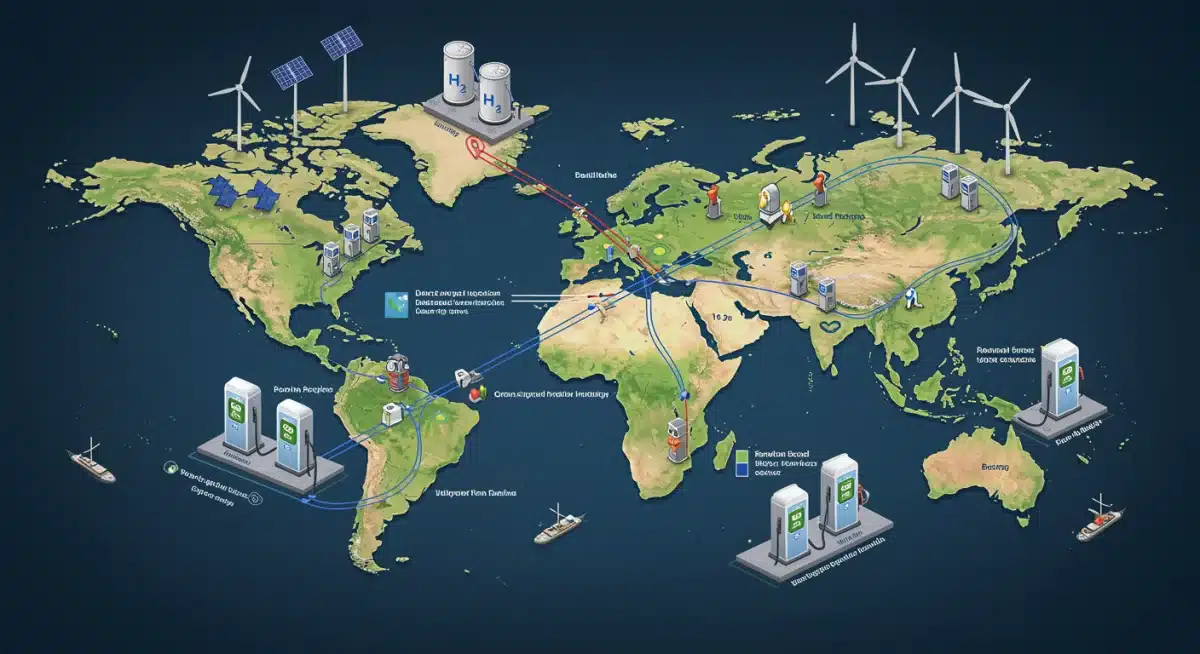
- Refueling Stations: The number of public hydrogen refueling stations is still very limited globally, concentrated in a few regions like California, Japan, South Korea, and parts of Europe. Building out this network is capital-intensive and requires strategic planning to ensure convenient access for FCEV owners.
By 2030, projections suggest a significant increase in hydrogen refueling stations, driven by government mandates and private sector investment. However, it is unlikely to match the density of BEV charging infrastructure in most regions by that time. The focus might initially be on ‘hydrogen corridors’ for heavy-duty transport and dense urban areas.
Market Adoption and Policy Support for Hydrogen Fuel Cell EVs
The trajectory of hydrogen fuel cell EVs from a niche technology to a potential mainstream alternative by 2030 is heavily influenced by market adoption rates and robust policy support. While BEVs have benefited from significant government incentives and consumer enthusiasm, FCEVs are carving out their own path, often targeting specific use cases first.
Current Market Status and Key Players
As of 2023, the FCEV market is considerably smaller than the BEV market. Toyota (Mirai) and Hyundai (Nexo) are the primary manufacturers offering passenger hydrogen fuel cell EVs to the public. Honda also had an FCEV, the Clarity Fuel Cell, though it has been discontinued. These vehicles are primarily sold or leased in regions with some existing hydrogen infrastructure, such as California, Japan, and South Korea.
However, the narrative shifts when considering heavy-duty transportation. Buses, trucks, trains, and even maritime vessels are increasingly seen as prime candidates for hydrogen fuel cells. Their higher energy requirements, longer routes, and the need for quick refueling make FCEVs a more compelling solution than BEVs, which would require massive, heavy battery packs and extensive charging downtime. Companies like Hyundai, Daimler Truck, Nikola, and others are heavily investing in hydrogen-powered commercial vehicles.
Government Policies and Incentives
Government policies play a pivotal role in nurturing emerging technologies. Many nations and regions have recognized hydrogen’s potential and are implementing strategies to accelerate its adoption:
- National Hydrogen Strategies: Countries like Germany, Japan, South Korea, Australia, and the European Union have developed comprehensive national hydrogen strategies, outlining plans for production, infrastructure, and deployment across various sectors, including transportation.
- Subsidies and Tax Credits: Incentives for purchasing FCEVs and developing hydrogen refueling infrastructure are crucial. These can include vehicle purchase subsidies, tax credits for hydrogen production, and grants for station development.
- Fleet Mandates: Some regions are exploring mandates for public and commercial fleets to adopt zero-emission vehicles, which could include FCEVs, particularly for heavy-duty applications.
- Research and Development Funding: Significant public funding is directed towards R&D to reduce the cost of fuel cells, improve hydrogen storage, and enhance overall system efficiency.
By 2030, the effectiveness of these policies will largely determine the pace of FCEV market growth. A concerted global effort is needed to create a level playing field with BEVs.
Consumer Perception and Education
Consumer awareness and perception are critical for mass adoption. Many consumers are still unfamiliar with hydrogen technology, and misconceptions about safety or availability persist. Effective public education campaigns highlighting the benefits and safety of FCEVs, coupled with visible infrastructure development, will be necessary to build trust and demand.
The Role of Industry Collaboration
The development of the hydrogen ecosystem requires unprecedented collaboration between automakers, energy companies, infrastructure providers, and governments. Initiatives like the Hydrogen Council bring together major corporations to advocate for and accelerate hydrogen deployment. Such partnerships are vital for standardizing technologies, sharing best practices, and pooling resources to overcome the significant investment hurdles.
While passenger FCEVs may not outsell BEVs by 2030, their presence as a viable alternative, particularly in specific market segments, is increasingly probable with sustained policy support and industry commitment.
Challenges and Opportunities on the Road to 2030
The journey for hydrogen fuel cell EVs to become a truly viable alternative to BEVs by 2030 is fraught with both significant challenges and exciting opportunities. Navigating these will define their role in the future of sustainable transportation.
Overcoming the ‘Chicken and Egg’ Problem
One of the most persistent challenges for FCEVs is the ‘chicken and egg’ dilemma: consumers won’t buy FCEVs without refueling stations, and companies won’t build stations without enough FCEVs on the road. This problem is slowly being addressed through strategic investments and government mandates that aim to kickstart both sides of the equation simultaneously. Focused deployment in specific corridors or regions first, rather than attempting a nationwide rollout all at once, seems to be the most pragmatic approach.
Cost Reduction and Scalability
The high cost of fuel cell stacks, hydrogen storage, and green hydrogen production remains a significant barrier. However, technological advancements, economies of scale, and increased competition are driving these costs down. Research into non-platinum catalysts, more efficient electrolyzers, and cheaper composite materials for tanks are crucial. As production volumes increase, the unit cost of hydrogen fuel cell EVs and hydrogen fuel is expected to decrease substantially by 2030, making them more competitive with BEVs and traditional internal combustion engine vehicles.
Ensuring a Green Hydrogen Supply Chain
The environmental credentials of FCEVs are contingent on the source of hydrogen. The rapid expansion of green hydrogen production capacity is paramount. This involves massive investments in renewable energy infrastructure (solar, wind) paired with electrolysis plants. Developing efficient and extensive hydrogen transport and storage networks from production sites to consumption points is also critical. Without a truly green and abundant hydrogen supply, the long-term sustainability argument for FCEVs weakens.
Competition from Advanced Battery Technology
While hydrogen technology is advancing, so too is battery technology. Solid-state batteries, for instance, promise higher energy density, faster charging, and improved safety, potentially eroding some of the FCEV’s range and refueling time advantages. The competition is not static; both technologies are evolving rapidly, and their relative strengths and weaknesses will continue to shift.
Opportunities in Specific Niches
Despite the challenges, FCEVs present significant opportunities in sectors where BEVs struggle. Heavy-duty trucks, buses, trains, forklifts, and even port equipment are ideal candidates due to their demanding operational cycles, weight sensitivity, and need for rapid refueling. For these applications, the energy density of hydrogen and quick turnaround times offer clear operational advantages over battery-electric alternatives. Focusing on these high-impact niches could allow the hydrogen ecosystem to mature and achieve scale before potentially expanding to broader consumer markets.
Energy Security and Diversification
Embracing hydrogen also offers benefits for energy security and diversification. Producing hydrogen from various renewable sources reduces reliance on fossil fuels and can utilize excess renewable energy that would otherwise be curtailed. This strategic advantage positions hydrogen as a key component of a resilient and diversified future energy mix.
By 2030, the success of hydrogen fuel cell EVs will likely depend on a balanced approach: continuous innovation to reduce costs, aggressive infrastructure buildout, strong government support, and strategic deployment in the most suitable market segments. It’s not necessarily about one technology winning, but about finding the optimal role for each in a diverse, sustainable transportation landscape.
The Path Forward: What to Expect by 2030 for Hydrogen Fuel Cell EVs
As we project towards 2030, the future of hydrogen fuel cell EVs appears to be one of strategic growth and increasing specialization, rather than an immediate overthrow of the dominant BEV market. While they may not achieve parity in passenger car sales, their role as a vital alternative in specific sectors is becoming increasingly clear.
Increased Focus on Heavy-Duty Applications
By 2030, expect to see a significant acceleration in the deployment of hydrogen fuel cell technology in heavy-duty vehicles. Long-haul trucks, municipal buses, and even trains and maritime vessels are prime candidates. The advantages of quick refueling, longer range, and lighter weight compared to large battery packs make FCEVs a highly attractive solution for these demanding applications. This segment will likely be the primary driver for hydrogen infrastructure expansion in the near term.
Regional Hubs and Corridors
Rather than a uniform global rollout, hydrogen infrastructure development will likely concentrate in specific regions and along key transport corridors. Areas with abundant renewable energy resources (for green hydrogen production) and strong government support will emerge as hydrogen hubs. These hubs will then connect via ‘hydrogen corridors’ to facilitate long-distance transport. For passenger hydrogen fuel cell EVs, this means availability will remain concentrated in certain markets by 2030, such as California, Japan, South Korea, and parts of Europe, where existing infrastructure is being expanded.
Technological Maturation and Cost Reduction
Continuous research and development will lead to more efficient, durable, and cost-effective fuel cell stacks and hydrogen storage systems. Platinum usage will likely decrease, and alternative catalyst materials will become more viable. The overall manufacturing costs of FCEVs will come down, making them more competitive. Similarly, green hydrogen production costs are projected to fall significantly, driven by larger electrolyzer scales and cheaper renewable energy, making hydrogen fuel more affordable.
Complementary, Not Necessarily Competing
The narrative around BEVs versus FCEVs is likely to shift from a zero-sum competition to one of complementarity. Both technologies are crucial for a fully decarbonized transport sector. BEVs may continue to dominate the light-duty passenger vehicle segment, especially for urban and suburban commuting, while FCEVs fill the void for longer-range, heavy-duty, and specialized applications. This diversified approach leverages the strengths of each technology for optimal efficiency and environmental benefit.
Stronger Policy Frameworks and International Cooperation
Governments worldwide will continue to refine and strengthen their hydrogen strategies, providing clearer regulatory frameworks, sustained incentives for infrastructure and vehicle deployment, and supporting international cooperation to establish a global hydrogen economy. This policy certainty is essential for attracting the massive private investments required.
Enhanced Public Awareness and Acceptance
As more FCEVs hit the road, particularly in commercial fleets, public awareness and acceptance will naturally increase. Education campaigns, coupled with a growing network of visible refueling stations, will help demystify the technology and build consumer confidence in hydrogen fuel cell EVs.
In conclusion, by 2030, hydrogen fuel cell EVs are set to emerge as a robust and essential pillar of sustainable transportation, particularly in segments where their unique advantages shine. While they may not universally replace BEVs, they will undoubtedly establish themselves as a viable, indispensable alternative, contributing significantly to global decarbonization efforts and offering consumers and industries a broader spectrum of clean mobility solutions.