2026 Mustang Mach-E GT Performance: 3-Month US Road Test & Range Analysis
The electric vehicle (EV) landscape is evolving at an unprecedented pace, and few vehicles embody this transformation quite like the Ford Mustang Mach-E. First introduced to a mix of excitement and skepticism, the Mach-E has carved out a significant niche, proving that the Mustang nameplate can indeed extend beyond its traditional muscle car roots. For 2026, the Mustang Mach-E GT Performance variant promises to elevate the experience further, blending exhilarating performance with the practicality of an electric SUV. But how does it truly hold up in the diverse and demanding driving conditions of the United States?
We embarked on an extensive three-month road test with the 2026 Mustang Mach-E GT Performance, meticulously analyzing every aspect of its performance, range, charging capabilities, and overall daily usability. Our goal was to provide a real-world, unbiased assessment for prospective US buyers, addressing common concerns and highlighting its strengths and weaknesses. This isn’t just about quoting spec sheets; it’s about living with the car, understanding its nuances, and seeing how it integrates into the American lifestyle, from daily commutes to cross-state road trips.
In this comprehensive review, we’ll delve deep into the driving dynamics, the true real-world range under various conditions, the efficiency of its charging infrastructure, the comfort and technology packed into its cabin, and ultimately, whether the Mach-E GT Performance stands as a compelling choice in the increasingly crowded premium EV segment. Prepare for a detailed breakdown that goes beyond the hype, offering practical insights and honest observations from thousands of miles on American roads.
First Impressions: Design, Power, and Initial Drive
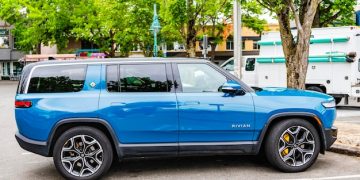
From the moment the 2026 Mustang Mach-E GT Performance rolled onto our driveway, its presence was undeniable. Ford has done an excellent job of imbuing this electric SUV with clear Mustang DNA, from the aggressive front fascia with its illuminated pony badge to the iconic tri-bar taillights. The GT Performance variant takes this a step further with unique styling cues, including larger wheels, red brake calipers, and a more pronounced aerodynamic package that hints at its elevated capabilities. Our test model, finished in a striking Vapor Blue Metallic, garnered plenty of admiring glances and questions.
Exterior Aesthetics and Build Quality
The exterior design is a masterful blend of muscularity and modern EV sleekness. The sloping roofline, a point of contention for some, contributes to its sporty profile and distinguishes it from more traditional SUVs. Panel gaps were consistent, and the paint quality was excellent, suggesting a high level of manufacturing precision. The overall build quality felt robust, a reassuring trait for a vehicle designed to handle varied driving conditions. The GT Performance-specific elements, like the unique grille and lower body cladding, subtly enhance its aggressive stance without being overtly ostentatious.
Stepping Inside: Cabin Comfort and Technology
Opening the door via the unique e-latch system reveals an interior that is both minimalist and technologically advanced. The large 15.5-inch vertical touchscreen dominates the dashboard, serving as the central hub for infotainment, climate control, and vehicle settings. While some prefer physical buttons, Ford’s SYNC 4A system is intuitive and responsive, with a large physical volume knob integrated into the screen itself – a thoughtful touch. The digital instrument cluster, though smaller, provides essential driving information clearly and concisely.
The GT Performance model comes with sport seats that offer excellent bolstering and support, crucial for spirited driving, yet remain comfortable for long hauls. The materials throughout the cabin feel premium, with soft-touch surfaces and tasteful accents. Rear passenger space is adequate for adults, and the panoramic fixed-glass roof, a standard feature on the GT, adds to the sense of spaciousness and airiness. Cargo space is competitive for the segment, augmented by a convenient front trunk (frunk) that’s perfect for charging cables or groceries.
Pressing the start button (or rather, the brake pedal, as it automatically powers on) and engaging drive, the Mach-E GT Performance immediately showcases its electric prowess. With dual motors delivering a combined 480 horsepower and a staggering 634 lb-ft of torque, acceleration is brutal and instantaneous. Ford claims a 0-60 mph time of 3.5 seconds, and our informal tests consistently placed it in that ballpark. This is supercar-level acceleration in an SUV body, and it never gets old. The sensation of being pushed back into your seat with such force, all in near silence, is a unique EV thrill.
The steering feels well-weighted and direct, offering good feedback from the road. The adaptive MagneRide damping system, standard on the GT Performance, does an admirable job of balancing ride comfort with handling prowess. In its most aggressive ‘Unbridled Extend’ mode, the suspension stiffens, throttle response sharpens, and the simulated engine sound (which can be turned off) intensifies, transforming the Mach-E into a surprisingly agile and engaging machine for its size. Even in normal driving, the ride is composed, absorbing bumps and imperfections without harshness.
Real-World Range Analysis: The US Driver’s Perspective
One of the most critical factors for any EV, especially for US drivers contemplating longer distances, is real-world range. While EPA estimates provide a baseline, they don’t always reflect the diverse driving conditions, temperature fluctuations, and varying speeds encountered in everyday use. The 2026 Mustang Mach-E GT Performance boasts an EPA-estimated range of around 270 miles. Our three-month test aimed to scrutinize this figure under a variety of real-world scenarios.
Mixed Driving Conditions: Commutes and City Driving
For daily commutes and city driving, where speeds are lower and regenerative braking can be maximized, the Mach-E GT Performance consistently exceeded its EPA estimates. In stop-and-go traffic and urban environments, we often observed an effective range closer to 280-290 miles on a full charge. The one-pedal driving mode, which allows for deceleration and even coming to a complete stop by simply lifting off the accelerator, is incredibly efficient and quickly becomes second nature, further boosting urban efficiency. This mode effectively captures kinetic energy that would otherwise be lost, converting it back into usable battery power.
Highway Performance: The Range Test
Highway driving, particularly at speeds of 70-80 mph, is where EVs typically see their range diminish more rapidly due to increased aerodynamic drag and less opportunity for regenerative braking. On extended highway runs across states like California, Arizona, and Texas, our Mach-E GT Performance generally delivered between 230-250 miles of range. Factors such as external temperature, terrain (uphill climbs are energy intensive), and the use of climate control significantly influenced these figures. For instance, cold weather driving (below 40°F) saw a noticeable dip, sometimes reducing the range by 15-20% due to battery conditioning and cabin heating demands. Conversely, mild weather and flat terrain allowed us to push closer to the higher end of our observed highway range.
It’s important to note that maintaining a steady 65 mph yielded better results than consistently cruising at 75 mph or higher. The difference in energy consumption between these speeds is substantial. For drivers primarily using highways, careful planning and awareness of charging infrastructure are key.
Impact of Driving Style and Climate Control
Aggressive driving, naturally, consumes more energy. Frequent use of the exhilarating acceleration will deplete the battery faster. Similarly, heavy reliance on the air conditioning in scorching summer heat or the heater in frigid winters will impact range. Our testing showed that moderate use of climate control, combined with pre-conditioning the cabin while plugged in, helped mitigate some of these energy losses. The Mach-E’s heat pump system, while efficient, still draws power, especially when working hard to maintain comfortable cabin temperatures.
The vehicle’s intelligent range predictor, which takes into account recent driving history, external temperature, and even topography from the navigation system, proved to be remarkably accurate. While it’s always wise to add a buffer, we found its estimates reliable, instilling confidence on longer journeys.
Charging Experience: Home, Public, and Fast Charging
A great EV is only as good as its charging ecosystem. For US drivers, this means a combination of convenient home charging and a robust, reliable public charging network. Our three-month test extensively explored both aspects of the Mach-E GT Performance.
Home Charging: The Backbone of EV Ownership
For most EV owners, home charging is the primary method, and it’s where the Mach-E truly shines. We installed a Level 2 (240V) charger, providing 48 amps, which translated to roughly 40 miles of range per hour of charging. This meant that even after a long day of driving, the Mach-E could be fully recharged overnight. For many, a Level 2 charger at home makes range anxiety virtually nonexistent for daily use, waking up every morning to a ‘full tank’ of electrons. Ford’s Connected Charge Station is a solid option, but any standard J1772 Level 2 charger works perfectly.
Public Level 2 Charging
Public Level 2 chargers, often found at workplaces, shopping centers, and hotels, were useful for topping up during longer stops. While slower than DC fast charging, they provide a convenient way to add significant range over a few hours. Compatibility was never an issue, as the Mach-E uses the standard J1772 connector common across North America for Level 2 charging. The FordPass app proved invaluable for locating available chargers and initiating sessions.
DC Fast Charging: Road Trip Essential
For road trips, DC fast charging is indispensable. The 2026 Mach-E GT Performance can accept charging speeds of up to 150 kW. In our tests, we consistently observed peak charging rates around this figure when the battery was low (typically below 20%) and the station was functioning optimally. Charging from 10% to 80% typically took between 35-45 minutes, a reasonable timeframe for a quick meal or rest stop. However, as with all EVs, charging speed tapers significantly as the battery approaches 80%, so planning stops around this threshold is efficient.
We utilized various charging networks, including Electrify America, EVgo, and ChargePoint. While the experience was generally positive, a few observations stood out:
- Reliability: While improving, charger reliability can still be a mixed bag. We encountered a few non-functional or significantly throttled chargers, underscoring the importance of having backup options or checking charger status via apps before arrival.
- Availability: In densely populated areas and along major interstates, fast chargers were generally plentiful. However, venturing into more rural areas sometimes required careful route planning to ensure adequate charging stops.
- Cost: Fast charging costs varied significantly by network and location. While often more expensive than home charging, it remains competitive with gasoline prices for comparable distances, especially when factoring in the performance.
Ford’s integration with the BlueOval Charge Network, accessible through the FordPass app, simplifies the process by allowing single-app payment and navigation to thousands of chargers. This ecosystem is a major advantage for Mach-E owners.
Driving Dynamics and Performance: Beyond the Straight Line
The ‘GT Performance’ moniker isn’t just for show. While the instant acceleration is thrilling, a true performance vehicle must handle well, brake effectively, and engage the driver. The 2026 Mach-E GT Performance largely delivers on these fronts.
Handling and Cornering
Despite its SUV stature and considerable weight (around 4,900 lbs), the Mach-E GT Performance handles with remarkable agility. The low center of gravity, thanks to the underfloor battery pack, contributes significantly to its planted feel. The MagneRide adaptive suspension continuously adjusts damping rates, providing a firm yet compliant ride. In spirited driving, body roll is well-controlled, and the car feels surprisingly balanced through corners. It’s not a lightweight sports car, but for an electric SUV, its cornering capabilities are genuinely impressive. The all-wheel-drive system, with its ability to precisely distribute torque between the front and rear axles, further enhances grip and stability.
Braking Performance
Equipped with larger Brembo front brakes, the GT Performance offers strong and consistent stopping power. The transition between regenerative braking and friction braking is seamless, a testament to Ford’s engineering. This smooth integration makes for comfortable driving and maximizes energy recovery. Even during aggressive stops, the brakes inspired confidence, bringing the heavy EV to a halt quickly and controllably.
Driving Modes and Customization
The Mach-E offers several drive modes: ‘Engage,’ ‘Whisper,’ and ‘Unbridled.’ The GT Performance adds ‘Unbridled Extend,’ which is designed for track use and offers the most aggressive settings for throttle response, steering, and suspension. While we didn’t track the vehicle, ‘Unbridled Extend’ provided an exhilarating experience on winding backroads, showcasing the car’s full dynamic potential. The ability to customize certain parameters within these modes allows drivers to tailor the experience to their preferences.
Technology and Infotainment: A Digital Cockpit
Modern EVs are as much about their digital experience as their driving dynamics. The 2026 Mach-E GT Performance is packed with technology designed to enhance convenience, safety, and connectivity.
SYNC 4A Infotainment System
The heart of the cabin technology is the 15.5-inch SYNC 4A touchscreen. Its interface is clean, modern, and highly customizable. Wireless Apple CarPlay and Android Auto worked flawlessly throughout our test, providing excellent integration with smartphones. Over-the-air (OTA) updates ensure the system remains current, adding new features and improving existing ones. We experienced a few minor software glitches early in the test, but subsequent OTA updates resolved them, demonstrating Ford’s commitment to continuous improvement.
Driver-Assistance Features and Safety
Ford Co-Pilot360 Assist 2.0 is standard, offering a comprehensive suite of safety and driver-assistance features. Adaptive cruise control with stop-and-go, lane-keeping assist, blind-spot monitoring, and a 360-degree camera system all contributed to a safer and less fatiguing driving experience. The optional BlueCruise hands-free driving system, available on designated highways, was particularly impressive. While it requires driver attention, it significantly reduces driver workload on long highway stretches, making journeys more relaxing. Its ability to handle gentle curves and maintain lane centering with smooth inputs felt genuinely advanced.
Connectivity and App Integration
The FordPass app is an essential companion for Mach-E owners. It allows for remote locking/unlocking, pre-conditioning the cabin, checking battery status, scheduling charging, and locating charging stations. Its functionality is robust and reliable, adding a layer of convenience to EV ownership. The connected navigation system also provides real-time traffic updates and integrates charging station information seamlessly into route planning.
Living with the Mach-E GT Performance: Practicality and Ownership Costs
Beyond the performance figures and tech specs, how does the 2026 Mach-E GT Performance fare as a daily driver and a long-term investment?
Daily Usability and Comfort
Despite its sporty pretensions, the Mach-E GT Performance is a very practical vehicle. The raised driving position offers good visibility, and the quick acceleration makes merging onto highways or overtaking effortless. The ride, even with the performance-tuned suspension, is comfortable enough for daily commutes, and the quiet cabin contributes to a relaxed atmosphere. The frunk is surprisingly useful for items like charging cables, groceries, or even a small carry-on bag, keeping the main cargo area free. The power liftgate adds to convenience.
Maintenance and Running Costs
One of the significant advantages of EVs is lower maintenance costs. With fewer moving parts than an internal combustion engine vehicle, routine service is generally less frequent and less expensive. Our three-month test involved no unexpected maintenance. Running costs primarily revolve around electricity. Home charging at off-peak hours can be significantly cheaper than gasoline, offering substantial savings over time. Even with public fast charging, the cost per mile is often competitive or lower than a comparable gasoline-powered performance SUV.
Potential Downsides and Considerations
While largely positive, our experience wasn’t without minor critiques:
- Rear Visibility: The sloping roofline and high rear deck can somewhat impede rear visibility, making the 360-degree camera system and blind-spot monitoring essential.
- Charging Infrastructure Gaps: While improving, charging infrastructure in some rural parts of the US can still be sparse, requiring careful planning for off-the-beaten-path road trips.
- Price: The GT Performance model sits at the higher end of the Mach-E lineup, making it a significant investment. However, its performance and features largely justify the price within its segment.
- Learning Curve for New EV Owners: For those new to EVs, understanding charging etiquette, optimizing range, and navigating charging networks can have a slight learning curve, though the Mach-E’s intuitive systems help mitigate this.
Conclusion: Is the 2026 Mustang Mach-E GT Performance the Right EV for You?
After three months and thousands of miles across various US states, the 2026 Mustang Mach-E GT Performance has undeniably left a strong impression. It successfully blends the iconic Mustang spirit with the undeniable advantages of an electric powertrain, creating a compelling package for the modern driver.
For those seeking exhilarating performance, the Mach-E GT Performance delivers in spades. Its instantaneous acceleration and surprisingly agile handling make every drive an engaging experience. The real-world range, while subject to environmental factors and driving style, proved to be more than adequate for most daily commutes and even manageable for longer road trips with proper planning.
The advanced technology, from the intuitive SYNC 4A infotainment system to the sophisticated driver-assistance features like BlueCruise, enhances both convenience and safety. Home charging is a breeze, and while public fast charging still has room for improvement in terms of universal reliability, Ford’s network integration helps streamline the process.
Ultimately, the 2026 Mustang Mach-E GT Performance is more than just an electric SUV; it’s a statement. It’s a testament to Ford’s commitment to the electric future, proving that an EV can be both practical and passionately exciting. If you’re a US driver looking for an electric vehicle that combines head-turning style, thrilling performance, advanced technology, and genuine daily usability, the Mach-E GT Performance should undoubtedly be at the top of your test-drive list. It’s a vehicle that doesn’t just meet expectations but often exceeds them, ushering in a new era for the Mustang legend.