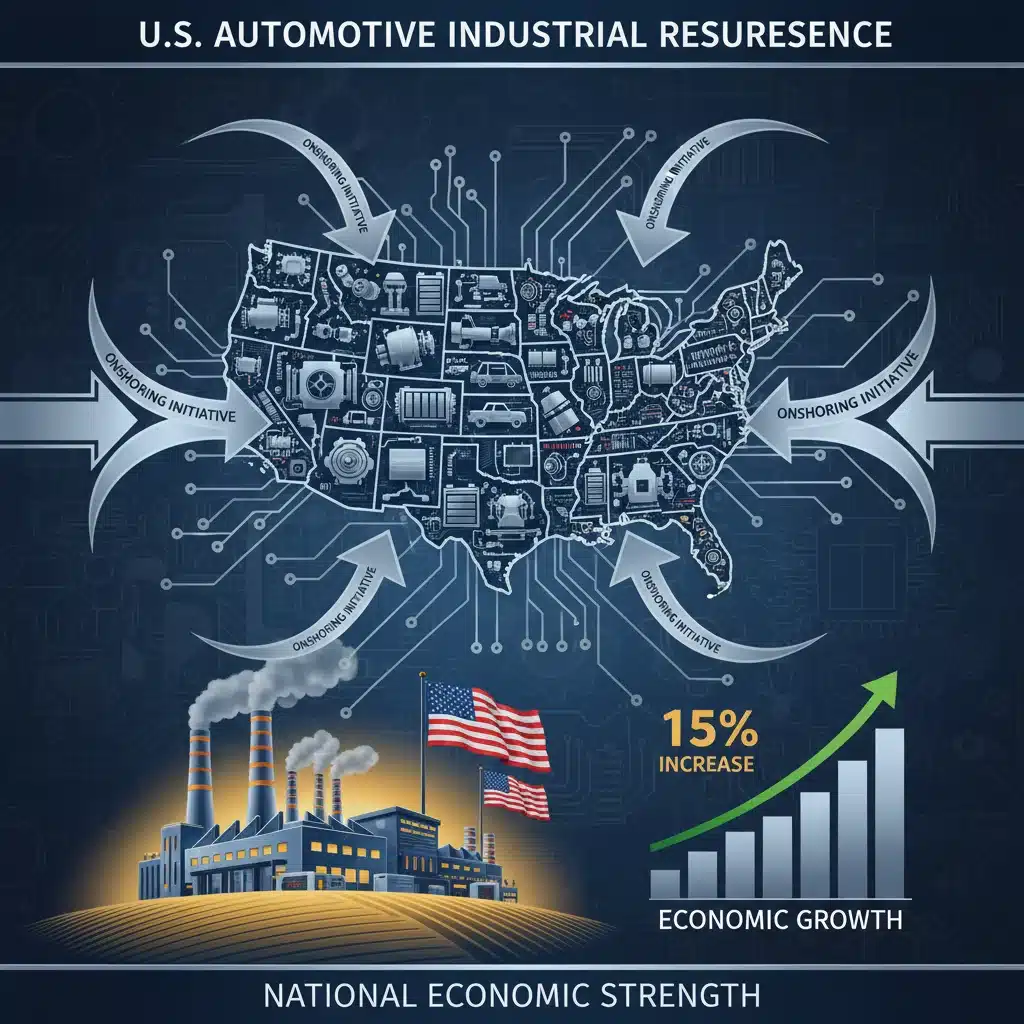
The Great Return: Analyzing the U.S. Automotive Industry’s 15% Onshoring Shift by 2026
The global supply chain disruptions of recent years have cast a long shadow over industries worldwide, none more so than the complex and interconnected automotive sector. For decades, manufacturers chased lower labor costs and expanded global reach, leading to an intricate web of international production. However, a significant paradigm shift is now underway, with a projected US auto onshoring increase of 15% by 2026. This isn’t merely a minor adjustment; it represents a fundamental re-evaluation of manufacturing strategies, driven by a confluence of economic, geopolitical, and logistical factors. This comprehensive analysis will delve deep into the forces propelling this onshoring trend, explore its multifaceted implications for the U.S. economy and workforce, and examine the challenges and opportunities that lie ahead for the American automotive landscape.
The concept of onshoring, or reshoring, refers to the process of bringing manufacturing and production back to the country where the company is headquartered. While the automotive industry has always had a significant presence in the United States, the past few decades saw a substantial exodus of production facilities overseas. The forecast of a 15% shift back to the U.S. by 2026 signals a robust reversal of this trend, promising to reshape the industry’s geographical footprint and operational models. Understanding the nuances of this shift is crucial for policymakers, investors, and industry stakeholders alike.
The Driving Forces Behind the US Auto Onshoring Wave
Several powerful factors are converging to make US auto onshoring an increasingly attractive, and in some cases, necessary, strategy for automotive manufacturers. These drivers are not isolated but rather interconnected, creating a compelling case for domestic production.
Supply Chain Resilience and Risk Mitigation
Perhaps the most immediate and impactful driver is the urgent need for enhanced supply chain resilience. The COVID-19 pandemic exposed the fragility of extended global supply chains. Lockdowns, port congestion, and unexpected factory shutdowns in distant lands brought production lines in the U.S. to a grinding halt, leading to significant financial losses and production delays. Automotive companies, particularly those relying heavily on just-in-time inventory systems, bore the brunt of these disruptions. By bringing production closer to home, manufacturers can significantly reduce lead times, minimize transportation costs, and gain greater control over their supply networks. This proximity allows for quicker responses to unforeseen events, reducing reliance on complex international logistics that are vulnerable to geopolitical tensions, natural disasters, and pandemics. The ability to pivot quickly and maintain consistent production, even in turbulent times, has become a top priority, making US auto onshoring a strategic imperative for risk mitigation.
Geopolitical Considerations and Trade Policies
The geopolitical landscape has become increasingly volatile, with trade disputes, tariffs, and national security concerns influencing global manufacturing decisions. Governments, including the U.S., are actively encouraging domestic production through various incentives and policies. The desire to reduce economic reliance on potentially adversarial nations and to secure critical industries within national borders plays a significant role. Trade policies, such as “Buy American” provisions and potential future tariffs on imported goods, create an economic environment that favors domestic manufacturing. Companies are increasingly factoring these political and policy risks into their long-term investment decisions, realizing that while offshore production might offer short-term cost savings, it can expose them to unpredictable and costly geopolitical headwinds. The stability and predictability of operating within a familiar regulatory and political framework are powerful motivators for US auto onshoring.
Rising Labor Costs Abroad and Automation Advantages
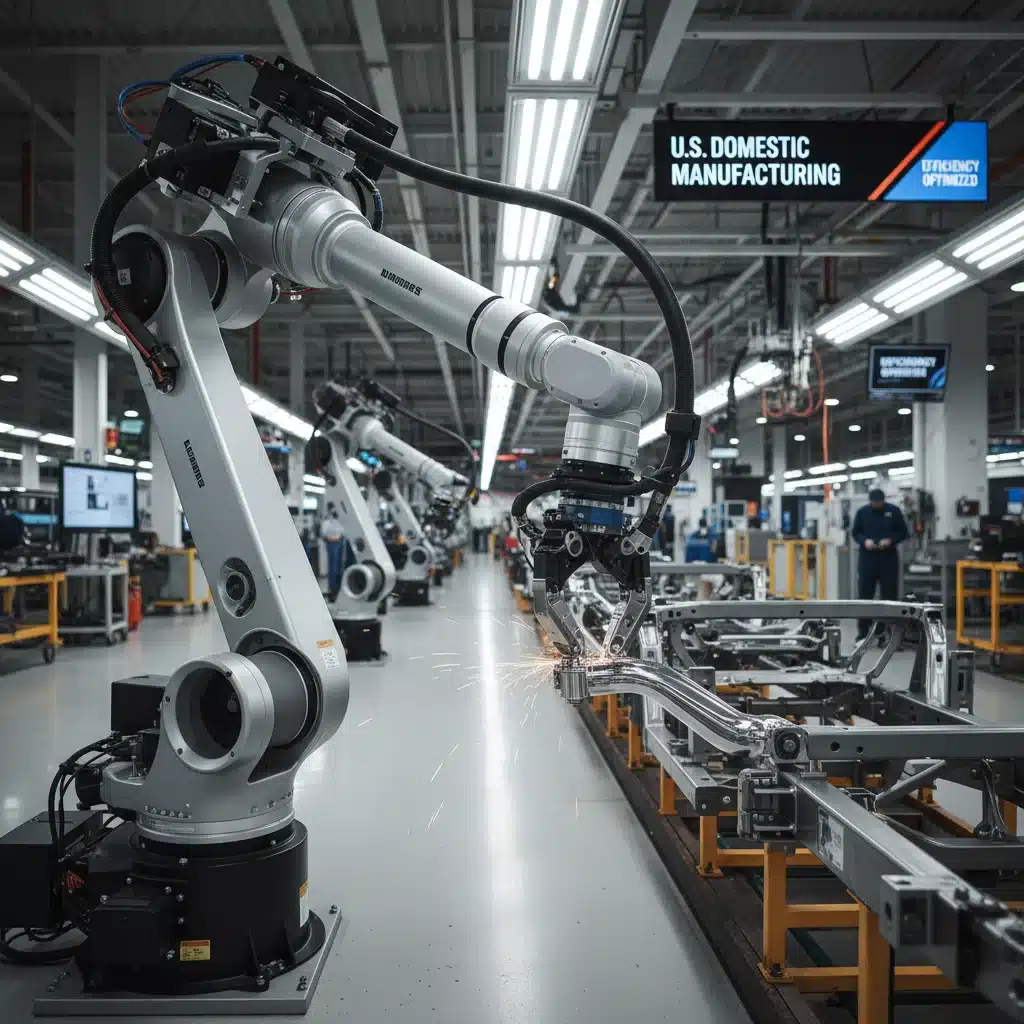
While historically, lower labor costs in countries like China and Mexico were a primary draw for offshore manufacturing, this advantage is steadily eroding. Wages in many traditional manufacturing hubs have been on the rise, narrowing the cost differential. Concurrently, advancements in automation and robotics are transforming the economics of manufacturing. Modern U.S. factories can achieve high levels of efficiency and productivity with a smaller, highly skilled workforce. The initial investment in advanced machinery is offset by reduced long-term labor costs, improved quality control, and faster production cycles. This technological leap means that the U.S. can compete more effectively on a cost-per-unit basis, especially for high-value and complex components. The integration of artificial intelligence, advanced robotics, and data analytics into manufacturing processes allows for greater precision, waste reduction, and customization, making domestic production an attractive option for companies looking to leverage cutting-edge technology.
Sustainability and ESG Factors
Environmental, Social, and Governance (ESG) considerations are no longer peripheral but central to corporate strategy. Consumers, investors, and regulators are increasingly demanding greater transparency and accountability regarding a company’s environmental footprint and ethical practices. Onshoring can contribute to a more sustainable manufacturing model by reducing the carbon emissions associated with long-distance transportation of goods and materials. It also allows for greater oversight of labor practices and environmental standards, ensuring compliance with U.S. regulations, which are often more stringent. Companies can leverage their domestic production as a testament to their commitment to sustainability and responsible business practices, enhancing their brand reputation and meeting evolving stakeholder expectations. The ability to control and verify the entire production process locally offers significant advantages in meeting these stringent ESG requirements, further bolstering the case for US auto onshoring.
Economic Impacts of Increased Onshoring
The projected 15% increase in US auto onshoring by 2026 is anticipated to have profound and overwhelmingly positive economic impacts across various sectors of the American economy.
Job Creation and Workforce Development
One of the most significant benefits of onshoring is job creation. Bringing manufacturing facilities back to the U.S. directly translates into new employment opportunities across a spectrum of roles, from assembly line workers and engineers to logistics specialists and administrative staff. These jobs are often well-paying, contributing to higher household incomes and increased consumer spending. Beyond direct manufacturing jobs, onshoring creates ripple effects, stimulating demand for services in supporting industries such as construction, transportation, and local retail. Furthermore, the nature of modern manufacturing demands a highly skilled workforce, prompting increased investment in workforce development programs, vocational training, and STEM education. This fosters a more skilled labor pool, enhancing the nation’s overall human capital and preparing it for future industrial advancements. The resurgence of manufacturing jobs can also revitalize communities that have historically relied on industrial employment, bringing renewed economic vibrancy and stability.
Innovation and Technological Advancement
Domestic manufacturing often goes hand-in-hand with increased investment in research and development (R&D) and technological innovation. When production facilities are located within the U.S., companies are more likely to collaborate with American universities, research institutions, and technology firms. This proximity fosters a dynamic ecosystem of innovation, leading to breakthroughs in materials science, manufacturing processes, automation, and product design. The pressure to remain competitive globally drives continuous improvement and the adoption of cutting-edge technologies, from advanced robotics and artificial intelligence to additive manufacturing and sustainable production methods. This cycle of innovation not only improves the efficiency and quality of automotive products but also positions the U.S. as a leader in advanced manufacturing, attracting further investment and talent. The proximity of R&D to manufacturing allows for quicker iteration and implementation of new technologies, accelerating the pace of innovation within the US auto onshoring landscape.
Strengthening Domestic Supply Chains
The push for onshoring extends beyond just the final assembly of vehicles; it encourages the localization of the entire supply chain. This means bringing the production of components, raw materials processing, and sub-assemblies back to the U.S. as well. A more robust domestic supply chain reduces reliance on foreign suppliers, mitigates the risks of international trade disruptions, and creates a more integrated and self-sufficient automotive ecosystem. This localization fosters greater collaboration between different tiers of suppliers, leading to improved quality control, faster delivery times, and opportunities for co-innovation. A stronger domestic supply chain also provides greater economic stability, as money spent on components and materials circulates within the U.S. economy, multiplying its impact. This interconnectedness makes the entire industry more resilient and less susceptible to external shocks, a key benefit of the US auto onshoring movement.
Reduced Trade Deficits and Economic Growth
By producing more goods domestically, the U.S. can reduce its reliance on imports, thereby narrowing its trade deficit. While the automotive sector is just one part of the overall trade balance, a significant shift in this industry can contribute meaningfully to a more balanced trade relationship. Furthermore, the increased economic activity generated by onshoring – through job creation, investment, and innovation – contributes directly to GDP growth. The multiplier effect of manufacturing jobs, where each manufacturing job supports several additional jobs in other sectors, amplifies this economic benefit. A thriving domestic automotive industry acts as a powerful engine for national economic prosperity, creating a virtuous cycle of investment, employment, and innovation. The economic independence fostered by robust domestic production also enhances national security and resilience in an unpredictable global environment, making US auto onshoring a cornerstone of future economic strategy.
Challenges and Considerations for Onshoring
While the benefits of US auto onshoring are substantial, the transition is not without its challenges. Manufacturers must navigate a complex landscape to successfully bring production back home.
High Initial Investment Costs
Establishing new manufacturing facilities or retooling existing ones in the U.S. requires significant capital investment. The costs associated with acquiring land, constructing buildings, purchasing advanced machinery, and implementing new production lines can be substantial. For some companies, particularly smaller ones, this upfront capital outlay can be a formidable barrier. While government incentives and tax breaks can help offset some of these costs, companies must conduct thorough cost-benefit analyses to ensure the long-term viability and profitability of onshoring projects. The return on investment for these large expenditures needs to be carefully projected, considering factors like labor costs, energy prices, and regulatory compliance. Securing financing and demonstrating a clear path to profitability are critical for successful onshoring initiatives.
Labor Availability and Skill Gaps
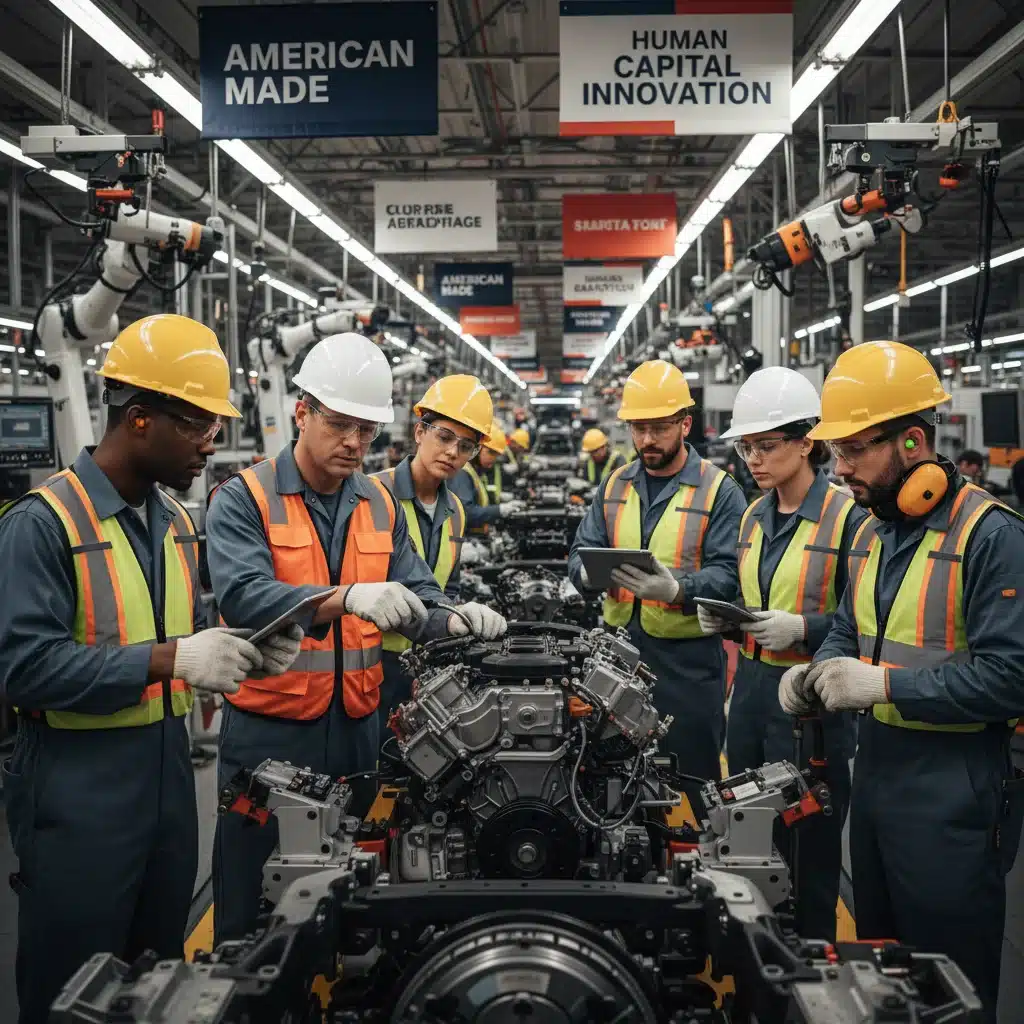
Despite the potential for job creation, finding a sufficiently skilled workforce can be a challenge. The U.S. manufacturing sector has seen a decline in certain types of skilled labor over the past decades, leading to potential skill gaps in areas like advanced robotics, mechatronics, and digital manufacturing. Companies engaging in US auto onshoring must invest heavily in training and upskilling programs for their existing employees and collaborate with educational institutions to develop curricula that meet the demands of modern manufacturing. Attracting new talent to manufacturing careers, often perceived as less glamorous than other sectors, also requires strategic efforts. Bridging these skill gaps is essential for ensuring that new facilities can operate efficiently and productively, making workforce development a critical component of any onshoring strategy.
Regulatory Environment and Compliance
Operating a manufacturing facility in the U.S. involves navigating a complex web of federal, state, and local regulations. These can include environmental protection standards, labor laws, safety regulations, and zoning requirements. While these regulations are in place for valid reasons, they can add to the cost and complexity of doing business. Companies must have a robust compliance framework in place and be prepared to allocate resources to meet these standards. Understanding the nuances of the regulatory landscape and potentially engaging with regulatory bodies early in the planning process can help streamline the onshoring transition. The perceived burden of regulation is sometimes cited as a reason for offshore production, making it a critical area for consideration in the US auto onshoring movement.
Energy Costs and Infrastructure
Energy costs can be a significant factor in manufacturing, and while the U.S. has relatively stable energy prices compared to some regions, they can still fluctuate. Access to reliable and affordable energy sources is crucial for continuous production. Furthermore, the existing infrastructure in some regions may require upgrades to support new or expanded manufacturing operations, including improvements to transportation networks, utility grids, and digital communication systems. Companies must assess the local infrastructure and energy landscape when selecting sites for new facilities. Investment in renewable energy sources and energy-efficient technologies can help mitigate energy costs and align with sustainability goals, making the onshoring process more resilient and environmentally friendly.
Strategic Implications for Automotive Manufacturers
For automotive manufacturers, the 15% US auto onshoring shift by 2026 demands a strategic re-evaluation of their global footprints and operational models. This isn’t a one-size-fits-all solution, but rather a complex strategic decision that requires careful consideration of various factors.
Re-evaluating Global Footprints
Companies are now meticulously scrutinizing their entire global manufacturing and supply chain footprints. This involves identifying which parts, components, or even entire vehicle lines are best suited for domestic production. Factors such as complexity, criticality, proprietary technology, and vulnerability to supply chain disruptions will play a key role in these decisions. The goal is to optimize a hybrid model that combines the benefits of localized production for critical components with strategic offshore partnerships where they still offer a competitive advantage. This re-evaluation will lead to a more diversified and resilient global network, with a stronger emphasis on regionalization and proximity to key markets, especially for the U.S. market. The strategic shift towards US auto onshoring is not about abandoning global operations but rather rebalancing them for greater security and efficiency.
Investment in Automation and Advanced Manufacturing
To make onshoring economically viable, particularly given higher labor costs compared to some offshore locations, manufacturers are heavily investing in automation, robotics, and advanced manufacturing technologies. This includes implementing Industry 4.0 principles, such as smart factories, predictive maintenance, and data-driven decision-making. These technologies not only improve efficiency and reduce production costs but also enhance quality, consistency, and customization capabilities. The focus is on creating highly productive, technologically advanced facilities that can compete globally on factors beyond just labor cost. This investment in advanced manufacturing infrastructure is a cornerstone of the US auto onshoring movement, ensuring that domestic production remains competitive and innovative.
Talent Development and Retention
As manufacturing becomes more technologically sophisticated, the demand for a highly skilled workforce intensifies. Automotive companies must prioritize talent development, investing in training programs that equip employees with the skills needed to operate and maintain advanced machinery and digital systems. Partnerships with educational institutions, vocational schools, and community colleges are crucial for building a pipeline of skilled workers. Furthermore, creating attractive work environments that foster innovation, offer career growth opportunities, and provide competitive compensation is essential for attracting and retaining top talent. The success of US auto onshoring will largely depend on the industry’s ability to cultivate and sustain a skilled and motivated workforce.
Government Incentives and Partnerships
Government policies and incentives play a pivotal role in encouraging US auto onshoring. Manufacturers are actively engaging with federal, state, and local governments to leverage tax breaks, grants, subsidies, and other support programs designed to promote domestic manufacturing. These partnerships can help offset the initial investment costs, reduce regulatory burdens, and facilitate workforce development initiatives. The collaborative effort between industry and government is essential for creating a supportive ecosystem that makes onshoring a more attractive and viable option. Understanding and utilizing these incentives is a key strategic consideration for any company looking to expand its U.S. manufacturing footprint.
The Future Outlook: Beyond 2026
The projected 15% shift in US auto onshoring by 2026 is likely just the beginning of a broader trend. The lessons learned from recent global disruptions, coupled with ongoing technological advancements and evolving geopolitical realities, suggest that the emphasis on domestic and regional production will continue to grow. Beyond 2026, we can anticipate further investments in advanced manufacturing capabilities, a deepening of domestic supply chains, and a continued focus on sustainability and resilience.
Continued Investment in R&D and Innovation
The drive for innovation will remain paramount. U.S. automotive manufacturers will continue to invest heavily in research and development, particularly in areas like electric vehicle (EV) technology, autonomous driving systems, advanced battery production, and sustainable materials. Onshoring facilitates this innovation cycle by bringing R&D closer to manufacturing, allowing for faster prototyping, testing, and deployment of new technologies. This will solidify the U.S.’s position as a global leader in automotive innovation, attracting more talent and investment, and ensuring the long-term competitiveness of the domestic industry.
Regional Manufacturing Hubs
We may see the emergence of more specialized regional manufacturing hubs within the U.S., each focusing on specific components, technologies, or vehicle types. These hubs could leverage local expertise, existing infrastructure, and regional supply networks to create highly efficient and integrated production ecosystems. This regionalization would further enhance supply chain resilience and foster localized economic growth. The development of these hubs would be a natural evolution of the US auto onshoring trend, optimizing for efficiency and specialization.
Enhanced Public-Private Partnerships
The collaboration between government, industry, and academia will become even more critical. Public-private partnerships will be essential for funding research, developing workforce training programs, upgrading infrastructure, and navigating complex regulatory landscapes. These partnerships can create a stable and predictable environment for manufacturers, encouraging continued investment in domestic production and ensuring that the U.S. remains at the forefront of automotive innovation and manufacturing excellence. The success of future US auto onshoring endeavors will hinge on the strength and breadth of these collaborative efforts.
Conclusion: A New Era for US Automotive Manufacturing
The projected 15% increase in US auto onshoring by 2026 marks a pivotal moment for the American automotive industry. Driven by the imperative for supply chain resilience, evolving geopolitical landscapes, technological advancements, and growing sustainability concerns, this shift is set to revitalize domestic manufacturing. While challenges such as initial investment costs, labor skill gaps, and regulatory complexities remain, the economic benefits—including job creation, enhanced innovation, strengthened domestic supply chains, and reduced trade deficits—are compelling.
The future of U.S. automotive manufacturing is one defined by strategic re-evaluation, significant investment in automation and advanced technologies, and a renewed focus on talent development. As manufacturers continue to navigate a dynamic global environment, the decision to bring production closer to home is not merely a tactical response to recent disruptions but a strategic commitment to long-term stability, competitiveness, and sustainable growth. The era of robust US auto onshoring is here, promising a more resilient, innovative, and prosperous future for the American automotive sector.