U.S. Auto Manufacturing Shifts: 2025 Reshoring Impact Analysis
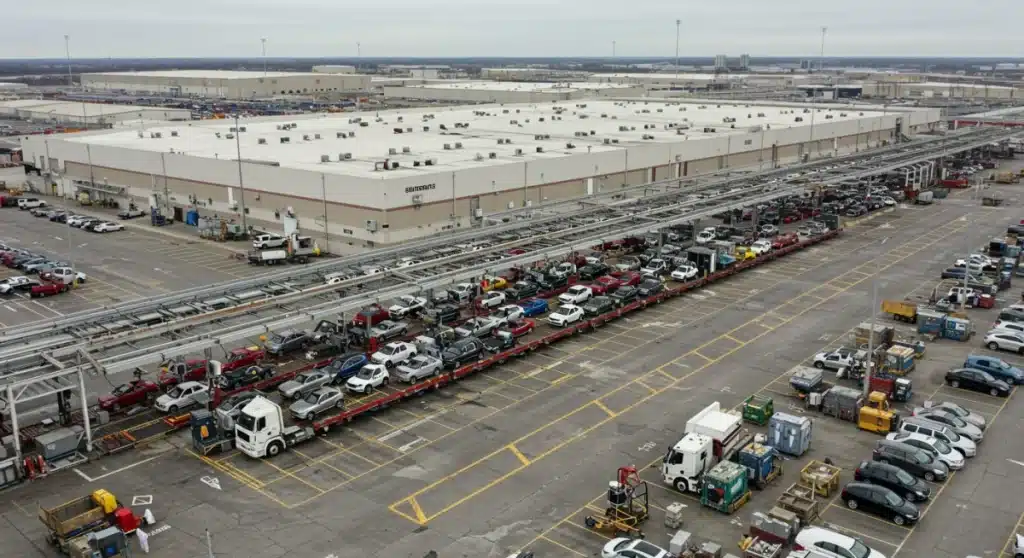
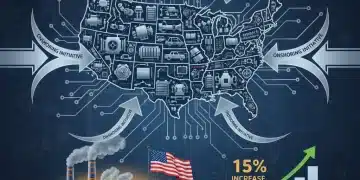
The U.S. automotive sector is undergoing significant changes by 2025, with an anticipated 15% reshoring of production, profoundly impacting the economy, supply chains, and domestic employment.
The landscape of the American automotive industry is poised for a significant transformation. By 2025, projections indicate a remarkable shift, with approximately 15% of automotive production being reshored to the United States. This move, driven by a confluence of economic, geopolitical, and strategic factors, promises to redefine how vehicles are made and supplied within the nation. Understanding the multifaceted implications of these U.S. automotive reshoring impact shifts is crucial for stakeholders across the entire industry.
Understanding the Reshoring Phenomenon in Automotive
Reshoring, the practice of bringing manufacturing operations back to a company’s home country, has gained considerable traction in recent years, particularly within the complex and globally interconnected automotive sector. For the U.S., this trend is not merely about national pride; it represents a strategic recalibration aimed at bolstering economic resilience and mitigating vulnerabilities exposed by global disruptions.
The push for reshoring is multifaceted, often stemming from a blend of perceived advantages and unavoidable pressures. Companies are increasingly weighing the benefits of closer supply chains against the initial costs of relocation and re-establishment. This strategic re-evaluation is reshaping investment decisions and operational blueprints across the industry.
Key Drivers Behind Automotive Reshoring
- Supply Chain Vulnerabilities: The COVID-19 pandemic starkly exposed the fragility of extended global supply chains, leading many automotive manufacturers to seek localized production to reduce risks and ensure continuity.
- Government Incentives and Policies: Federal and state governments in the U.S. are actively promoting domestic manufacturing through various incentives, tax breaks, and supportive policies, making reshoring more financially appealing.
- Technological Advancements: Automation, advanced robotics, and AI are making domestic manufacturing more competitive by reducing labor costs and increasing efficiency, often offsetting previous advantages of lower-wage regions.
- Consumer Demand for “Made in USA”: A growing segment of American consumers shows a preference for domestically produced goods, creating a market incentive for companies to reshore and highlight their U.S. origins.
Ultimately, the reshoring phenomenon in the automotive industry is a complex interplay of economic rationales, strategic imperatives, and evolving market dynamics. The decision to bring production back home is rarely simple, involving substantial investment and a careful assessment of long-term benefits versus short-term challenges. However, the anticipated 15% reshoring by 2025 suggests a strong commitment to this strategic direction by major industry players.
Economic Implications of 15% Production Reshoring
The reshoring of 15% of U.S. automotive production by 2025 carries substantial economic implications that will ripple through various sectors. This influx of domestic manufacturing will not only directly impact the automotive industry but also generate significant secondary economic effects, influencing employment, GDP, and regional development.
One of the most immediate effects will be job creation. New manufacturing facilities and expanded existing ones will require a skilled workforce, spanning roles from engineers and technicians to assembly line workers. This demand for labor can lead to increased wages and improved economic stability in communities hosting these operations.
Job Creation and Workforce Development
The return of manufacturing jobs is a cornerstone of the reshoring narrative. These are not just any jobs; they are often well-paying positions that contribute to a stable middle class. The automotive sector, in particular, has historically been a strong employer, and its resurgence domestically can revitalize local economies.
- Direct Manufacturing Jobs: Estimates suggest thousands of new positions will be created directly within automotive assembly and component manufacturing.
- Indirect and Induced Jobs: Beyond the factory floor, reshoring stimulates demand for supporting industries, including logistics, raw materials, tooling, and local services, generating a multiplier effect on job creation.
- Skills Gap Addressing: The need for a specialized workforce will likely spur investment in vocational training programs, community college partnerships, and apprenticeships, enhancing overall workforce skills.
Moreover, the increased domestic production will contribute directly to the U.S. Gross Domestic Product (GDP). By reducing reliance on imported components and finished vehicles, more economic activity remains within the country, fostering internal growth. This shift also strengthens the tax base for local, state, and federal governments, providing resources for public services and infrastructure.
The economic benefits extend to technological innovation. As manufacturing returns, so too does the research and development associated with it. This can foster a virtuous cycle of innovation, leading to more efficient processes, advanced materials, and cutting-edge automotive technologies being developed and produced on U.S. soil. This comprehensive economic impact underscores the strategic importance of the anticipated 15% reshoring.
Impact on Automotive Supply Chains and Logistics
The reshoring of 15% of U.S. automotive production will fundamentally reshape existing supply chains and logistics networks. The move aims to mitigate the vulnerabilities exposed by recent global disruptions, fostering greater resilience and efficiency through localized sourcing and distribution. This shift necessitates a complete re-evaluation of how components are procured, transported, and integrated into the manufacturing process.
Traditional global supply chains, optimized for cost efficiency, often involved complex, multi-country routes. Reshoring will shorten these distances, leading to significant changes in freight patterns, warehousing needs, and the overall speed of delivery. This localization reduces transit times and inventory holding costs, making the entire system more agile.
Streamlining and Localizing Supply Networks
A core benefit of reshoring is the ability to create more robust, localized supply chains. This means a greater emphasis on sourcing raw materials and components from U.S. suppliers or those within closer geographical proximity, reducing dependence on distant international partners.
- Reduced Lead Times: Shorter distances between suppliers and assembly plants translate to faster delivery of parts, enabling quicker responses to market demands and reducing production delays.
- Enhanced Quality Control: Proximity to suppliers allows for more frequent and direct oversight of quality standards, potentially leading to higher product reliability and fewer defects.
- Greater Visibility and Collaboration: Localized supply chains foster stronger relationships between manufacturers and suppliers, improving communication, collaboration, and problem-solving capabilities.
Logistically, the shift will require investment in domestic transportation infrastructure, including roads, rail, and potentially port facilities if new domestic sources emerge. There will be a greater reliance on U.S. trucking companies and rail networks to move goods, creating opportunities for growth in these sectors. Furthermore, the strategic placement of new or expanded manufacturing hubs will be critical to optimize these localized logistics networks, minimizing transportation costs and environmental impact.
The shift towards localized supply chains also encourages the development of a domestic ecosystem of specialized suppliers. This can lead to increased competition among U.S. component manufacturers, driving innovation and efficiency. Ultimately, the anticipated 15% reshoring will not only bring manufacturing jobs back but also create a more resilient, efficient, and domestically focused automotive supply chain, capable of better weathering future global uncertainties.
Technological Advancements and Automation in Reshored Facilities
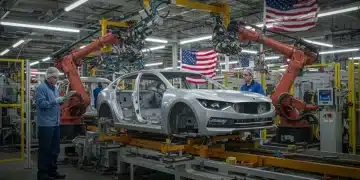
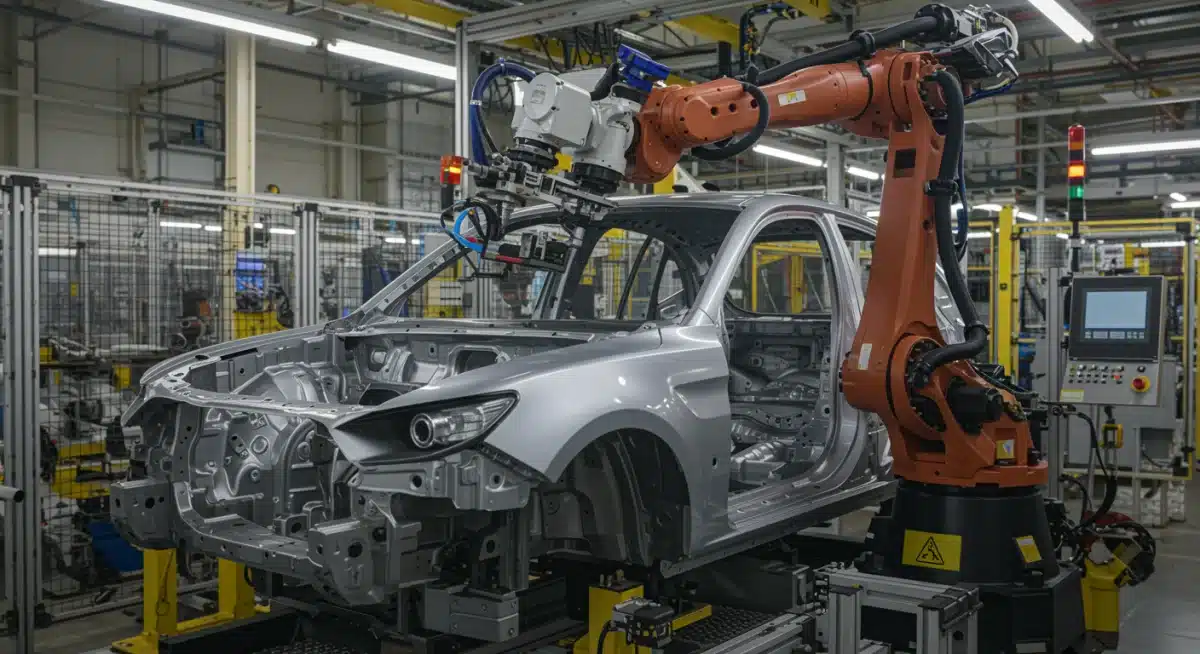
The return of automotive production to the U.S. is not a simple reversion to old manufacturing models. Instead, it is intrinsically linked with the adoption of cutting-edge technological advancements and increased automation. Reshored facilities are set to be highly modernized, leveraging Industry 4.0 principles to achieve efficiency, precision, and competitiveness previously unattainable.
This integration of advanced technology is a key differentiator, enabling U.S. manufacturers to offset higher labor costs and compete effectively with global counterparts. Automation, particularly robotics and artificial intelligence, will play a pivotal role in transforming factory floors, making them smarter, safer, and more productive.
Integrating Smart Manufacturing Practices
Smart manufacturing encompasses a range of technologies designed to optimize production processes. Reshored automotive plants will be at the forefront of this evolution, utilizing data-driven insights to enhance every stage of vehicle production.
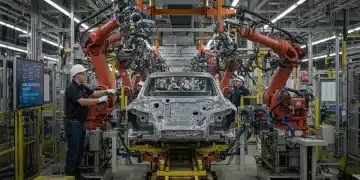
- Advanced Robotics: Collaborative robots (cobots) and autonomous guided vehicles (AGVs) will work alongside human employees, performing repetitive or hazardous tasks, improving safety and throughput.
- Artificial Intelligence and Machine Learning: AI algorithms will optimize production schedules, predict maintenance needs, and enhance quality control through real-time data analysis, minimizing downtime and waste.
- Internet of Things (IoT): Connected sensors and devices across the factory will provide a constant stream of data, allowing for immediate adjustments and continuous process improvement.
The emphasis on automation also extends to additive manufacturing, or 3D printing, which can be used for prototyping, creating specialized tools, and even producing complex components on demand. This reduces reliance on external suppliers for certain parts and speeds up the innovation cycle.
Furthermore, the integration of digital twins – virtual replicas of physical assets and processes – will allow manufacturers to simulate and optimize production scenarios before implementation, reducing errors and improving efficiency. This strategic embrace of technology ensures that the 15% of reshored automotive production will be characterized by high levels of innovation and operational excellence, setting new benchmarks for U.S. manufacturing capabilities.
Environmental and Sustainability Considerations
The reshoring of 15% of U.S. automotive production by 2025 presents a unique opportunity to integrate advanced environmental and sustainability practices into the manufacturing process. As companies bring production closer to home, there’s a growing imperative to not only enhance economic resilience but also to minimize ecological footprints and promote responsible resource management.
This shift allows for greater control over manufacturing processes, making it easier to implement stricter environmental regulations and adopt greener technologies. The focus moves beyond mere compliance to proactive sustainability initiatives that can offer long-term benefits for both the environment and the brand image of automotive manufacturers.
Promoting Green Manufacturing and Reduced Emissions
Reshored facilities can be designed and operated with sustainability at their core, leveraging renewable energy sources and implementing waste reduction strategies from the outset. This commitment to green manufacturing aligns with global efforts to combat climate change and meet consumer demands for eco-friendly products.
- Reduced Transportation Emissions: By shortening supply chains, the carbon footprint associated with transporting raw materials and finished goods across continents is significantly reduced.
- Energy Efficiency: New facilities can incorporate state-of-the-art energy-efficient machinery and renewable energy generation (e.g., solar panels), lowering operational emissions.
- Waste Reduction and Recycling: Localized production facilitates closed-loop recycling systems for manufacturing waste, turning byproducts into reusable resources and minimizing landfill contributions.
Moreover, the reshoring trend encourages the development of local circular economies, where materials are sourced, used, and recycled within a confined geographical area. This not only reduces waste but also creates new business opportunities in recycling, remanufacturing, and sustainable material innovation.
The automotive industry’s commitment to electric vehicles (EVs) also plays a crucial role. Reshored production of EV components and batteries, coupled with sustainable manufacturing practices, can significantly lower the overall environmental impact of the entire EV lifecycle. Therefore, the 15% reshoring effort is not just an economic decision but a pivotal moment for advancing environmental stewardship within the U.S. automotive sector.
Challenges and Opportunities for 2025
While the reshoring of 15% of U.S. automotive production by 2025 presents numerous advantages, it also comes with a distinct set of challenges that require careful navigation. Overcoming these hurdles will be crucial for the long-term success and sustainability of these domestic manufacturing initiatives. Yet, within these challenges lie significant opportunities for innovation and strategic growth.
One of the primary challenges is the initial capital investment required to build new facilities or retool existing ones. This can be substantial, and companies must weigh these upfront costs against the long-term benefits of reduced supply chain risks and improved control. Additionally, securing a sufficiently skilled workforce capable of operating advanced manufacturing technologies is a continuous effort.
Navigating the Road Ahead: Key Obstacles and Pathways to Success
Addressing the complexities of reshoring demands a strategic approach, involving collaboration between industry, government, and educational institutions.
- High Labor Costs: U.S. labor costs are generally higher than in many traditional manufacturing hubs. This necessitates a greater reliance on automation and efficiency gains to remain competitive.
- Regulatory Compliance: Navigating the complex web of U.S. environmental, labor, and safety regulations can be challenging for companies accustomed to operating in different regulatory environments.
- Supply Chain Development: While reshoring aims to localize supply chains, rebuilding a robust domestic supplier base for all necessary components takes time and significant investment.
Despite these challenges, the opportunities presented by reshoring are compelling. It fosters greater innovation, as proximity between R&D and manufacturing can accelerate product development cycles. It also enhances national security by reducing reliance on foreign sources for critical automotive components, especially those related to defense or essential services.
Furthermore, reshoring strengthens the domestic economy, creating a ripple effect of job growth and economic stability. It positions the U.S. as a leader in advanced manufacturing, attracting further investment and talent. The 15% reshoring target by 2025, therefore, represents not just a relocation of production but a strategic investment in the future competitiveness and resilience of the American automotive industry.
| Key Aspect | Brief Description |
|---|---|
| Economic Impact | Significant job creation, GDP growth, and increased tax revenues from localized production. |
| Supply Chain Resilience | Shortened lead times, enhanced quality control, and reduced global dependency through localized sourcing. |
| Technological Integration | Adoption of advanced robotics, AI, and IoT in modernized reshored facilities for efficiency. |
| Sustainability Focus | Opportunity for greener manufacturing, reduced emissions, and enhanced waste reduction practices. |
Frequently Asked Questions About Automotive Reshoring
The main drivers include enhancing supply chain resilience against global disruptions, leveraging government incentives for domestic production, and benefiting from advanced manufacturing technologies that reduce labor cost impact. Consumer preference for ‘Made in USA’ also plays a role in this strategic shift.
Reshoring is expected to create thousands of direct manufacturing jobs in the automotive sector, along with significant indirect jobs in supporting industries like logistics and raw materials. This will also spur investment in workforce development and training programs to meet new skill demands.
Advanced technologies such as automation, robotics, AI, and the Internet of Things (IoT) are crucial. They enable U.S. manufacturers to achieve high levels of efficiency and precision, offsetting higher domestic labor costs and making production competitive on a global scale.
Yes, reshoring can lead to reduced transportation emissions due to shorter supply chains. It also provides an opportunity to build new facilities with advanced energy efficiency, embrace renewable energy, and implement robust waste reduction and recycling programs, fostering greener manufacturing.
Key challenges include the substantial upfront capital investment, navigating complex U.S. regulatory environments, and developing a sufficiently skilled workforce. Rebuilding a comprehensive domestic supplier base capable of meeting diverse component needs also presents a significant hurdle.
Conclusion
The projected 15% reshoring of U.S. automotive production by 2025 marks a pivotal moment for the industry. This strategic shift, driven by a desire for enhanced supply chain resilience, economic revitalization, and technological advancement, promises to fundamentally alter the manufacturing landscape. While challenges such as investment costs and workforce development remain, the long-term benefits of job creation, bolstered GDP, and a more sustainable, innovative domestic industry are compelling. The journey towards a more localized automotive future is complex but ultimately positions the United States for greater self-sufficiency and global competitiveness in the years to come.