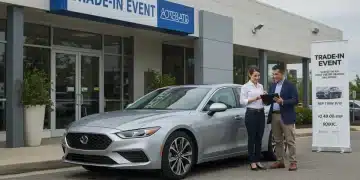
Negotiate 2026 Car Prices: Your 3-Step Guide to 5-10% Savings

Mastering the art of car negotiation in 2026 is crucial for securing significant savings, and this guide provides a practical 3-step framework to reduce vehicle prices by 5-10% through informed preparation and strategic communication.
Are you ready to purchase a new vehicle in 2026 but dread the negotiation process? Fear not, as this comprehensive guide on negotiating 2026 car prices will equip you with the practical solutions needed to drive down costs by a significant 5-10%. Understanding the evolving automotive market and applying strategic negotiation tactics can transform your car buying experience from stressful to successful. Let’s delve into how you can secure that coveted deal.
Understanding the 2026 Automotive Market Landscape
Before you even step foot into a dealership, a thorough understanding of the 2026 automotive market is paramount. The landscape is continuously shifting, influenced by factors like supply chain stability, technological advancements, and consumer demand for electric vehicles. Recognizing these trends will give you an edge in negotiations.
Key Market Dynamics
The automotive industry in 2026 is characterized by several key dynamics. Inventory levels, while improving from previous years, can still vary significantly by model and manufacturer. This directly impacts pricing power. Furthermore, the push towards electrification continues to influence traditional vehicle pricing, often creating opportunities for discounts on internal combustion engine (ICE) models as manufacturers clear inventory for newer EV lines.
- Global supply chain efficiency: Improved but still prone to regional disruptions.
- Increased EV adoption: Shifting focus and incentives.
- Inflationary pressures: Affecting raw material costs and MSRPs.
- Interest rate fluctuations: Impacting financing costs.
Leveraging Market Data
Access to real-time market data is your secret weapon. Websites and automotive publications often provide insights into average transaction prices, inventory levels, and incentives offered by manufacturers. Knowing what others are paying for the same vehicle in your region empowers you to set realistic yet ambitious negotiation targets. This data can reveal which models are in high demand versus those with excess inventory, indicating where you might have more leverage.
Understanding the market also means being aware of regional differences. A car that is highly sought after in one state might be less popular in another, leading to different pricing structures. Researching local market conditions can highlight specific dealerships or areas where better deals are more probable. This granular approach to market understanding is a cornerstone of effective price negotiation.
Overall, a deep dive into the 2026 automotive market landscape provides the foundational knowledge necessary for effective negotiation. By recognizing market dynamics and leveraging available data, you position yourself as an informed buyer, ready to engage in strategic discussions with dealerships.
Step 1: Meticulous Research and Pre-Negotiation Preparation
The first and arguably most critical step in securing a 5-10% discount on your 2026 car purchase is comprehensive research and preparation. This isn’t just about knowing the MSRP; it’s about understanding every facet of the deal before you even speak to a salesperson.
Vehicle-Specific Information
Begin by identifying the exact make, model, trim, and desired options for your target vehicle. Research its invoice price, which is what the dealer paid for the car, not the MSRP. Several online resources and automotive pricing guides provide this information. Knowing the invoice price gives you a realistic baseline for negotiation. Additionally, investigate any manufacturer-to-dealer incentives or holdbacks that might allow the dealer more room for negotiation than initially apparent.
- Target vehicle’s invoice price.
- Current manufacturer incentives and rebates.
- Resale value projections for the chosen model.
- Common issues or maintenance costs associated with the model.
Understanding Your Trade-In Value
If you have a trade-in, research its market value thoroughly. Use online appraisal tools and get offers from multiple sources, such as CarMax or other dealerships. Do not allow the trade-in discussion to merge with the new car price negotiation. Treat them as separate transactions. This prevents dealers from manipulating figures by offering a good price on your trade-in while inflating the new car price, or vice-versa.
Obtaining a firm offer for your trade-in from an independent buyer or another dealership gives you a strong bargaining chip. This way, you know the absolute minimum value of your trade-in, and if the selling dealership cannot match or beat it, you can sell your old car separately. This clear separation ensures you’re getting the best deal on both ends of the transaction.
Financing Pre-Approval
Secure financing pre-approval from your bank or credit union before visiting the dealership. This provides you with an independent interest rate, giving you leverage against potentially higher rates offered by the dealership’s finance department. Knowing your pre-approved rate also allows you to focus solely on the car’s price during negotiation, without the added complexity of financing terms.
Having a pre-approval in hand demonstrates your seriousness as a buyer and removes one major variable from the negotiation equation. It allows you to calmly compare the dealer’s financing offer against your pre-approved rate, ensuring you choose the most advantageous option. This meticulous preparation is crucial for maximizing your savings.
In conclusion, thorough research and pre-negotiation preparation are the bedrock of a successful car purchase. By understanding vehicle costs, trade-in values, and securing independent financing, you enter the dealership armed with knowledge and confidence, ready to negotiate from a position of strength.
Step 2: Strategic Communication and Negotiation Tactics
With your extensive research complete, the next step involves implementing strategic communication and negotiation tactics. This is where your preparation translates into tangible savings, aiming for that 5-10% reduction in price. Approach the conversation with confidence, politeness, and a clear objective.
Initiating the Negotiation
Start your negotiation by making an offer below the invoice price, but within a reasonable margin that signals you’ve done your homework. A common strategy is to offer 2-3% below invoice. This establishes your position as an informed buyer and sets the stage for a back-and-forth that moves towards your target discount. Always negotiate the ‘out-the-door’ price, which includes all fees, taxes, and the vehicle price, to avoid hidden costs later.
- Always negotiate the ‘out-the-door’ price.
- Be prepared to walk away if the offer isn’t satisfactory.
- Maintain a polite, firm, and patient demeanor.
- Communicate via email initially to create a paper trail.
Leveraging Competition Among Dealerships
Contact multiple dealerships, preferably via email, to solicit quotes for the exact same vehicle. Pit them against each other by sharing competing offers. For instance, if one dealership offers a price, you can email another stating, ‘Dealership X offered me Y price; can you beat it?’ This creates a competitive environment where each dealer is motivated to offer their best price to earn your business. This tactic is incredibly effective in driving prices down.
When using this strategy, ensure all quotes are for identical vehicles and include all fees. This prevents discrepancies and ensures you’re comparing apples to apples. The goal is to obtain the lowest possible selling price before ever stepping foot in a showroom, saving you time and emotional investment in the process.
Handling Sales Tactics
Be aware of common sales tactics, such as the ‘four-square’ method (where monthly payment, trade-in, down payment, and new car price are negotiated simultaneously). Insist on negotiating one item at a time, starting with the new car’s price. Avoid discussing monthly payments until the total purchase price is finalized. Salespeople often try to shift focus to monthly payments to obscure the overall cost.
Be prepared for high-pressure sales tactics and remain firm in your decision-making. Do not be rushed into a decision. If you feel uncomfortable or pressured, simply state that you need more time to consider the offer and be ready to leave. Remember, you hold the power as the buyer, especially when you’ve done your homework.
In essence, strategic communication and smart negotiation tactics are vital for achieving your desired discount. By initiating negotiations effectively, using competition to your advantage, and recognizing sales ploys, you can confidently navigate the car-buying process and secure a favorable deal.
Step 3: Finalizing the Deal and Post-Negotiation Review
Once you’ve successfully negotiated a price that meets your 5-10% discount target, the final step involves carefully finalizing the deal and conducting a thorough post-negotiation review. This ensures that all agreed-upon terms are accurately reflected in the paperwork and that no unexpected fees or changes have been introduced.
Reviewing the Purchase Agreement
Before signing anything, meticulously review the entire purchase agreement. Ensure that the agreed-upon price for the new vehicle, your trade-in value (if applicable), and all associated fees are exactly as negotiated. Look out for any added protection packages, extended warranties, or unnecessary accessories that you did not agree to. These can significantly inflate the final cost and erode your hard-won discount.
- Verify the new car’s exact price.
- Confirm trade-in value matches agreement.
- Scrutinize all line items for unapproved add-ons.
- Check for correct tax calculations and registration fees.
Understanding Financing Details
If you’re financing through the dealership, carefully examine the interest rate, loan term, and any associated fees. Compare this against your pre-approved financing. If the dealership’s offer is better, great! But ensure there are no hidden clauses or penalties. Understand the total cost of the loan, not just the monthly payment. A lower monthly payment over a longer term can often mean paying significantly more interest overall.
Ask for a detailed breakdown of all financing charges. Sometimes, dealerships might include credit insurance or other optional products without explicit consent. Being vigilant at this stage can save you hundreds, if not thousands, of dollars over the life of the loan. Do not hesitate to ask questions until you fully understand every aspect of the financing agreement.
Post-Sale Follow-Up
Even after signing, a brief follow-up is advisable. Keep copies of all signed documents. If any issues arise with the vehicle or the paperwork, having a clear record of your agreement is crucial. Registering your vehicle promptly and ensuring all necessary title and registration documents are processed correctly by the dealership is also part of this final stage. A smooth post-sale process confirms the success of your negotiation efforts.
Finalizing the deal requires the same level of attention to detail as your initial research. By carefully reviewing all documentation, understanding financing terms, and conducting a post-sale follow-up, you ensure that your negotiated 5-10% discount is fully realized and that your car-buying experience concludes successfully and without surprises.
Advanced Negotiation Strategies for Higher Savings
Beyond the fundamental three steps, several advanced negotiation strategies can further enhance your chances of securing a more significant discount on your 2026 car purchase. These tactics often require a higher level of confidence and a deeper understanding of dealership operations.
Timing Your Purchase
The timing of your purchase can significantly impact a dealer’s willingness to negotiate. Dealerships often have monthly, quarterly, and annual sales quotas. Visiting towards the end of a month, quarter, or year can provide increased leverage as sales teams strive to meet targets. Additionally, shopping during off-seasons or when new models are about to be released can lead to better deals on current inventory.
- End of the month or quarter.
- During holidays (e.g., Black Friday, Labor Day).
- When new model years are arriving.
- During slower sales periods (e.g., mid-week, mid-day).
Considering Dealer Holdbacks and Incentives
While often opaque, dealer holdbacks and factory-to-dealer incentives provide additional profit margins for dealerships, which can sometimes be tapped into during aggressive negotiations. A holdback is a percentage of the MSRP (typically 2-3%) that the manufacturer pays the dealer after the car is sold. While not directly negotiable, knowing it exists confirms that the dealer has more room than just the invoice price. Manufacturers also offer various incentives directly to dealers for meeting sales targets or moving specific models, creating more flexibility for discounts.
Asking a dealer if they can ‘do better’ based on current manufacturer incentives, without necessarily knowing the specifics, can prompt them to reveal more aggressive pricing. This requires a nuanced approach, as dealers are not obligated to disclose these figures, but a well-timed question can open the door to further reductions.
Negotiating Add-Ons and Extended Warranties Separately
After settling on the car’s price, you’ll likely be directed to the finance and insurance (F&I) office, where you’ll be offered various add-ons and extended warranties. These are often high-profit items for dealerships. Negotiate each of these separately and aggressively, or decline them outright if they don’t align with your needs. Many extended warranties can be purchased from third-party providers at a lower cost, or even directly from the manufacturer.
Do not feel pressured to accept these additional products. Research their value and necessity beforehand. If you decide to purchase an extended warranty, negotiate its price just as you would the car. Often, the initial price quoted for these items has a substantial markup, providing ample room for negotiation. This separation of negotiations ensures you’re not unknowingly inflating the overall cost of your purchase.
By employing these advanced strategies, coupled with your foundational knowledge and strategic communication, you can push your savings beyond the initial 5-10% target, securing an even more advantageous deal on your 2026 vehicle.
The Power of Patience and Persistence in Car Buying
In the high-stakes environment of car buying, patience and persistence are not merely virtues; they are powerful negotiation tools. Rushing the process or succumbing to pressure can easily erase your hard-earned savings. Understanding how to wield these qualities effectively can make a significant difference in your final deal.
Avoiding Impulse Decisions
One of the biggest pitfalls in car negotiation is making an impulse decision. Dealerships are designed to create a sense of urgency, with limited-time offers or the fear of missing out on a specific vehicle. Resist the urge to buy on your first visit, especially if you haven’t completed all your research or explored all your options. Take time to reflect on any offer, discuss it with a trusted advisor, or simply sleep on it.
- Never commit to a purchase on your first visit.
- Always take time to review offers away from the dealership.
- Be prepared to walk away if you feel pressured.
- Trust your instincts; if a deal feels off, it probably is.
The Art of Walking Away
The ability to genuinely walk away from a deal is perhaps your strongest bargaining chip. If a dealership isn’t meeting your price or terms, politely thank them for their time and leave. Often, this action alone can prompt a salesperson or manager to reconsider their offer and call you back with a more favorable deal. It demonstrates that you are serious about your budget and not desperate to buy.
Walking away doesn’t mean you’ve failed; it means you value your money and are disciplined enough to stick to your negotiation goals. Sometimes, the best deal isn’t found at the first or even second dealership you visit. Persistence in seeking out the right offer will ultimately lead to greater satisfaction and significant savings.
Building Rapport, Not Friendship
While it’s important to be polite and respectful, remember that the salesperson is working for the dealership, not for you. Building a friendly rapport can make the experience more pleasant, but don’t let it cloud your judgment or erode your negotiation stance. Maintain a professional distance and focus on the business transaction at hand. Your goal is to get the best price, not to make a new friend.
A friendly but firm approach often yields the best results. It shows you are reasonable but also serious about your intentions. This balanced approach allows for productive discussions without getting sidetracked by emotional appeals or personal anecdotes that can distract from the core objective of securing a 5-10% discount on your 2026 car.
Ultimately, patience in waiting for the right deal and persistence in pursuing your financial goals are crucial attributes for any successful car buyer. They empower you to navigate the complexities of the dealership environment with confidence and emerge with a deal you can be proud of.
Common Pitfalls to Avoid in 2026 Car Negotiations
Even with the best preparation, certain pitfalls can derail your negotiation efforts and prevent you from achieving your desired 5-10% discount on a 2026 vehicle. Being aware of these common mistakes can help you steer clear of them and maintain control of the buying process.
Focusing Solely on Monthly Payments
One of the most common mistakes buyers make is negotiating based purely on monthly payments. Dealerships often try to shift the conversation to this metric because it allows them to extend the loan term, add costly extras, or inflate the interest rate, all while keeping the monthly payment seemingly affordable. This strategy often results in paying significantly more over the life of the loan.
- Always negotiate the total ‘out-the-door’ price first.
- Understand the impact of loan terms on total cost.
- Avoid discussing monthly payments until the price is set.
- Be wary of ‘payment packing’ where extra items are silently added.
Disclosing Your Budget Too Early
Never reveal your maximum budget or desired monthly payment early in the negotiation process. Doing so gives the dealer an upper hand, as they will try to structure a deal that hits your stated limit, regardless of the car’s true value or their profit margins. Let the dealer offer their best price first, based on your request for a specific vehicle, rather than your financial constraints.
Keep your financial information private until it’s absolutely necessary for financing discussions. Your budget is a personal constraint, not a negotiation point for the dealer. By keeping it guarded, you force the dealer to focus on the vehicle’s price and not on how much they think you can afford.
Emotional Attachment to a Vehicle
Falling in love with a specific car on the lot can severely weaken your negotiation position. Emotional attachment often leads to making concessions you wouldn’t otherwise. Treat the car as a commodity, not an object of desire, during the negotiation phase. Be prepared to walk away if the deal isn’t right, even if it means not getting the exact color or trim you initially envisioned.
Test driving multiple vehicles and keeping your options open can help prevent this emotional trap. Remember, there are many cars on the market, and another one just like it will likely be available if the current deal doesn’t work out. Maintaining a detached, logical approach is crucial for successful negotiation.
By actively avoiding these common pitfalls, you can protect your financial interests and ensure that your efforts in negotiating 2026 car prices lead to the maximum possible savings. Staying vigilant and disciplined throughout the process is key to a successful purchase.
Finalizing Your 2026 Car Purchase: Ensuring Lasting Satisfaction
After successfully navigating the negotiation process and securing a favorable price, the final steps in your 2026 car purchase are about ensuring lasting satisfaction and protecting your investment. This involves meticulous attention to detail and proactive measures to prevent future complications.
Thorough Pre-Delivery Inspection
Before driving off the lot, conduct a comprehensive pre-delivery inspection of your new vehicle. Check for any scratches, dents, or imperfections that may have occurred during transit or preparation. Verify that all requested accessories and options are present and functioning correctly. Test all lights, electronics, air conditioning, and safety features. This is your last chance to identify any issues before the vehicle is officially yours.
- Inspect exterior for any cosmetic damage.
- Verify all interior features and electronics work.
- Confirm all agreed-upon options are installed.
- Check fluid levels and tire pressure.
Understanding the Warranty and Maintenance Schedule
Familiarize yourself with the vehicle’s factory warranty terms and conditions. Understand what is covered, for how long, and any exclusions. Also, review the recommended maintenance schedule. Adhering to this schedule is crucial for maintaining your warranty validity and the vehicle’s long-term reliability. Ask the dealership about any complimentary maintenance packages that might be included.
Knowing your warranty details can save you significant costs down the line if an unexpected issue arises. It also empowers you to make informed decisions about extended warranties or service plans, ensuring you only purchase what is truly necessary and beneficial for your specific needs.
Post-Purchase Documentation and Record Keeping
Organize all purchase documents, including the sales agreement, financing contract, warranty information, and any receipts for down payments or trade-ins. Keep these records in a safe and accessible place. This documentation is vital for future reference, such as when selling the vehicle, making an insurance claim, or addressing any disputes that may arise.
Proper record-keeping also includes noting the date of purchase, mileage at delivery, and any specific agreements made with the dealership. This meticulous approach to documentation provides peace of mind and serves as a crucial resource throughout your ownership of the 2026 vehicle. Ensuring lasting satisfaction extends beyond the initial purchase; it involves diligent management of your automotive investment.
| Key Negotiation Step | Brief Description |
|---|---|
| Research & Prep | Understand market, invoice prices, trade-in value, and secure financing pre-approval. |
| Strategic Communication | Initiate low offers, leverage competition, and manage sales tactics effectively. |
| Finalizing the Deal | Meticulously review all paperwork, understand financing, and conduct a pre-delivery inspection. |
| Patience & Persistence | Avoid impulse buys and be ready to walk away to secure the best possible terms. |
Frequently Asked Questions About 2026 Car Price Negotiation
Realistically, a well-prepared buyer can save between 5-10% off the MSRP or even the invoice price on a new 2026 vehicle. Savings depend on the specific model, market demand, and your negotiation skills, but a 5% reduction is often achievable with solid research.
The most crucial information is the vehicle’s invoice price. Knowing what the dealer paid for the car provides a realistic baseline for your initial offer and helps you understand the dealer’s profit margin, guiding your negotiation strategy effectively.
No, always negotiate the price of the new car first, independently. Discussing trade-in and financing before agreeing on the car’s price allows dealers to manipulate figures, making it harder to determine if you’re getting a good deal on any single component of the transaction.
Yes, email negotiations are highly effective. They create a written record of offers, allow you to easily compare quotes from multiple dealerships, and reduce the pressure of in-person interactions, empowering you to make more rational decisions without feeling rushed.
Watch out for dealers who focus solely on monthly payments, refusing to discuss the total price. Also, be wary of excessive pressure to buy immediately, unexplained fees, or attempts to combine trade-in and new car pricing into a single, opaque offer. These are common tactics to maximize dealer profit.
Conclusion
Successfully navigating the car buying process in 2026 and negotiating a 5-10% reduction in price is entirely achievable with the right approach. By committing to meticulous research, employing strategic communication tactics, and exercising patience, you empower yourself to secure an advantageous deal. Remember, the power lies in your preparation and willingness to walk away if the terms aren’t right. Armed with these practical solutions, you’re now ready to confidently engage with dealerships and drive away in your new vehicle, knowing you’ve achieved significant savings.