2026 EV Charging Speeds: Top 5 Public Networks Compared
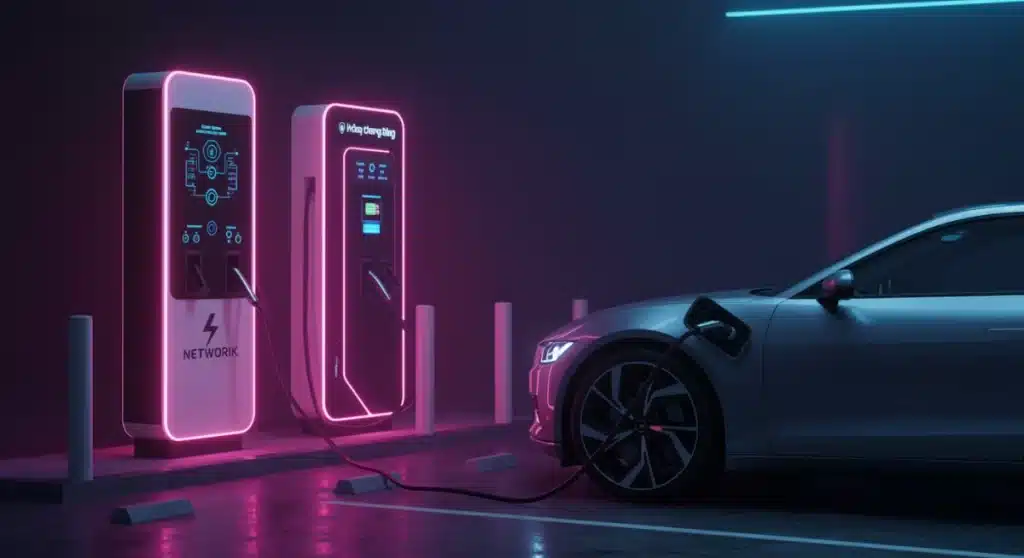
The landscape of electric vehicles (EVs) is evolving at an unprecedented pace, and with it, the critical infrastructure that supports them: public charging networks. As we look towards 2026, the demand for faster, more reliable, and universally accessible charging solutions is intensifying. Drivers are no longer content with slow overnight charges; the expectation is rapid replenishment that mirrors the convenience of gasoline refueling. This comprehensive analysis delves into the EV Charging Speeds 2026, offering a comparative look at five of the top public networks, evaluating their current capabilities, projected advancements, and overall user experience.
Understanding the nuances of EV charging speeds is paramount for both current and prospective electric vehicle owners. It impacts everything from daily commutes to long-distance travel planning. A network’s charging speed isn’t just about the raw power output (measured in kilowatts, kW); it also encompasses factors like charger availability, network reliability, payment simplicity, and the overall user interface. In 2026, we anticipate significant strides in all these areas, driven by technological innovation, increased investment, and a growing competitive market.
Our focus will be on key players that are shaping the future of EV charging: Electrify America, EVgo, ChargePoint, Tesla Supercharger Network, and a rising contender, Ionity (particularly relevant for international comparisons and emerging standards). Each of these networks brings a unique set of strengths and strategies to the table, and their performance in terms of EV Charging Speeds 2026 will be a crucial differentiator.
The Need for Speed: Why EV Charging Speeds Matter in 2026
The transition to electric vehicles is fundamentally linked to the efficiency of their charging infrastructure. In 2026, consumers expect their EVs to integrate seamlessly into their lifestyles, meaning charging times must be minimized. Long charging stops are a major deterrent for many potential EV buyers, highlighting the critical importance of advancements in EV Charging Speeds 2026. Faster charging translates to greater convenience, reduced range anxiety, and ultimately, a more widespread adoption of electric mobility.
Technological advancements in battery chemistry and vehicle charging architecture are enabling higher power delivery. Most modern EVs can now accept 150 kW, with many pushing towards 250 kW and even 350 kW. The challenge for charging networks is to match these vehicle capabilities with robust, high-power charging stations that are consistently available and operational. The goal is to add hundreds of miles of range in a matter of minutes, not hours, making long-distance EV travel as practical as its gasoline counterpart.
Beyond the technical specifications, the user experience plays a vital role. A fast charger is only truly fast if it’s easy to locate, available when needed, and simple to initiate a charge. Network reliability, uptime, and intuitive payment systems are all integral components of the ‘speed’ equation in the eyes of the consumer. As we analyze the EV Charging Speeds 2026, we’ll consider these holistic factors that contribute to a truly efficient charging experience.
Electrify America: Pushing the Limits of Power Delivery
Electrify America, born out of Volkswagen’s Dieselgate settlement, has rapidly established itself as a leader in high-power DC fast charging across the United States. By 2026, its network is expected to be even more expansive and capable, with a strong emphasis on maximizing EV Charging Speeds 2026.
Current Capabilities and Future Projections
- Power Output: Electrify America currently offers chargers ranging from 50 kW up to 350 kW. Their strategy has been to deploy a significant number of 150 kW and 350 kW chargers, catering to the growing fleet of EVs capable of ultra-fast charging. By 2026, we anticipate a further increase in the proportion of 350 kW chargers, potentially with even higher power outputs at select flagship locations as vehicle technology advances.
- Network Expansion: The network is committed to significant expansion, aiming for thousands of chargers across North America. This expansion is not just in quantity but also in strategic placement, ensuring coverage along major travel corridors and in metropolitan areas.
- Reliability: Early challenges with charger reliability have been addressed with ongoing maintenance and software updates. By 2026, Electrify America aims for industry-leading uptime, which is crucial for perceived speed and user trust.
- User Experience: Features like Plug & Charge (for compatible vehicles), a user-friendly mobile app, and various payment options contribute to a streamlined charging process. These aspects are continuously refined to enhance the overall charging experience.
Electrify America’s aggressive deployment of 350 kW chargers positions it well for the future of EV Charging Speeds 2026. These stations can add up to 20 miles of range per minute for vehicles capable of accepting such high power. This makes them a top contender for drivers prioritizing minimal stop times on long journeys.
EVgo: Expanding Access and Enhancing Convenience
EVgo operates one of the largest public fast-charging networks in the U.S., with a strong focus on urban areas and retail locations. Their strategy for EV Charging Speeds 2026 revolves around ubiquitous access, diverse charging options, and a seamless user experience.
Current Capabilities and Future Projections
- Power Output: EVgo’s network primarily features 50 kW and 100 kW chargers, with an increasing deployment of 150 kW and 350 kW stations. They are strategically upgrading existing sites and installing new high-power chargers to meet the growing demand for faster charging.
- Network Expansion: EVgo is focused on expanding its footprint, particularly in high-traffic urban centers and along key transportation routes. They also emphasize partnerships with fleet operators and ride-share companies, further integrating EV charging into daily operations.
- Reliability: EVgo has a strong track record of network uptime and proactive maintenance. Their commitment to reliability is a key factor in ensuring that advertised charging speeds are consistently delivered.
- User Experience: The network supports multiple payment methods, including credit cards, RFID cards, and a mobile app. They are also a leader in Plug & Charge implementation, simplifying the charging process for compatible vehicles.
EVgo’s commitment to expanding its high-power charging infrastructure, coupled with its emphasis on accessibility and user-friendliness, makes it a significant player in the evolution of EV Charging Speeds 2026. While perhaps not always boasting the absolute highest power across its entire network compared to some rivals, its extensive coverage and reliability are major advantages.
ChargePoint: The Ubiquitous Connector
ChargePoint stands out for having one of the largest and most diverse charging networks globally, encompassing Level 2 AC chargers, DC fast chargers, and home charging solutions. For EV Charging Speeds 2026, their focus is on integrating a vast ecosystem of charging options to provide comprehensive solutions.
Current Capabilities and Future Projections
- Power Output: While ChargePoint is well-known for its extensive network of Level 2 chargers (which typically offer 6-25 kW), they are also significantly expanding their DC fast charging capabilities. Their DC fast chargers range from 50 kW to 350 kW, with a clear trend towards more high-power installations.
- Network Expansion: ChargePoint’s growth strategy involves partnerships with businesses, workplaces, and municipalities, leading to a highly distributed network. This broad presence ensures that users can find charging options in a variety of locations, even if not all are ultra-fast.
- Interoperability: A key strength of ChargePoint is its focus on interoperability, allowing drivers to access chargers from various networks through their app. This reduces range anxiety and simplifies the charging experience across different providers.
- User Experience: The ChargePoint app is highly regarded for its features, including real-time charger availability, charging status updates, and robust payment options. Their emphasis on a connected and intelligent charging experience will be crucial for EV Charging Speeds 2026 as drivers seek efficiency and convenience.
ChargePoint’s strategy for EV Charging Speeds 2026 is less about having the most 350 kW chargers at every location and more about providing a seamless, integrated charging experience across a vast and varied network. Their strength lies in the sheer number and diversity of their charging points, making them a go-to for many EV owners.
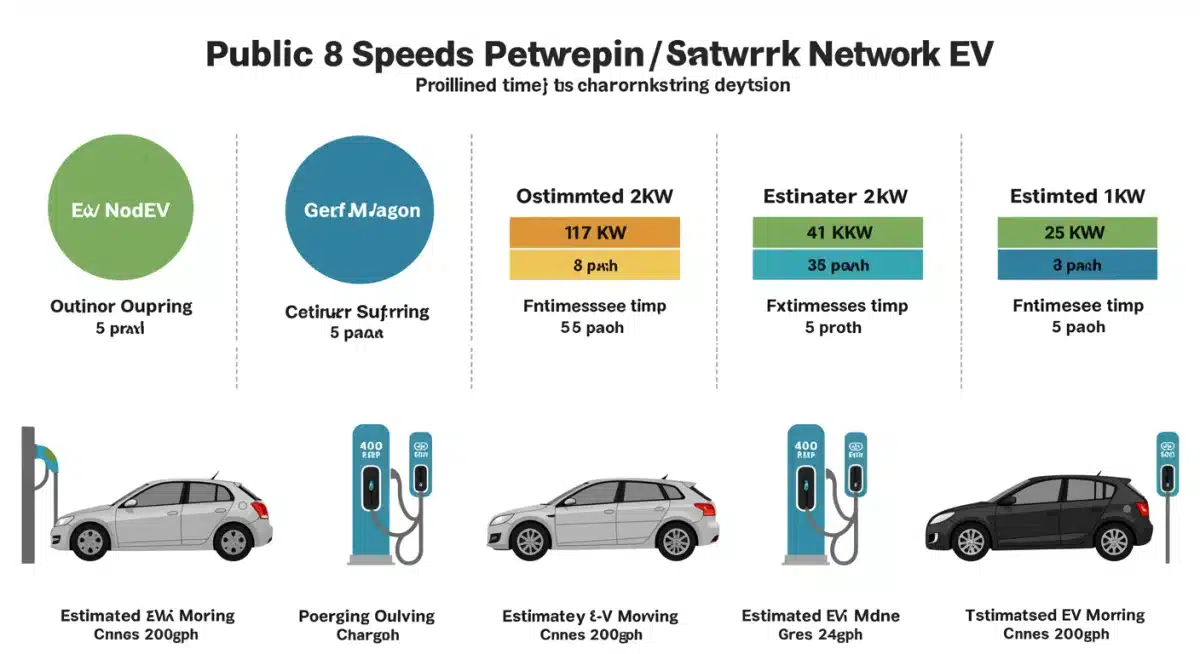
Tesla Supercharger Network: The Gold Standard for Seamless Charging
Tesla’s Supercharger network has long been lauded as the benchmark for reliability and user experience. As we approach 2026, the network continues to evolve, with significant implications for EV Charging Speeds 2026, especially as it opens to non-Tesla vehicles.
Current Capabilities and Future Projections
- Power Output: Tesla’s V2 Superchargers offer up to 150 kW, while the more prevalent V3 and newer V4 Superchargers deliver up to 250 kW. There are indications of even higher power outputs (300 kW+) in development for future iterations, solidifying their position in high EV Charging Speeds 2026.
- Network Expansion: The Supercharger network is continuously expanding globally, with a focus on strategic locations along major highways and in urban centers. The sheer density of Supercharger stations in many regions is a significant advantage.
- Reliability: Tesla Superchargers are renowned for their exceptional uptime and consistent performance. This reliability is a major factor in the network’s perceived speed, as drivers can trust that a charger will be available and functional.
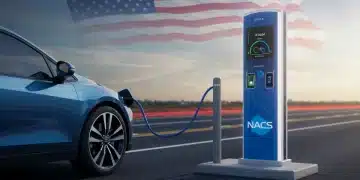
- User Experience: The integrated Plug & Charge functionality, automatic billing, and seamless navigation integration within Tesla vehicles provide an unparalleled charging experience. The ongoing rollout of access for non-Tesla EVs (via adapters or native NACS ports) will extend this premium experience to a broader audience, albeit with potential initial complexities for payment and app integration.
The Tesla Supercharger network’s consistent performance, strategic placement, and user-friendly experience set a high bar for EV Charging Speeds 2026. Their expansion to include non-Tesla vehicles will undoubtedly reshape the competitive landscape, pushing other networks to further innovate.
Ionity: Europe’s High-Power Corridor
While primarily focused on Europe, Ionity is a crucial network to consider for its impact on global charging standards and high-power deployments, setting benchmarks for EV Charging Speeds 2026 internationally.
Current Capabilities and Future Projections
- Power Output: Ionity’s network is characterized by its exclusive deployment of 350 kW chargers, making it one of the most powerful charging networks in Europe. This focus on ultra-fast charging is a core part of its strategy.
- Network Expansion: Backed by major automotive manufacturers (BMW, Mercedes-Benz, Ford, Hyundai, Porsche, Audi, and Volkswagen), Ionity is rapidly expanding its network along major European travel routes, ensuring seamless long-distance EV travel.
- Reliability: With a strong emphasis on modern hardware and robust infrastructure, Ionity aims for high reliability, crucial for cross-country journeys where charging options might be fewer.
- User Experience: Ionity supports various payment methods and is actively working on Plug & Charge solutions for a more streamlined experience. Their focus on high power and strategic locations addresses a key aspect of EV Charging Speeds 2026 for European drivers.
Ionity’s commitment to 350 kW charging across its network positions it as a leader in ultra-fast charging, providing a glimpse into the future of high EV Charging Speeds 2026 infrastructure that other regions may emulate.
Factors Influencing Real-World EV Charging Speeds in 2026
While the advertised power output of a charger is a critical metric, several other factors significantly influence the actual EV Charging Speeds 2026 experienced by a driver. Understanding these nuances is essential for setting realistic expectations.
Vehicle Battery State of Charge (SoC)
EV batteries charge fastest when they are at a low state of charge (e.g., 10-20%). As the battery fills up, the charging rate typically tapers off to protect the battery and extend its lifespan. This means that a 350 kW charger might only deliver its peak power for a relatively short period, often up to 80% SoC, after which the speed decreases significantly.
Vehicle’s Max Charging Rate
Not all EVs can accept the highest charging rates offered by modern stations. A vehicle might only be capable of 150 kW, even if it’s plugged into a 350 kW charger. The charging speed will be limited by the lower of the two capabilities.
Battery Temperature
Optimal battery temperature is crucial for fast charging. In very cold or very hot weather, the vehicle’s battery management system might reduce charging speeds to prevent damage. Preconditioning features in some EVs can help warm the battery before a fast charge, improving efficiency.
Number of Vehicles Charging Simultaneously
Some charging stations share power among multiple stalls. If several vehicles are charging at the same station, the available power might be split, leading to slower speeds for individual vehicles. Networks are increasingly deploying stations with dedicated power modules per stall to mitigate this.
Charger Uptime and Maintenance
A high-power charger is useless if it’s broken or offline. Network reliability and proactive maintenance are paramount. Frequent outages or slow, malfunctioning chargers directly impact the perceived and actual EV Charging Speeds 2026.
Software and Communication Protocols
The seamless communication between the vehicle and the charger is vital. Issues with software, communication protocols (like CCS or NACS), or payment systems can delay the start of a charge or reduce its efficiency.
The Future of EV Charging Speeds: Innovations Beyond 2026
Looking beyond 2026, the trajectory for EV Charging Speeds 2026 is one of continuous acceleration and innovation. Several emerging technologies and trends promise to further revolutionize the charging experience.
Megawatt Charging System (MCS)
For heavy-duty electric trucks and potentially even larger passenger vehicles, the Megawatt Charging System (MCS) is on the horizon. This standard aims to deliver charging power in the megawatt range (1,000 kW+), drastically reducing charging times for commercial vehicles and opening new possibilities for long-haul electric transport. While primarily for commercial use, the underlying technology could eventually trickle down to passenger vehicles, further boosting EV Charging Speeds 2026 and beyond.
Battery Swapping
While not a ‘charging’ technology in the traditional sense, battery swapping offers an alternative to fast charging by allowing drivers to exchange a depleted battery for a fully charged one in minutes. Companies like NIO have already implemented this in certain markets, and its potential for rapid ‘refueling’ could impact how EV Charging Speeds 2026 are perceived, especially for those prioritizing absolute speed over all else.
Wireless Charging (Dynamic and Static)
Wireless charging, both static (at parking spots) and dynamic (while driving on specially equipped roads), offers the ultimate convenience. While current static wireless charging is typically slower than DC fast charging, advancements in power transfer efficiency and higher wattage systems could make it a viable option for opportunistic top-ups, reducing reliance on traditional plug-in stations for everyday use. Dynamic wireless charging, though further off, could revolutionize long-distance travel by eliminating the need for charging stops altogether.
Advanced Battery Technologies
Improvements in battery chemistry, such as solid-state batteries or silicon-anode batteries, promise not only higher energy density but also the ability to accept charges at much higher rates without degradation. These advancements will directly enable higher EV Charging Speeds 2026 and beyond, pushing the boundaries of what’s currently possible.
Smart Grid Integration and V2G
The integration of charging networks with the smart grid, including Vehicle-to-Grid (V2G) capabilities, will optimize charging times and costs. While not directly increasing raw charging speed, V2G allows EVs to feed power back to the grid during peak demand, potentially offsetting charging costs and making the overall EV ecosystem more sustainable and efficient. This intelligent management of energy can indirectly enhance the perceived efficiency of EV Charging Speeds 2026 by making charging more economical and integrated.
Conclusion: Navigating the Future of EV Charging in 2026
As we navigate towards 2026, the world of electric vehicle charging is dynamic and rapidly advancing. The top public networks – Electrify America, EVgo, ChargePoint, Tesla Supercharger Network, and Ionity – are all making significant strides in enhancing EV Charging Speeds 2026, expanding coverage, and improving the overall user experience.
For consumers, the choice of network will increasingly depend on their specific needs: whether it’s raw power for minimal stop times on long trips, widespread accessibility in urban environments, or a seamless, integrated experience with their vehicle. The trend is clear: faster, more reliable, and more convenient charging is becoming the norm.
The competition among these networks, coupled with relentless innovation in battery technology and charging infrastructure, promises an exciting future for EV drivers. By 2026, range anxiety will be a distant memory for many, replaced by the confidence that comes with a robust, high-speed charging ecosystem ready to power the electric revolution forward. Keeping an eye on these developments will be crucial for anyone looking to embrace the future of electric mobility and leverage the best EV Charging Speeds 2026 has to offer.