2026 Hyundai Ioniq 6: Dual-Motor Performance & US Charging Review
The automotive landscape is undergoing a monumental shift, and at the forefront of this electric revolution stands the 2026 Hyundai Ioniq 6. As consumers increasingly turn their attention to electric vehicles (EVs), performance, range, and charging capabilities become paramount. The Ioniq 6, with its distinctive ‘Electrified Streamliner’ design and advanced E-GMP platform, promises to deliver on all fronts. This comprehensive Ioniq 6 Performance Review delves into the heart of its dual-motor setup and evaluates its real-world charging speed on the varied US infrastructure, offering a detailed look at what prospective owners can expect.
Hyundai has made significant strides in the EV market, establishing itself as a serious contender with vehicles that blend cutting-edge technology, compelling design, and competitive pricing. The Ioniq 6 builds upon the success of its Ioniq 5 sibling, pushing the boundaries further with its aerodynamic efficiency and enhanced performance metrics. For those considering a shift to electric, understanding the nuances of an EV’s power delivery, handling, and charging ecosystem is crucial. This article aims to provide that clarity, focusing specifically on the dual-motor variant of the 2026 Hyundai Ioniq 6 and its practical application within the United States.
Unpacking the Dual-Motor Powertrain: Power and Precision
At the core of the 2026 Hyundai Ioniq 6’s exhilarating driving experience is its dual-motor all-wheel-drive (AWD) powertrain. This configuration is not merely about adding more power; it’s about optimizing traction, enhancing stability, and delivering a dynamic driving feel that belies its electric nature. Unlike single-motor setups that typically power the rear wheels, the dual-motor variant places an electric motor on each axle, providing instantaneous torque to all four wheels.
Raw Power and Acceleration
The combined output of the dual motors in the 2026 Ioniq 6 is expected to be a significant leap from the single-motor RWD versions. While official figures for the 2026 model are still being finalized, based on the current generation’s trajectory, we anticipate a power output exceeding 320 horsepower and a corresponding torque figure well over 450 lb-ft. This translates into impressive acceleration, with 0-60 mph times projected to be in the low 5-second range, potentially even dipping into the high 4-second territory for the performance-oriented trims. This kind of rapid acceleration, characteristic of many high-performance EVs, provides an immediate and thrilling response, making overtakes effortless and daily driving more engaging.
The instant torque delivery of electric motors is a game-changer. Unlike internal combustion engines that need to rev up to their power band, electric motors deliver maximum torque from a standstill. This characteristic is particularly evident in the Ioniq 6’s dual-motor setup, where power is seamlessly distributed to the wheels that need it most, ensuring optimal grip and launch performance. This responsiveness is a key element of the Ioniq 6 Performance Review.
Advanced All-Wheel Drive System
Beyond raw power, the dual-motor configuration offers sophisticated all-wheel-drive capabilities. The system intelligently monitors wheel slip and distributes power between the front and rear axles to maximize traction, whether accelerating on dry pavement, navigating slippery roads, or taking a corner with enthusiasm. This active torque vectoring not only improves safety in adverse conditions but also enhances the vehicle’s handling dynamics, making it feel more planted and agile.
The electronic control unit (ECU) constantly adjusts power output to each motor, optimizing performance for various driving scenarios. For instance, when cruising, the system might prioritize the rear motor for efficiency, engaging the front motor only when extra power or traction is required. This intelligent management contributes to both performance and overall energy efficiency, a critical aspect for any EV owner.
Driving Dynamics and Handling
The E-GMP platform, purpose-built for electric vehicles, plays a crucial role in the Ioniq 6’s handling characteristics. The battery pack is integrated into the floor, creating a low center of gravity. This, combined with the balanced weight distribution afforded by the dual motors, results in a vehicle that feels stable and composed through corners. The suspension tuning, likely to be sportier in the dual-motor variants, will aim to strike a balance between comfortable cruising and engaging road manners.
Expect precise steering, minimal body roll, and a general sense of control that instills confidence in the driver. The regenerative braking system, often adjustable, will also contribute to the driving experience, allowing for ‘one-pedal driving’ in many situations and further enhancing efficiency by recuperating energy during deceleration. These attributes are central to a thorough Ioniq 6 Performance Review.
Battery Technology and Estimated Range
Performance in an EV is inextricably linked to its battery capacity and efficiency. The 2026 Hyundai Ioniq 6 is expected to feature an advanced battery pack, likely building on the proven 77.4 kWh capacity found in its predecessors. This substantial battery, combined with the Ioniq 6’s exceptionally aerodynamic design (boasting a drag coefficient as low as 0.22 Cd), is projected to deliver an impressive range.
Optimized for Long-Distance Travel
For the dual-motor AWD variant, while typically consuming slightly more energy than a single-motor RWD, the 2026 Ioniq 6 is still expected to offer a highly competitive EPA estimated range. We anticipate figures in the realm of 270-300 miles on a full charge. This range makes the Ioniq 6 a viable option for longer road trips and reduces range anxiety for daily commutes, positioning it favorably against its rivals.
Hyundai’s focus on efficiency extends beyond aerodynamics. Advanced battery management systems (BMS) meticulously monitor and optimize battery health, temperature, and charge/discharge cycles to maximize longevity and range. The thermal management system for the battery is also critical, ensuring optimal operating temperatures for both performance and fast charging, even in varying climates.
Impact of Driving Style and Conditions
It’s important to remember that real-world range can vary based on several factors, including driving style, external temperature, terrain, and the use of climate control. Aggressive driving, frequent hard acceleration, and driving at high speeds will naturally consume more energy. Conversely, a more conservative driving style, utilizing regenerative braking effectively, and pre-conditioning the cabin while plugged in can help extend the range. These practical considerations are vital for any comprehensive Ioniq 6 Performance Review.
Charging Speed on US Infrastructure: A Critical Examination
One of the most significant considerations for prospective EV owners is the charging experience, particularly the speed and availability of charging infrastructure. The 2026 Hyundai Ioniq 6, leveraging the E-GMP platform, is equipped with a class-leading 800V electrical architecture, which is a game-changer for fast charging.
800V Architecture Advantage
The 800V system allows the Ioniq 6 to charge at exceptionally high rates when connected to compatible DC fast chargers. While many EVs operate on a 400V system, the 800V architecture enables significantly faster charging times by reducing resistance and heat generation during high-power charging. This means less time spent waiting and more time driving.
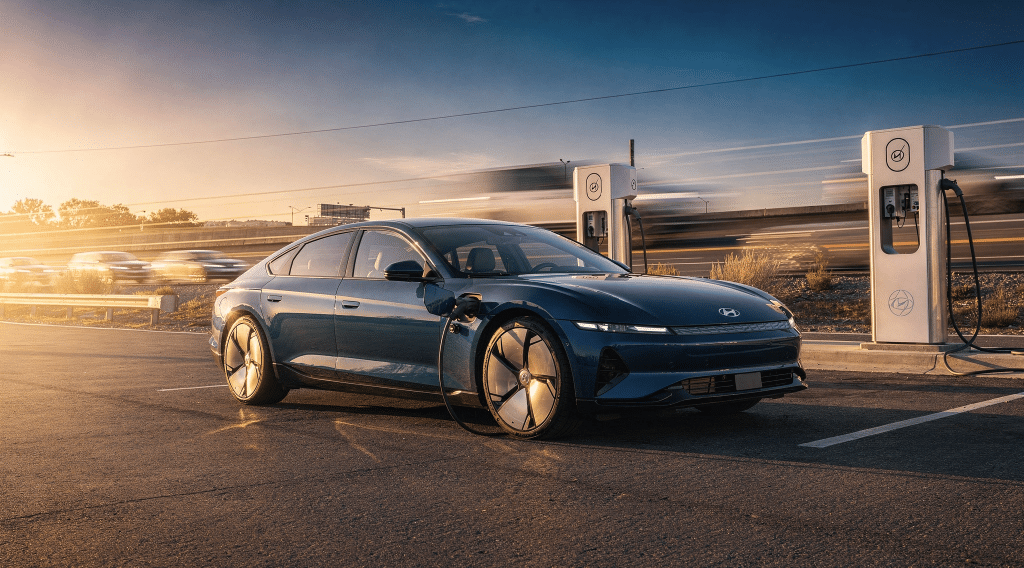
Hyundai has stated that the Ioniq 6 can charge from 10% to 80% in as little as 18 minutes under ideal conditions with a 350 kW DC fast charger. This incredible speed brings EV charging closer to the convenience of refueling a gasoline car for long journeys. However, ‘ideal conditions’ and ‘compatible chargers’ are key caveats that require further exploration within the context of US infrastructure.
Navigating the US Charging Landscape
The United States charging infrastructure is rapidly expanding, but consistency in charger availability, speed, and reliability can vary. The Ioniq 6’s ability to utilize 800V charging is a massive advantage, but it relies on the presence of chargers capable of delivering that power. Networks like Electrify America (which often partners with Hyundai) are increasingly deploying 350 kW chargers, but they are not yet ubiquitous across all regions.
When connected to a 150 kW DC fast charger, which is more common, the Ioniq 6 will still charge quickly, though not at its absolute peak rate. Even at 150 kW, a 10% to 80% charge could take around 25-30 minutes, which is still highly respectable. It’s crucial for owners to plan their routes and identify charging stations that can maximize the Ioniq 6’s charging potential. Apps like PlugShare or the vehicle’s built-in navigation system will be invaluable tools for this.
Level 2 Home Charging
For daily charging, most EV owners rely on Level 2 (240V) home charging. The 2026 Ioniq 6 will come with a robust onboard charger, likely supporting up to 11 kW AC charging. This means a full charge from empty at home could take approximately 6-8 hours, making it perfect for overnight charging. Installing a Level 2 charger at home is a highly recommended investment for any EV owner, providing unparalleled convenience and ensuring the vehicle is always ready for the day ahead. This aspect is often overlooked but critical in a practical Ioniq 6 Performance Review.
Comparative Performance: Ioniq 6 vs. Competitors
To truly appreciate the 2026 Hyundai Ioniq 6’s performance, it’s helpful to benchmark it against its closest rivals in the increasingly crowded EV sedan segment. Competitors like the Tesla Model 3, Polestar 2, and BMW i4 offer compelling packages, each with its own strengths.
Acceleration and Power
While the Tesla Model 3 Performance often sets the bar for acceleration, the dual-motor Ioniq 6 is poised to offer a very close, if not competitive, experience. Its instant torque and strong horsepower figures place it firmly in the performance sedan category. Polestar 2’s dual-motor variant also offers robust acceleration, but the Ioniq 6’s aerodynamic efficiency might give it an edge in sustained high-speed driving and overall range.
Range and Efficiency
The Ioniq 6’s impressive aerodynamic design and large battery capacity position it as a strong contender in terms of range. It is expected to rival or even exceed the range offered by many of its direct competitors, especially when comparing similarly priced dual-motor configurations. Hyundai’s dedication to optimizing every aspect for efficiency is evident here, translating into fewer charging stops for owners.
Charging Speed
This is where the Ioniq 6 truly shines. Its 800V architecture provides a significant advantage over most competitors, many of which are still on 400V systems. While Tesla’s Supercharger network is extensive and reliable, the Ioniq 6’s peak charging rate on compatible DC fast chargers can be superior, allowing for quicker turnaround times on long journeys. This is a crucial differentiator and a strong point in this Ioniq 6 Performance Review.
Driving Experience
Subjectively, driving dynamics will vary between these vehicles. The Ioniq 6 is expected to offer a refined and comfortable ride, characteristic of Hyundai’s recent offerings, combined with the engaging performance of its dual-motor setup. Its unique styling also sets it apart, offering a distinct aesthetic that appeals to those looking for something different from the mainstream EV designs.
Technological Innovations Enhancing Performance
Beyond the raw power and battery, the 2026 Hyundai Ioniq 6 incorporates several technological innovations that subtly, yet significantly, enhance its overall performance and user experience. These features underscore Hyundai’s commitment to delivering a holistic and advanced EV.
Vehicle-to-Load (V2L) Functionality
The Ioniq 6 is expected to retain its Vehicle-to-Load (V2L) capability, a unique feature that allows the car to act as a mobile power bank. This means you can plug in and power external electrical appliances, from camping equipment to power tools, directly from the car’s battery. While not directly related to driving performance, V2L adds immense utility and flexibility, making the Ioniq 6 more than just a mode of transport.
Advanced Driver-Assistance Systems (ADAS)
Hyundai’s SmartSense suite of ADAS features will be standard or available on the Ioniq 6, offering a comprehensive array of safety and convenience technologies. These include adaptive cruise control with stop-and-go, lane-keeping assist, blind-spot monitoring, and highway driving assist. These systems reduce driver fatigue, enhance safety, and contribute to a more relaxed and confident driving experience, indirectly supporting the overall performance by allowing the driver to focus on the road.
Software Over-the-Air (OTA) Updates
Like many modern EVs, the Ioniq 6 will likely support over-the-air (OTA) software updates. This capability allows Hyundai to push updates to the vehicle’s various systems, including infotainment, battery management, and even powertrain controls, without requiring a visit to the dealership. OTA updates can introduce new features, improve existing functionalities, and even enhance performance and efficiency over time, ensuring the vehicle remains current and optimized throughout its lifespan. This future-proofing is a key aspect of value in any modern Ioniq 6 Performance Review.
The Future of Electric Driving with the Ioniq 6
The 2026 Hyundai Ioniq 6, particularly in its dual-motor configuration, represents a compelling vision for the future of electric mobility. It combines striking design with robust performance, impressive range, and leading-edge charging technology. As the US charging infrastructure continues to mature and expand, the Ioniq 6’s 800V architecture will only become more advantageous, providing owners with rapid charging capabilities that minimize downtime.
Is the Ioniq 6 Right for You?
For those seeking an electric vehicle that offers a dynamic driving experience, a practical long range, and rapid charging, the 2026 Hyundai Ioniq 6 dual-motor is an extremely strong contender. Its blend of performance, efficiency, and advanced technology makes it suitable for daily commuting, weekend adventures, and longer road trips across the country. The distinctive styling also ensures it stands out from the crowd, appealing to buyers who value aesthetics as much as performance.
Consider your typical driving patterns, access to charging (both home and public), and your priorities for an EV. If instantaneous acceleration, confident handling, and minimal charging stops on long journeys are high on your list, then the Ioniq 6 warrants serious consideration. This in-depth Ioniq 6 Performance Review aims to arm you with the knowledge to make an informed decision.
Conclusion: A New Benchmark for Electric Sedans
In summary, the 2026 Hyundai Ioniq 6 dual-motor is poised to set a new benchmark in the electric sedan segment. Its powerful dual-motor setup delivers exhilarating performance and enhanced all-wheel-drive traction, making it a joy to drive in various conditions. The impressive battery capacity, coupled with its ultra-aerodynamic design, ensures a competitive range that alleviates range anxiety for most drivers.
Crucially, the Ioniq 6’s 800V charging architecture provides a significant advantage, allowing for some of the fastest charging times available on the market today, especially when utilizing high-power DC fast chargers across the US. While the charging infrastructure is still evolving, the Ioniq 6 is future-proofed to take full advantage of its advancements.
From its innovative V2L capabilities to its comprehensive suite of ADAS features and OTA updates, the Ioniq 6 is more than just a car; it’s a statement about the future of personal transportation. It embodies Hyundai’s bold vision for electric vehicles, combining performance, efficiency, and cutting-edge technology into a stylish and practical package. For anyone in the market for a high-performance electric sedan, the 2026 Hyundai Ioniq 6 dual-motor should undoubtedly be at the top of their test-drive list. This comprehensive Ioniq 6 Performance Review confirms its status as a formidable player in the EV arena.