Leasing vs. Buying a Car in 2026: A 5-Year Cost Analysis for Informed Decisions
The automotive landscape is ever-evolving, and as we approach 2026, the perennial question of leasing vs. buying a car becomes even more complex. With economic shifts, technological advancements, and changing consumer preferences, making the right decision requires a thorough understanding of the financial implications. This comprehensive guide will delve into a detailed 5-year cost analysis, helping you navigate the intricacies of both options and make an informed choice that aligns with your financial goals and lifestyle.
For many, a vehicle is one of the most significant purchases they will make, second only to a home. The choice between leasing and buying isn’t merely about monthly payments; it encompasses a myriad of factors including depreciation, maintenance, insurance, long-term value, and flexibility. As we look at 2026, these factors are influenced by inflation, interest rates, supply chain dynamics, and the accelerating transition to electric vehicles (EVs).
Understanding the Core Differences: Leasing vs. Buying
Before we dive into the numbers, it’s crucial to grasp the fundamental differences between leasing and buying. When you buy a car, you own it. You take out a loan, pay it off over time, and eventually, the car is yours free and clear. This builds equity, and you have complete freedom to modify, sell, or trade the vehicle as you see fit. However, you also bear the full burden of depreciation, maintenance, and eventual resale.
Leasing, on the other hand, is essentially a long-term rental. You pay to use the vehicle for a set period, typically 2 to 4 years, and then return it to the dealership. Your monthly payments cover the depreciation of the car during your lease term, plus interest and taxes. While leasing often comes with lower monthly payments and the ability to drive a new car more frequently, it doesn’t build equity, and you’re subject to mileage limits and wear-and-tear clauses.
The decision of leasing vs buying a car is highly personal and depends on your driving habits, financial situation, and how long you typically keep a vehicle. Let’s explore these aspects in detail for the 2026 market.
The 5-Year Cost Analysis: Buying a Car in 2026
When you choose to buy a car in 2026, you’re investing in an asset, albeit a depreciating one. A 5-year analysis of buying includes the initial purchase price, financing costs, insurance, maintenance, and the eventual resale or trade-in value.
Initial Purchase and Financing Costs
The upfront cost of buying a car can be substantial. This includes the down payment, sales tax, registration fees, and any dealer fees. For a purchase, a larger down payment can significantly reduce your monthly loan payments and the total interest paid over the life of the loan. In 2026, with potential fluctuations in interest rates, securing a favorable auto loan rate will be paramount. A 5-year loan term is common, meaning you’ll be paying off the vehicle over the entirety of our analysis period.
Consider a mid-range vehicle with an MSRP of $35,000. Assuming a 10% down payment ($3,500) and a 5-year loan at an average interest rate of 6% (which could vary based on market conditions in 2026 and your credit score), your monthly payments would be approximately $600-$650. Over five years, this translates to roughly $36,000-$39,000 in principal and interest, not including your down payment. The total cost of acquisition over 5 years would be around $39,500-$42,500.
Depreciation: The Silent Cost of Ownership
Depreciation is arguably the largest single cost of owning a car. A new car can lose 20-30% of its value in the first year alone, and 50-60% over five years. For our $35,000 vehicle, after five years, its market value might drop to $14,000-$17,500. This loss in value, while not a direct out-of-pocket expense each month, is a significant financial consideration when assessing the true cost of ownership. The impact of depreciation on the leasing vs buying car debate is profound, as lessors essentially pay for this depreciation.
Insurance Costs
Insurance premiums vary widely based on your age, driving record, location, and the type of vehicle. For a new car, comprehensive coverage is typically required by lenders. Over five years, insurance can easily accumulate to $5,000-$10,000 or more, depending on your individual circumstances. This is an ongoing cost regardless of whether you lease or buy, but it’s a critical component of the total ownership expense.
Maintenance and Repair Expenses
Modern vehicles are more reliable than ever, but maintenance is still essential. Over five years, expect routine service (oil changes, tire rotations, brake pads, etc.) to cost anywhere from $2,000 to $4,000. As the car ages, more significant repairs might be necessary, especially in years 4 and 5. Unexpected repairs could add several hundred to a few thousand dollars annually. The average annual maintenance cost for a 3-5 year old car can range from $500 to $1,000, totaling $2,500 to $5,000 over the five-year period.
Fuel and Other Operating Costs
Fuel costs are a variable but significant expense. Assuming an average of 12,000 miles driven per year and a vehicle that gets 30 MPG, at $3.50 per gallon (a conservative estimate for 2026), you’d spend about $1,400 per year on fuel, totaling $7,000 over five years. Other costs include registration renewals, inspections, and potentially parking fees or tolls.
Total 5-Year Buying Cost Estimate
Let’s summarize the estimated costs for buying a $35,000 car over five years:
- Down Payment: $3,500
- Loan Payments (Principal & Interest): $36,000 – $39,000
- Sales Tax & Fees: ~$2,000 (varies by state)
- Insurance: $5,000 – $10,000
- Maintenance: $2,500 – $5,000
- Fuel: $7,000
- Miscellaneous (Registration, etc.): $1,000 – $1,500
Estimated Total Out-of-Pocket Cost: $57,000 – $68,000
From this, you subtract the estimated resale value of the car (e.g., $15,000) to get the true cost of ownership. The net cost of owning this vehicle for five years would be approximately $42,000 – $53,000, assuming you sell it at the end of the period. This figure highlights the importance of considering the full financial picture when evaluating leasing vs buying a car.
The 5-Year Cost Analysis: Leasing a Car in 2026
Leasing offers a different financial structure, often characterized by lower monthly payments and less concern about long-term depreciation. However, it comes with its own set of considerations for a 5-year perspective.
Initial Costs and Monthly Lease Payments
Leasing typically requires a smaller upfront payment compared to buying. This might include a down payment (often called a ‘capitalized cost reduction’), acquisition fees, the first month’s payment, and security deposit. For our $35,000 vehicle, a typical lease might involve an upfront payment of $2,000-$3,000. Monthly lease payments are generally lower than loan payments for a comparable car because you’re only paying for the depreciation during the lease term, plus interest (money factor) and taxes.
A 3-year lease on a $35,000 car might have monthly payments ranging from $400-$550, depending on the residual value, money factor, and lease incentives. Over a 3-year term, this would total $14,400-$19,800 in payments. If you decide to lease for five years, you would typically enter into two consecutive 3-year leases, or a 3-year lease followed by a 2-year lease, meaning you would incur initial costs twice.
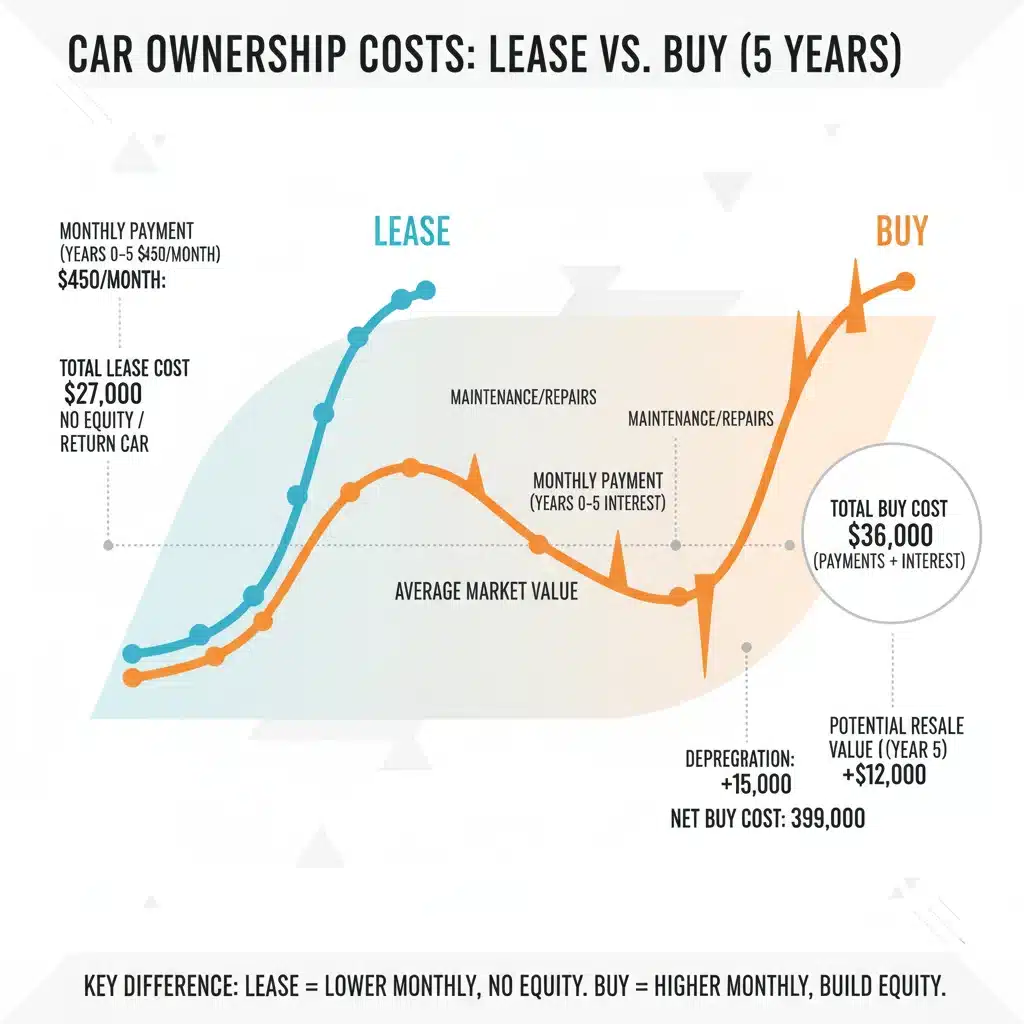
Let’s project for two consecutive 3-year leases for a 5-year analysis, acknowledging the slight overlap or gap. You’d likely lease a new car every 36 months. For the first 3-year lease:
- Upfront Costs: $2,500
- Monthly Payments ($475/month): $17,100
- Total for First Lease: $19,600
For the second lease (assuming similar terms for a new $35,000 vehicle after 3 years):
- Upfront Costs: $2,500
- Monthly Payments ($475/month for 2 years of the 5-year period): $11,400 (24 months * $475)
- Total for Second Lease (within 5-year window): $13,900
Total Lease Payments (over 5 years, two vehicles): $33,500
Insurance Costs for Leased Vehicles
Leasing companies often require higher insurance coverage (e.g., higher liability limits, lower deductibles) than what you might choose for a purchased vehicle. This is because they own the asset and want to protect their investment. Therefore, insurance costs for a leased car can sometimes be slightly higher than for a purchased one, even for the same vehicle. Over five years (two lease terms), this could still range from $5,000-$10,000, similar to buying, or potentially a bit more.
Maintenance and Repair (Under Warranty)
One of the major advantages of leasing is that you’re typically driving a car that is always under the manufacturer’s warranty. This means that most major repairs are covered. You’re still responsible for routine maintenance (oil changes, tire rotations), but these costs are generally lower for newer vehicles. Over a 3-year lease, maintenance might only be $1,000-$1,500. Over two lease terms within five years, this could be $2,000-$3,000.
Mileage Limits and Wear & Tear
Lease agreements come with mileage restrictions, typically 10,000-15,000 miles per year. Exceeding these limits can result in significant penalties (e.g., $0.15-$0.25 per mile). If you drive a lot, leasing can become very expensive. Similarly, excessive wear and tear beyond what’s considered normal can incur charges at the end of the lease. These are important considerations when evaluating the overall cost of leasing vs buying a car.
End-of-Lease Fees
At the end of a lease, you might face disposition fees (for returning the vehicle), excess mileage charges, and wear-and-tear penalties. These can add up to several hundred to a few thousand dollars. While not always incurred, they are a potential cost.
Fuel and Other Operating Costs
Fuel, registration, and other operating costs are similar to buying. Over five years, fuel would again be around $7,000. Registration might be slightly lower as a new car is registered more frequently, but the difference is usually negligible.
Total 5-Year Leasing Cost Estimate
Let’s summarize the estimated costs for two consecutive leases over five years:
- Upfront Costs (two leases): $5,000 (2 x $2,500)
- Monthly Lease Payments (across two vehicles): $33,500
- Sales Tax & Fees (incorporated into payments/upfront): ~$2,000
- Insurance: $5,000 – $10,000
- Maintenance: $2,000 – $3,000
- Fuel: $7,000
- Miscellaneous (Registration, End-of-Lease Fees): $1,500 – $3,000
Estimated Total Out-of-Pocket Cost: $56,000 – $63,500
It’s important to note that at the end of five years, you will have no equity in the vehicles. You will have to start over with new upfront costs for a third lease or a purchase. This is a critical distinction in the leasing vs buying a car debate.
Key Factors Influencing Your Decision in 2026
1. Financial Flexibility and Upfront Costs
Leasing generally requires less money down and offers lower monthly payments, making it an attractive option for those who prefer to keep more cash on hand or have a tighter budget. Buying, while requiring a larger initial outlay, builds equity over time. In an economy where interest rates might be volatile, the initial financial burden of buying can be higher, making leasing seem more appealing for short-term cash flow management.
2. Driving Habits and Mileage
If you drive more than 15,000 miles a year, buying is almost always more economical. Lease mileage limits can quickly lead to expensive penalties. If your daily commute is long or you frequently take road trips, the freedom of unlimited mileage with a purchased vehicle is a significant advantage. This is a major differentiator in the leasing vs buying a car discussion.
3. Desire for New Technology and Features
The pace of automotive innovation, particularly in EVs and autonomous driving features, is accelerating. If you enjoy driving the latest models with cutting-edge technology and want to upgrade every few years, leasing is a compelling option. It allows you to avoid the long-term depreciation of rapidly evolving tech and always have the newest features. Buyers, especially those who keep cars for 5+ years, might find their technology quickly outdated.
4. Maintenance and Reliability Concerns
Leasing typically means you’re always driving a car under warranty, minimizing unexpected repair costs. This peace of mind is a significant benefit. When you buy, especially beyond the 3-year mark, you become fully responsible for all maintenance and potential major repairs. This is where the long-term cost of ownership for buying can escalate, making the leasing vs buying car decision lean towards leasing for those who dread repair bills.

5. Equity and Long-Term Value
Buying a car means you eventually own it. While cars depreciate, the equity you build can be used as a trade-in for your next vehicle or simply provides a tangible asset. Leasing offers no equity; at the end of the term, you return the car and walk away with nothing but the memory of driving it. For those who see a vehicle as an investment or want to avoid perpetual car payments, buying is the clear winner.
6. Customization and Modifications
If you love to customize your vehicle with aftermarket parts, performance upgrades, or significant aesthetic changes, buying is your only real option. Lease agreements typically prohibit permanent modifications and may charge penalties for removing them or for any damage incurred during modification. This freedom to personalize is a key aspect of ownership in the leasing vs buying a car debate.
7. Market Conditions in 2026
The 2026 automotive market will be influenced by several factors:
- Interest Rates: Higher interest rates make both loans and leases more expensive.
- Vehicle Supply: Supply chain issues could still impact vehicle availability and pricing, affecting both purchase prices and lease residuals.
- EV Adoption: Government incentives for EVs might make leasing EVs particularly attractive, as manufacturers often pass on tax credits in the form of lower lease payments.
- Resale Values: The depreciation curve for internal combustion engine (ICE) vehicles might steepen as EV adoption grows, making the depreciation cost of buying an ICE car higher.
The Hybrid Approach: Lease-to-Buy Option
Some dealerships offer a lease-to-buy option, which can provide the best of both worlds. You lease the car for a few years, enjoying lower monthly payments and warranty coverage. At the end of the lease, you have the option to purchase the vehicle at a predetermined residual value. This allows you to ‘test drive’ a car for an extended period before committing to ownership, and protects you from unexpected depreciation if the market value drops below the residual. However, if the market value is significantly higher than the residual, you might miss out on potential equity. This option can be an interesting middle ground in the leasing vs buying a car decision.
Conclusion: Making Your Informed Decision in 2026
The choice between leasing vs buying a car in 2026 is not a one-size-fits-all answer. Both options present distinct financial profiles and lifestyle implications. Your decision should be guided by a careful consideration of your personal finances, driving habits, and priorities.
When Leasing Makes Sense:
- You prefer lower monthly payments and less upfront cash.
- You enjoy driving a new car every 2-4 years with the latest technology and safety features.
- You drive average or fewer miles per year (under 15,000).
- You appreciate having your vehicle under warranty, minimizing repair costs.
- You don’t want the hassle of selling or trading in a used car.
When Buying Makes Sense:
- You plan to keep your car for more than 5 years.
- You drive a lot and exceed typical mileage limits.
- You want to build equity and eventually own your vehicle free and clear.
- You prefer the freedom to customize your car.
- You want to avoid potential end-of-lease fees and mileage penalties.
- You are comfortable with eventual maintenance and repair costs as the vehicle ages.
As our 5-year cost analysis for 2026 reveals, the total out-of-pocket expenses for both options can be surprisingly similar over the long run, especially when considering the lack of equity in leasing. However, the distribution of those costs and the benefits derived from each are vastly different. Take the time to evaluate your unique situation, perhaps even consult a financial advisor, to determine which path offers the most value and peace of mind for your automotive needs in 2026 and beyond. Understanding the nuances of leasing vs buying a car is key to a financially sound decision.
Ultimately, whether you decide on leasing vs buying a car, the most important step is to do your research, understand all the terms and conditions, and negotiate effectively. Happy driving!