Powering Up: Is the 2026 US Grid Ready for Mass EV Adoption?
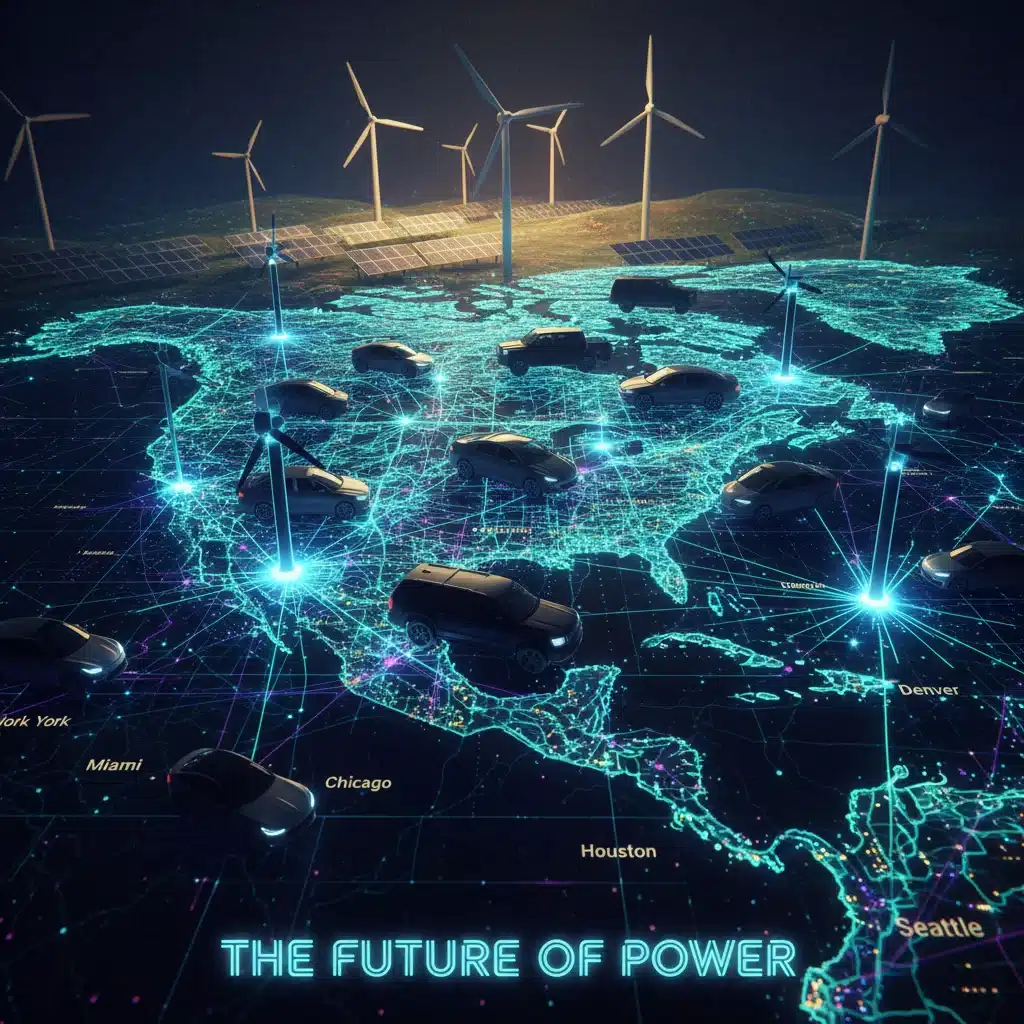
Is the 2026 US Grid Ready for Mass EV Adoption? Challenges and Solutions
The dawn of the electric vehicle (EV) era is upon us, bringing with it promises of cleaner air, reduced carbon emissions, and energy independence. However, as millions of Americans increasingly opt for EVs, a critical question emerges: Is the US Grid EV Readiness sufficient to handle this monumental shift by 2026? The answer is complex, involving intricate challenges and innovative solutions across infrastructure, technology, and policy.
The transition to electric vehicles is not merely about replacing gasoline cars with electric ones; it’s a fundamental reimagining of our energy consumption patterns and infrastructure. The electrical grid, often taken for granted, is the backbone of this transformation. Its ability to generate, transmit, and distribute the vast amounts of electricity required to power a nation of EVs will dictate the pace and success of this green revolution.
The Unprecedented Surge in EV Adoption and Its Implications
Forecasts for EV adoption are nothing short of astounding. Projections suggest that by 2026, electric vehicles could represent a significant percentage of new car sales, rapidly increasing the total number of EVs on the road. This surge is driven by a confluence of factors: technological advancements leading to longer ranges and lower costs, increasing environmental awareness, and substantial government incentives. While this growth is positive for climate goals, it places immense pressure on the existing electrical infrastructure.
Consider the sheer volume of energy required. A typical EV charging at home can draw as much power as several average-sized houses. Multiply that by millions of vehicles, and the demand on the grid becomes enormous. This isn’t just about total energy consumption; it’s also about the timing and location of that consumption. Peak charging times, often in the evenings when people return home from work, coincide with existing residential peak demand, creating potential strain and bottlenecks.
The implications extend beyond just power generation. The transmission and distribution lines, substations, and transformers that deliver electricity to our homes and businesses were not originally designed to accommodate such concentrated and fluctuating loads. Without significant upgrades, localized outages and grid instability could become more frequent, undermining public confidence in EV technology and hindering the very progress we aim to achieve. Ensuring US Grid EV Readiness is paramount to avoiding these pitfalls.
Key Challenges Facing the 2026 US Grid
Preparing the US grid for mass EV adoption by 2026 involves overcoming several formidable hurdles. These challenges are interconnected and require a holistic approach for effective resolution.
1. Insufficient Generation Capacity
While the overall generation capacity of the US grid is substantial, the question isn’t just about total output but about the flexibility and sustainability of that output. As EV adoption escalates, the demand for electricity will rise considerably. Relying solely on existing fossil fuel-based power plants to meet this new demand would negate many of the environmental benefits of EVs. The challenge lies in expanding clean energy generation – solar, wind, hydro, and geothermal – at a pace that keeps up with EV growth, while ensuring grid stability and reliability. This rapid expansion requires significant investment and streamlined regulatory processes.
2. Aging Transmission and Distribution Infrastructure
Much of the US electrical grid is decades old, built for a different era of energy consumption. The transmission and distribution lines that carry high-voltage electricity over long distances and the local distribution networks that deliver it to homes and businesses are often operating at or near their capacity. The increased and often localized demand from EV charging can overload these systems, leading to equipment failure, power outages, and inefficiencies. Upgrading and modernizing this infrastructure, including replacing old transformers, strengthening power lines, and improving substation capacity, is a massive undertaking that requires substantial capital and time.
3. Lack of Smart Grid Technologies
The traditional electrical grid is largely a one-way system, with power flowing from generation to consumption. A smart grid, by contrast, incorporates digital communication technology to detect and react to local changes in usage. This bidirectional flow of information and electricity is crucial for managing the dynamic loads introduced by EVs. Without smart grid capabilities, utilities struggle to monitor real-time demand, optimize power flow, and integrate distributed energy resources like rooftop solar. This lack of intelligence means inefficient resource allocation and a higher risk of grid instability, directly impacting US Grid EV Readiness.
4. Charging Infrastructure Bottlenecks
Beyond the grid itself, the charging infrastructure needs to be robust and ubiquitous. This includes not only public fast-charging stations but also residential and workplace charging solutions. The deployment of these chargers must be strategic, considering population density, travel patterns, and existing grid capacity. The sheer number of chargers required, coupled with the need for interoperability and reliable payment systems, presents a significant logistical and financial challenge. Furthermore, the integration of these chargers into the grid, ensuring they don’t overwhelm local circuits, is a complex engineering task.
5. Cybersecurity Risks
As the grid becomes more digitized and interconnected through smart technologies and EV charging networks, it also becomes more vulnerable to cyberattacks. A successful cyberattack on the grid could have catastrophic consequences, disrupting power supply to millions and crippling essential services. Protecting this critical infrastructure requires continuous investment in advanced cybersecurity measures, robust protocols, and a skilled workforce to defend against evolving threats. The digital transformation necessary for US Grid EV Readiness must be accompanied by enhanced security.
Innovative Solutions for a Resilient EV-Ready Grid
Addressing these challenges requires a multi-faceted approach, combining technological innovation, strategic investment, and forward-thinking policy. The good news is that many solutions are already in development or being implemented.
1. Renewable Energy Expansion and Storage
A significant part of the solution lies in accelerating the transition to renewable energy sources. Solar and wind power, when coupled with advanced battery storage systems, can provide clean, dispatchable power to meet increased EV demand. Investment in large-scale renewable projects, along with incentives for distributed generation (e.g., rooftop solar with home battery storage), will diversify the energy mix and reduce reliance on fossil fuels. Energy storage, particularly utility-scale batteries, is crucial for balancing the intermittency of renewables and providing power during peak EV charging times, thereby enhancing US Grid EV Readiness.
2. Smart Grid Modernization and Digitization
Upgrading to a smart grid is non-negotiable. This involves deploying advanced metering infrastructure (AMI), sensors, and communication networks across the grid. These technologies enable real-time monitoring of electricity flow, demand forecasting, and automated responses to grid disturbances. Smart grid systems can optimize power distribution, integrate distributed energy resources, and facilitate demand-side management programs (e.g., encouraging off-peak charging). This modernization allows for more efficient use of existing infrastructure and better management of new EV loads.

3. Vehicle-to-Grid (V2G) Technology
V2G technology represents a paradigm shift, transforming EVs from mere consumers of electricity into active participants in grid management. With V2G, EVs can not only draw power from the grid but also feed excess energy back into it during periods of high demand or low renewable generation. This turns parked EVs into a vast network of mobile batteries, providing ancillary services, stabilizing the grid, and potentially generating revenue for vehicle owners. While still in its nascent stages, V2G holds immense potential for bolstering US Grid EV Readiness and creating a more resilient energy ecosystem.
4. Targeted Infrastructure Upgrades
Instead of a blanket overhaul, strategic and targeted upgrades to transmission and distribution infrastructure are essential. This includes identifying and reinforcing bottleneck areas, upgrading substations, and deploying advanced conductors that can carry more power. Microgrids, localized energy grids that can operate independently from the main grid, also offer a solution for enhancing local resilience and supporting critical loads, including EV charging hubs. Investing in resilient infrastructure ensures that power can be reliably delivered where and when it’s needed most.
5. Demand-Side Management and Incentives
Encouraging smart charging behavior through incentives is a powerful tool. Utilities can offer lower electricity rates for off-peak charging (e.g., overnight) or implement demand response programs that temporarily reduce charging rates during grid strain. These programs help shift demand away from peak hours, alleviating pressure on the grid and making it more manageable. Public awareness campaigns and user-friendly smart charging apps can further empower EV owners to participate in these programs, contributing to overall US Grid EV Readiness.
The Role of Policy and Investment
Government policies and substantial investment are indispensable for achieving a truly EV-ready grid by 2026. The private sector, while playing a crucial role, cannot bear the entire burden of this transformation alone.
1. Federal and State Funding
Legislation like the Bipartisan Infrastructure Law has allocated significant funds for grid modernization, EV charging infrastructure, and clean energy projects. Continued and expanded federal and state funding is vital for accelerating the deployment of smart grid technologies, upgrading aging infrastructure, and incentivizing renewable energy development. These investments create a stable framework for innovation and growth.
2. Regulatory Reforms
Outdated regulations can hinder grid modernization and the integration of new technologies. Regulatory bodies need to adapt to the evolving energy landscape by streamlining permitting processes for renewable energy projects, establishing clear guidelines for V2G integration, and creating frameworks that incentivize utilities to invest in grid resilience and smart technologies. Forward-looking regulatory reforms are critical for fostering an environment conducive to US Grid EV Readiness.
3. Public-Private Partnerships
Collaboration between government agencies, utilities, technology providers, and EV manufacturers is essential. Public-private partnerships can leverage diverse expertise and resources to overcome complex challenges, share risks, and accelerate the deployment of innovative solutions. These collaborations can drive research and development, pilot new technologies, and scale successful initiatives across the nation.
4. Workforce Development
The transition to an EV-ready grid requires a skilled workforce capable of designing, building, operating, and maintaining advanced energy systems. Investment in education and training programs focused on renewable energy, smart grid technologies, cybersecurity, and EV charging infrastructure is crucial. Developing this talent pipeline ensures that the human capital is available to support the technological advancements and maintain US Grid EV Readiness.
Regional Disparities and Equitable Access
It’s important to acknowledge that the readiness of the US grid is not uniform across all regions. Areas with high population density, existing grid constraints, or a slower adoption of renewable energy may face greater challenges. Conversely, regions with proactive utility companies and supportive state policies might be better positioned.
Ensuring equitable access to EV charging infrastructure and a resilient grid is also paramount. Low-income communities and rural areas often lag in infrastructure development. Policies must ensure that the benefits of EV adoption and a modernized grid are accessible to all, preventing a ‘two-tiered’ energy system. This includes targeted investments in underserved areas and programs to reduce the upfront costs of EVs and charging equipment for all demographics.

The Path Forward for 2026 and Beyond
By 2026, significant progress towards US Grid EV Readiness is achievable, but it will require sustained effort and commitment. The foundation is being laid, with increased awareness, technological advancements, and policy initiatives. However, the pace of EV adoption continues to outstrip some infrastructure upgrades, highlighting the urgency of continued action.
The journey to a fully EV-ready grid is not a sprint but a marathon. It involves continuous adaptation, learning, and innovation. The challenges are substantial, but the solutions are within reach. By focusing on renewable energy integration, smart grid modernization, strategic infrastructure upgrades, and supportive policies, the US can build a resilient, sustainable, and reliable electrical grid capable of powering the electric vehicle revolution for decades to come.
The future of transportation is electric, and the future of our energy system must evolve to meet it. The vision of a cleaner, more sustainable future depends on our ability to transform the grid, making US Grid EV Readiness not just a goal, but a reality.
Conclusion: A Collective Effort for an Electrified Future
The question of whether the 2026 US grid will be ready for mass EV adoption is not a simple yes or no. It’s a testament to the dynamic interplay between technological innovation, economic investment, and policy foresight. While significant hurdles remain, the momentum towards an electrified transportation future is undeniable, and with it comes a powerful impetus for grid modernization.
Achieving comprehensive US Grid EV Readiness by 2026 demands a collective, coordinated effort from all stakeholders: government agencies, utilities, private industry, and consumers. Continued investment in renewable energy sources, the widespread deployment of smart grid technologies, strategic upgrades to aging infrastructure, and the innovative integration of Vehicle-to-Grid capabilities are not merely options but necessities.
Furthermore, policies that incentivize smart charging behaviors, streamline regulatory processes, and ensure equitable access to charging infrastructure will be crucial in smoothing this transition. The cybersecurity of our increasingly digitized grid must also remain a top priority, safeguarding against potential disruptions.
The benefits of a successful transition are immense: a cleaner environment, reduced reliance on fossil fuels, and a more resilient energy system. While 2026 serves as an important near-term benchmark, the ongoing evolution of the grid to support EVs will be a continuous process. By embracing innovation and collaboration, the United States can pave the way for a sustainable, electrified future, ensuring that our power grid is not just ready, but truly optimized for the electric vehicle revolution.