Fleet Electrification 2026: 25% US Commercial EV Adoption Surge
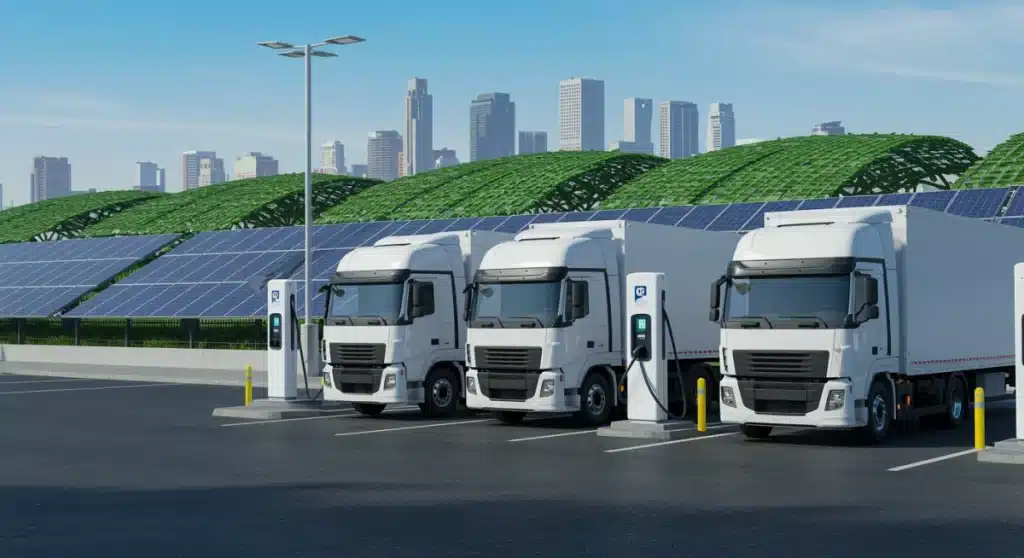
By 2026, the United States is projected to witness a significant 25% increase in commercial electric vehicle adoption, marking a pivotal shift towards sustainable fleet operations and substantial environmental benefits.
The landscape of commercial transportation is undergoing a profound transformation, with fleet electrification in 2026 emerging as a key driver of change. This movement is not merely a trend but a strategic imperative, anticipating a remarkable 25% increase in US commercial electric vehicle (EV) adoption and delivering significant environmental benefits.
the driving forces behind commercial EV adoption
The surge in commercial electric vehicle adoption is not accidental; it is underpinned by a confluence of economic, regulatory, and technological factors. Businesses are increasingly recognizing the long-term cost savings, operational efficiencies, and enhanced brand image that come with transitioning to electric fleets.
Government incentives, both federal and state, play a crucial role in mitigating the initial investment costs associated with EVs and charging infrastructure. These incentives, ranging from tax credits to grants, make the financial proposition of fleet electrification far more attractive for companies of all sizes.
economic advantages of electric fleets
- Reduced operating costs: Electric vehicles typically have lower fuel and maintenance costs compared to their internal combustion engine counterparts. Electricity is generally cheaper and more stable in price than gasoline or diesel, and EVs have fewer moving parts, leading to less wear and tear.
- Incentives and rebates: Various government programs offer financial support for purchasing commercial EVs and installing charging infrastructure, significantly reducing the upfront capital expenditure.
- Improved total cost of ownership (TCO): When factoring in fuel savings, maintenance reductions, and incentives, the TCO for electric fleets often proves more favorable over the vehicle’s lifespan.
Beyond the immediate financial benefits, the long-term sustainability goals of many corporations are aligning with electrification. Companies are under increasing pressure from consumers, investors, and regulators to reduce their carbon footprint and demonstrate environmental responsibility. Electric fleets offer a tangible and measurable way to achieve these objectives, contributing to a greener corporate image and attracting environmentally conscious stakeholders.
In conclusion, the momentum towards commercial EV adoption is fueled by a compelling mix of financial prudence, supportive policies, and a growing commitment to environmental stewardship. These factors collectively create a powerful incentive for businesses to accelerate their transition to electric fleets, signaling a fundamental shift in the transportation sector.
environmental benefits: a cleaner, quieter future
The environmental advantages of widespread commercial EV adoption are perhaps the most compelling argument for fleet electrification. As more businesses transition their fleets from fossil fuel-powered vehicles to electric, the positive impact on air quality, climate change, and noise pollution becomes increasingly evident.
One of the primary benefits is the substantial reduction in greenhouse gas emissions. Electric vehicles produce zero tailpipe emissions, directly contributing to cleaner air in urban and suburban areas. This reduction is critical for combating climate change and improving public health, especially in communities heavily impacted by vehicle pollution.
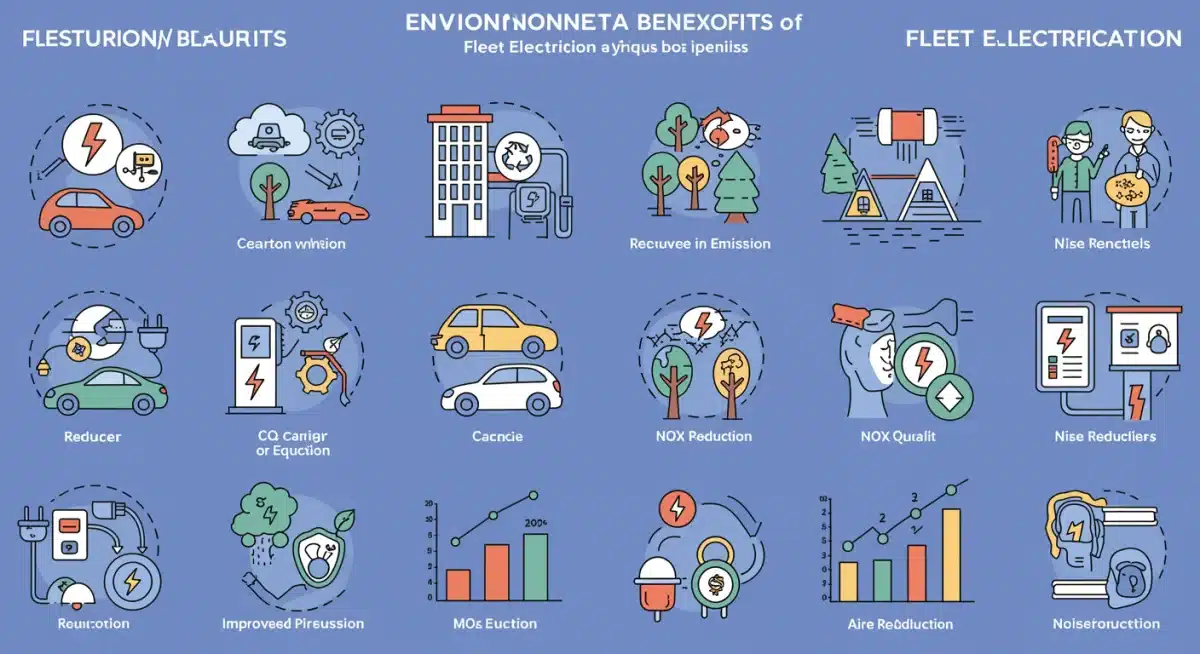
Beyond carbon dioxide, EVs also eliminate emissions of harmful pollutants like nitrogen oxides (NOx) and particulate matter (PM2.5), which are known contributors to respiratory illnesses and other health issues. This improvement in air quality translates directly into better public health outcomes and reduced healthcare costs.
reducing carbon footprint and air pollution
The shift to electric fleets directly addresses the urgent need to reduce carbon emissions. By replacing diesel or gasoline vehicles with EVs, companies can dramatically lower their operational carbon footprint, aligning with global climate goals and corporate sustainability initiatives. This transition is not just about individual vehicles but about transforming entire logistics and delivery networks.
Moreover, the quieter operation of electric vehicles offers a significant, often overlooked, environmental benefit: noise reduction. Commercial vehicles, particularly those operating in urban environments, are major contributors to noise pollution. Electric fleets can significantly reduce this, leading to more peaceful communities and improved quality of life for residents.
In essence, the environmental benefits of commercial EV adoption extend far beyond just cleaner air. They encompass a holistic improvement in urban environments, a tangible step towards mitigating climate change, and a commitment to creating healthier, more sustainable communities for everyone. The projected 25% increase in US commercial EV adoption by 2026 represents a critical milestone in this journey.
overcoming infrastructure challenges for growth
While the benefits of fleet electrification are clear, the path to widespread adoption is not without its hurdles, particularly concerning charging infrastructure. The rapid expansion of commercial EV fleets necessitates a robust and scalable charging network capable of meeting diverse operational demands.
Developing adequate charging infrastructure requires significant investment and strategic planning. This includes not only the installation of charging stations at depots and warehouses but also the consideration of public charging options for longer routes and unexpected needs. The sheer volume of power required for large commercial fleets presents a unique challenge for existing electrical grids.
key infrastructure considerations
- Depot charging: Establishing sufficient charging capacity at fleet depots is paramount for overnight charging and operational readiness. This often requires upgrades to electrical service and careful energy management.
- Route planning and public charging: For fleets that operate over long distances, access to public fast-charging stations along their routes becomes essential. This requires collaboration between fleet operators, charging network providers, and local governments.
- Grid capacity and smart charging: Integrating a large number of commercial EVs into the grid demands intelligent charging solutions that can manage power demand, optimize charging times, and potentially integrate with renewable energy sources.
Many companies are exploring innovative charging solutions, such as smart charging systems that can dynamically adjust charging schedules to take advantage of off-peak electricity rates or integrate with on-site renewable energy generation. The development of more powerful and efficient fast chargers is also critical for minimizing vehicle downtime.
Addressing these infrastructure challenges is not merely a technical task; it requires a concerted effort from policymakers, utility companies, technology providers, and fleet operators. Collaborative initiatives and supportive regulatory frameworks are essential to accelerate the deployment of the necessary charging infrastructure, ensuring that the projected growth in commercial EV adoption can be sustained.
government policies and incentives shaping the market
Government policies and incentives are undeniably powerful catalysts accelerating the adoption of commercial electric vehicles across the United States. These measures provide the financial impetus and regulatory clarity needed to encourage businesses to invest in fleet electrification, thereby supporting the projected 25% increase in US commercial EV adoption by 2026.
At the federal level, various programs offer significant tax credits and grants for the purchase of new clean commercial vehicles and the installation of charging infrastructure. These incentives directly reduce the capital expenditure for businesses, making the transition to electric fleets more economically viable and less risky.
federal and state support mechanisms
- Federal tax credits: Programs like the clean commercial vehicle tax credit provide substantial financial relief for eligible EV purchases, making them more competitive with traditional vehicles.
- State-specific incentives: Many states offer their own suite of incentives, including rebates, grants, and favorable utility rates for EV charging, further sweetening the deal for local businesses.
- Regulatory mandates and targets: Some states and municipalities are implementing regulations or setting targets for fleet electrification, compelling businesses to transition to meet compliance requirements and contribute to local environmental goals.
Beyond direct financial incentives, government policies also play a crucial role in fostering research and development in EV technology and charging solutions. Funding for pilot programs, infrastructure development, and battery advancements helps to drive innovation and address some of the remaining technological barriers to widespread adoption.
The consistency and predictability of these policies are vital for businesses to make long-term investment decisions. A stable policy environment assures companies that their investments in electric fleets will continue to be supported, encouraging further commitment to electrification. This interplay of financial incentives, regulatory support, and R&D funding creates a robust framework that is actively shaping the future of commercial transportation.
technological advancements driving efficiency and range
The rapid pace of technological innovation is a critical enabler for the projected growth in commercial EV adoption. Advancements in battery technology, motor efficiency, and vehicle design are directly addressing some of the historical limitations of electric vehicles, making them increasingly practical and appealing for commercial applications.
Battery technology, in particular, has seen exponential improvements in energy density, charging speed, and longevity. These enhancements translate into longer driving ranges for commercial EVs, reducing range anxiety and allowing for more extensive delivery routes. Faster charging capabilities also minimize downtime, ensuring that vehicles can be quickly recharged and returned to service.
innovations enhancing EV performance
- Improved battery chemistry: New battery compositions are leading to higher energy density, meaning more power packed into smaller, lighter units, thus extending vehicle range.
- Faster charging rates: Advancements in charging technology allow for quicker replenishment of battery power, significantly reducing the time commercial vehicles spend off-road.
- Efficient electric powertrains: Modern electric motors are becoming more compact and efficient, optimizing energy usage and improving overall vehicle performance and reliability.
Beyond the core components, telematics and fleet management software are also evolving to specifically cater to electric fleets. These systems provide real-time data on battery health, charging status, energy consumption, and optimal routing, allowing fleet managers to maximize efficiency and proactively manage their electric assets.
The integration of artificial intelligence and machine learning is further enhancing these systems, enabling predictive maintenance, optimized charging schedules, and intelligent route planning that takes into account charging availability and energy costs. These technological advancements are not only making commercial EVs more capable but also more intelligent and easier to manage, solidifying their role in the future of transportation.
challenges and considerations for fleet managers
While the trajectory for commercial EV adoption is upward, fleet managers face several critical challenges and considerations in their transition to electric vehicles. Navigating these complexities is essential for a successful and sustainable shift, particularly as the US commercial EV adoption aims for a 25% increase by 2026.
One primary concern is the initial acquisition cost of electric commercial vehicles, which can still be higher than their traditional counterparts, despite available incentives. Fleet managers must carefully evaluate the total cost of ownership (TCO) over the vehicle’s lifespan, factoring in fuel savings, reduced maintenance, and potential resale value.
navigating the transition to electric fleets
- Initial capital expenditure: The upfront cost of commercial EVs remains a significant barrier for some businesses, requiring careful financial planning and a thorough understanding of available incentives.
- Charging infrastructure deployment: Planning and installing adequate charging infrastructure, both at depots and potentially along routes, presents a complex logistical and financial challenge.
- Driver training and adaptation: Drivers need to be trained on the unique operational characteristics of electric vehicles, including regenerative braking, range management, and charging protocols.
- Maintenance and repair expertise: Technicians require specialized training and tools to service and repair electric powertrains and high-voltage battery systems.
Another crucial aspect is the operational impact of charging times and range limitations. Fleet managers must meticulously plan routes and schedules to ensure vehicles have sufficient charge for their tasks and adequate time for recharging, minimizing disruptions to service. This often requires a re-evaluation of traditional operational models.
Furthermore, the availability of a diverse range of commercial EV models that can meet specific industry needs is still evolving. While options are increasing, specialized vehicles for heavy-duty applications or unique operational requirements might still be limited. Overcoming these challenges requires strategic planning, a willingness to adapt, and leveraging available resources and expertise. Fleet managers who proactively address these considerations will be best positioned to capitalize on the benefits of electrification.
the future outlook: beyond 2026
Looking beyond the projected 25% increase in US commercial EV adoption by 2026, the future of fleet electrification appears even more dynamic and integrated. The foundational changes occurring now are setting the stage for a fully electric commercial transportation ecosystem that will continue to evolve rapidly.
We can anticipate further innovations in battery technology, leading to even greater energy density, faster charging, and potentially new battery chemistries that are more sustainable and cost-effective. These advancements will continue to push the boundaries of range and payload capacity for commercial EVs, making them viable for an even wider array of applications.
The charging infrastructure will also mature significantly, moving beyond basic charging stations to intelligent, interconnected networks. Vehicle-to-grid (V2G) technology, where electric vehicles can feed power back into the grid during peak demand, is expected to become more prevalent, transforming fleets into mobile energy assets. This integration will enhance grid stability and open new revenue streams for fleet operators.
Moreover, the regulatory environment will likely continue to tighten, with more stringent emissions standards and incentives further favoring electric vehicles. This will create a virtuous cycle, driving greater adoption, which in turn will spur further technological development and infrastructure investment. The emphasis will shift from merely adopting EVs to optimizing their entire lifecycle, including battery recycling and second-life applications.
The long-term vision involves fully autonomous electric commercial vehicles, operating in highly optimized, interconnected logistics networks. This future promises not only zero emissions but also unprecedented levels of efficiency, safety, and cost-effectiveness in commercial transportation. The groundwork laid by fleet electrification in 2026 is merely the beginning of this transformative journey, pointing towards a greener, smarter, and more sustainable future for commercial mobility.
| Key Aspect | Brief Description |
|---|---|
| Projected Growth | US commercial EV adoption expected to increase by 25% by 2026. |
| Environmental Impact | Significant reduction in carbon emissions, improved air quality, and noise reduction. |
| Challenges | Infrastructure development, initial costs, and fleet management adaptation. |
| Enablers | Government incentives, technological advancements, and operational cost savings. |
Frequently asked questions about fleet electrification
The projected increase is driven by a combination of factors including significant operational cost savings from lower fuel and maintenance, robust government incentives, and a growing corporate commitment to environmental sustainability goals and improved public image.
The primary environmental benefits include a substantial reduction in greenhouse gas emissions, leading to cleaner air and a significant contribution to combating climate change. Additionally, electric fleets notably reduce noise pollution in urban areas, improving community quality of life.
Key challenges involve developing sufficient charging infrastructure at depots and along routes, managing the increased demand on electrical grids, and integrating smart charging solutions. These require substantial investment and strategic planning across various stakeholders.
Government policies are providing crucial support through federal and state tax credits, grants for vehicle purchases and infrastructure, and regulatory mandates. These measures help offset initial costs and create a favorable environment for businesses to invest in electric fleets.
Key advancements include improvements in battery energy density, leading to longer ranges and faster charging. More efficient electric powertrains and sophisticated telematics systems are also enhancing operational performance, reliability, and intelligent fleet management capabilities.
Conclusion
The projected 25% increase in US commercial EV adoption by 2026 underscores a transformative period for the transportation sector, driven by compelling economic advantages, technological progress, and critical environmental imperatives. While challenges related to infrastructure and initial investment persist, the concerted efforts of policymakers, innovators, and businesses are steadily paving the way for a cleaner, more efficient, and sustainable future for commercial fleets. This shift not only promises significant reductions in carbon emissions and air pollution but also signals a fundamental redefinition of operational efficiency and corporate responsibility in the evolving automotive landscape.