Leasing vs. Buying a Car in 2026: The Ultimate Guide for Smart Decisions
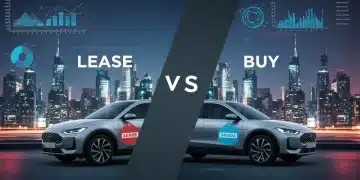
Choosing your next vehicle is an exciting prospect, but the decision between leasing and buying can often feel like navigating a complex financial labyrinth. As we approach 2026, the automotive landscape continues to evolve, bringing with it new considerations, technologies, and market dynamics that impact both options. This comprehensive guide aims to demystify the debate of Leasing vs Buying 2026, providing you with the insights needed to make an informed decision that aligns with your financial goals and lifestyle.
For decades, car ownership has been a cornerstone of the American dream, a symbol of independence and stability. However, the rise of flexible financing options like leasing has presented a compelling alternative, particularly in an era where technological advancements make vehicles obsolete at a faster pace. Understanding the nuances of each choice is paramount, especially as economic conditions, interest rates, and vehicle availability continue to shift. This article will delve deep into the pros and cons, financial implications, and practical considerations of both leasing and buying a car in the current and projected market of 2026.
The Fundamentals: What Exactly Are Leasing and Buying?
Before we dive into the comparative analysis, let’s establish a clear understanding of what leasing and buying entail.
Buying a Car: The Traditional Path to Ownership
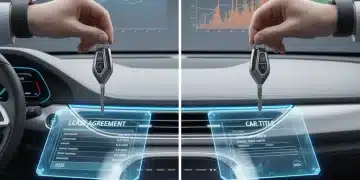
When you buy a car, whether new or used, you are purchasing the vehicle outright. This typically involves paying the full price upfront, or more commonly, securing a loan to finance the purchase. Over time, as you make your monthly loan payments, you build equity in the vehicle. Once the loan is paid off, you own the car free and clear, and it becomes an asset (albeit a depreciating one) on your balance sheet.
Key characteristics of buying:
- Ownership: You own the vehicle once the loan is repaid.
- Full control: No mileage limits, no restrictions on modifications, and you can sell it whenever you wish.
- Equity building: You gain equity as you pay down the loan.
- Long-term commitment: Loans typically range from 3 to 7 years.
Leasing a Car: The Flexible Alternative
Leasing, in contrast, is essentially a long-term rental agreement. You pay to use a vehicle for a specified period, usually 2 to 4 years, and for a predetermined number of miles. At the end of the lease term, you return the vehicle to the dealership. You are not building equity because you never truly own the car.
Key characteristics of leasing:
- No ownership: You are essentially renting the vehicle.
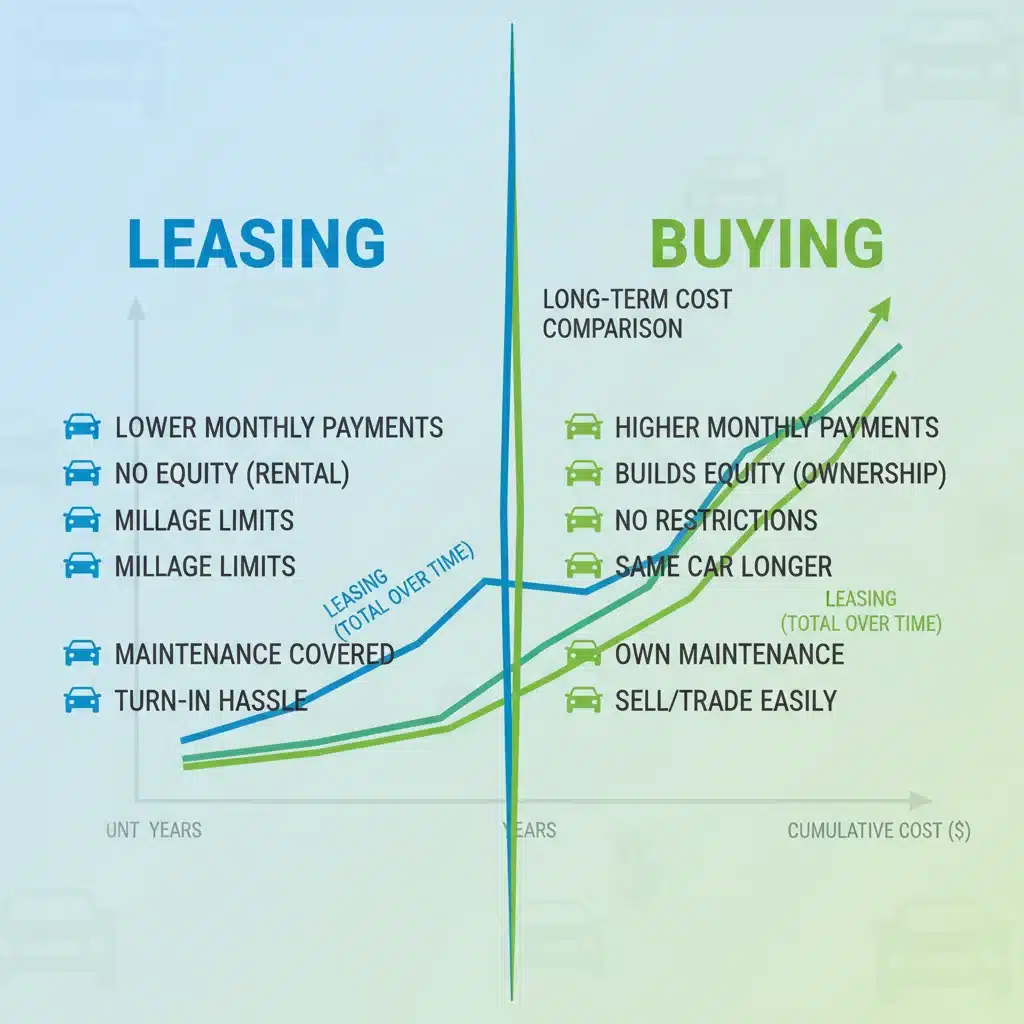
- Lower monthly payments: Payments are based on the depreciation of the car during the lease term, not its full purchase price.
- New cars more often: You can drive a new car every few years.
- Mileage restrictions: Leases come with strict annual mileage limits.
- Wear and tear clauses: You may be charged for excessive wear and tear at the end of the lease.
Financial Implications: A Deep Dive into Costs for Leasing vs Buying 2026
The financial aspect is often the most significant factor in the Leasing vs Buying 2026 decision. Let’s break down the costs associated with each option.
Buying: The Cost Breakdown
When buying, your costs typically include:
- Down Payment: Often 10-20% of the vehicle’s purchase price, though some loans require less or none.
- Monthly Loan Payments: These cover the principal and interest over the loan term. The amount depends on the loan amount, interest rate, and term length.
- Interest Rates: These can vary significantly based on your credit score, market conditions, and the lender. In 2026, interest rates could be influenced by global economic factors, so it’s crucial to shop around for the best rates.
- Sales Tax and Fees: These are typically paid upfront or rolled into the loan.
- Insurance: Full coverage insurance is usually required as long as you have a loan.
- Maintenance and Repairs: As the car ages, these costs tend to increase.
- Depreciation: While not an out-of-pocket expense, it’s a significant financial reality. Cars lose value over time, especially in the first few years.
Pros of Buying (Financial):
- Equity: You build equity with each payment, contributing to your net worth.
- No Mileage Penalties: Drive as much as you want without fear of extra charges.
- Lower Long-Term Costs: Once the loan is paid off, your only car expenses are insurance, maintenance, and fuel. Over a 10-year period, buying is often cheaper than continually leasing.
- Resale Value: You can sell or trade in the car at any time and keep the proceeds.
Cons of Buying (Financial):
- Higher Monthly Payments: Generally, loan payments are higher than lease payments for comparable vehicles.
- Significant Upfront Costs: Down payments, taxes, and fees can be substantial.
- Depreciation Risk: You bear the full burden of depreciation.
- Maintenance Costs Increase with Age: As the car gets older, maintenance and repair costs tend to rise.
Leasing: The Cost Breakdown
Leasing costs typically include:
- Down Payment (or "Capitalized Cost Reduction"): While often lower than a purchase down payment, it’s still an upfront cost. Some leases offer no money down.
- Monthly Lease Payments: These are based on the difference between the car’s initial value (capitalized cost) and its projected value at the end of the lease (residual value), plus interest (money factor), taxes, and fees.
- Acquisition Fee: A fee charged by the leasing company for setting up the lease.
- Sales Tax: Usually paid on the monthly payment amount, rather than the full vehicle price.
- Insurance: Lease agreements often require specific, higher coverage insurance than what you might choose for a purchased vehicle.
- End-of-Lease Fees: These can include disposition fees, excess mileage charges, and charges for excessive wear and tear.
Pros of Leasing (Financial):
- Lower Monthly Payments: Often significantly lower than buying, freeing up cash flow.
- Lower Upfront Costs: Down payments are typically smaller or can be avoided entirely.
- New Car Every Few Years: You always drive a vehicle with the latest technology and safety features, often still under warranty, reducing unexpected repair costs.
- Tax Advantages for Businesses: Business owners may be able to deduct lease payments as an operating expense.
Cons of Leasing (Financial):
- No Equity: You don’t own the car and build no equity.
- Mileage Restrictions: Exceeding your mileage limit can be very costly (e.g., $0.15-$0.25 per mile).
- Wear and Tear Charges: You can be charged for dents, dings, excessive tire wear, or interior damage beyond "normal" wear and tear.
- Early Termination Penalties: Breaking a lease early can be extremely expensive.
- Higher Overall Cost (Long-Term): If you consistently lease new cars, you’ll likely spend more over a 10-year period than if you bought a car and kept it for the same duration.
Lifestyle and Practical Considerations for Leasing vs Buying 2026
Beyond the numbers, your lifestyle, driving habits, and long-term plans play a crucial role in determining the best option for you. The automotive landscape of 2026 also introduces specific factors to consider.
Who Should Consider Buying in 2026?
- High Mileage Drivers: If you drive more than 12,000-15,000 miles annually, buying is almost always the more economical choice due to lease mileage penalties.
- Those Who Keep Cars Long-Term: If you plan to keep your vehicle for 5 years or more, the financial benefits of buying (especially after the loan is paid off) become very clear.
- Individuals Who Prefer Customization: If you like to modify your vehicle with aftermarket parts, buying gives you complete freedom.
- People Who Value Equity: If building assets and having something tangible to show for your payments is important, buying aligns better.
- Those Seeking Simplicity: Once the loan is paid, you own the car, period. No end-of-lease inspections or negotiations.
- Consideration for 2026: With the rapid evolution of electric vehicles (EVs) and autonomous driving features, buying might be appealing if you want to commit to a specific technology for the long haul, especially if you believe its value will hold or appreciate (e.g., certain classic EVs).
Who Should Consider Leasing in 2026?
- Drivers Who Want the Latest Technology: If you enjoy driving a new car every 2-4 years with the latest safety features, infotainment, and engine technology, leasing is ideal. This is particularly relevant in 2026, as EV technology and advanced driver-assistance systems (ADAS) are advancing rapidly.
- Low Mileage Drivers: If your annual mileage is consistently below 12,000 miles, you’re a good candidate for leasing.
- Those Who Prefer Predictable Monthly Costs: With a lease, your monthly payments are fixed, and since the car is usually under warranty, major unexpected repair costs are rare.
- Individuals Who Don’t Want to Deal with Resale: At the end of a lease, you simply return the car. No haggling with buyers or dealerships for trade-in value.
- Business Owners: As mentioned, there can be tax advantages for businesses.
- Consideration for 2026: The rapid pace of innovation, especially in the EV market, makes leasing an attractive option. You can experience cutting-edge technology without the long-term commitment, potentially upgrading to even newer models as they become available. This mitigates the risk of rapid technological obsolescence.
The Impact of the 2026 Automotive Market on Leasing vs Buying 2026
The automotive industry is a dynamic environment, and 2026 will present its own unique set of circumstances affecting your decision. Several key trends are likely to influence the Leasing vs Buying 2026 landscape:
Electric Vehicle (EV) Adoption and Technology
2026 is projected to see continued acceleration in EV adoption. Battery technology, charging infrastructure, and vehicle range are constantly improving. This rapid evolution makes leasing an EV particularly appealing, as you can upgrade to a more advanced model in a few years without being stuck with potentially outdated technology. However, if you believe a specific EV model’s technology is mature and its value will hold, buying could still be a smart move.
Interest Rate Environment
Interest rates play a significant role in the cost of both loans and leases. Higher interest rates make buying more expensive due to increased interest payments over the loan term. For leases, higher interest rates (reflected in the "money factor") also increase monthly payments. Keeping an eye on economic forecasts and central bank policies leading up to 2026 will be crucial.
Vehicle Availability and Inventory
Supply chain issues have plagued the auto industry in recent years. While 2026 is expected to see more stable production, localized shortages or high demand for specific popular models could still impact pricing and availability, potentially favoring leasing deals if manufacturers want to move inventory, or making buying more difficult if demand outstrips supply.
Residual Values
Residual value (the estimated value of a car at the end of a lease) is a critical component of lease payments. Strong residual values translate to lower monthly lease payments. Factors like brand reputation, reliability, and market demand for a particular model influence residual values. The rapid depreciation of some ICE (internal combustion engine) vehicles as EVs gain traction might lead to interesting lease opportunities or challenges in 2026.
Insurance Costs
As vehicles become more technologically advanced, repair costs can increase, potentially driving up insurance premiums. Both buyers and lessees will face these costs, but lessees often have stricter insurance requirements to protect the lessor’s asset. In 2026, the rise of ADAS features might influence insurance costs, as these systems can reduce accidents but are expensive to repair.
Hybrid Approaches and Exit Strategies
The Leasing vs Buying 2026 decision isn’t always black and white. There are hybrid approaches and important considerations for exiting either option.
Lease-to-Buy Option
Many leases offer the option to purchase the vehicle at the end of the term for its predetermined residual value. This can be a good option if you loved the car, the residual value is favorable compared to its market value, or if you want to avoid mileage penalties. It essentially allows you to "test drive" ownership for a few years.
Early Termination of a Lease
While generally expensive, some options exist for early lease termination, such as lease transfers (where someone else takes over your lease) or trading in a leased vehicle (where the dealership pays off the lease and rolls the remaining balance into a new purchase or lease). However, these still often involve significant costs or negative equity.
Selling a Purchased Vehicle
If you own your car outright or have positive equity, selling it privately or trading it in can provide a down payment for your next vehicle. This flexibility is a key advantage of buying.
Making Your Decision: A Checklist for Leasing vs Buying 2026
To help you solidify your choice, consider these questions:
- How long do you typically keep your vehicles? If less than 4 years, leasing might be attractive. If 5+ years, buying is usually better.
- How many miles do you drive annually? High mileage (over 15,000 miles/year) strongly favors buying. Low mileage (under 12,000 miles/year) makes leasing more viable.
- Do you prioritize lower monthly payments or building equity? Leasing offers lower payments; buying builds equity.
- Do you want the latest technology and safety features frequently? Leasing allows for frequent upgrades.
- Are you comfortable with potential end-of-lease fees? Be prepared for mileage and wear-and-tear charges with a lease.
- What is your financial situation? Consider your down payment capabilities, credit score, and overall budget for monthly car expenses.
- How stable are your life circumstances? An unpredictable future might make a shorter-term lease more appealing.
- What are the current interest rates and market conditions for 2026? Research these factors close to your decision point.
The Environmental Aspect: Leasing vs Buying 2026 and Sustainability
As environmental concerns grow, the sustainability aspect of your vehicle choice also warrants consideration. In 2026, the push towards greener transportation will be even stronger.
Environmental Impact of Buying
When you buy a car and keep it for many years, you are maximizing the lifespan of that vehicle. This can be seen as environmentally friendly as it reduces the demand for new car production, which is a resource-intensive process. However, older cars, especially internal combustion engine (ICE) vehicles, may be less fuel-efficient and produce more emissions than newer models, unless they are meticulously maintained or are classic cars with minimal usage. If you buy an EV, keeping it long-term means fewer new battery productions are needed, which is a significant environmental factor.
Environmental Impact of Leasing
Leasing encourages more frequent turnover of vehicles. This means more new cars are manufactured, which has an environmental cost. However, lessees often drive newer, more fuel-efficient, and lower-emission vehicles (including a higher proportion of EVs) due to the nature of leasing. This constant upgrade cycle means that the fleet of leased cars on the road is generally more environmentally friendly in terms of emissions per mile. For those interested in driving the latest EV technology, leasing allows for continuous access to advancements that reduce carbon footprint.
Ultimately, the environmental impact of Leasing vs Buying 2026 largely depends on the type of vehicle chosen (ICE vs. EV) and the duration of ownership/usage. A long-term ownership of an efficient EV could be highly sustainable, as could frequent leasing of the latest, most efficient models.
Conclusion: Your Best Path Forward in 2026
The debate of Leasing vs Buying 2026 doesn’t have a universal answer. It’s a deeply personal decision influenced by your financial situation, lifestyle, driving habits, and how you value flexibility versus ownership. In the rapidly evolving automotive market of 2026, with its technological leaps and changing economic currents, carefully weighing all factors is more important than ever.
If you value lower monthly payments, want to drive a new car with the latest technology every few years, and typically drive fewer miles, leasing could be your ideal choice. It offers predictability and convenience, allowing you to sidestep the hassle of resale.
Conversely, if you prefer to build equity, drive many miles, customize your vehicle, and plan to keep it for an extended period, buying is likely the more financially sound option in the long run. It offers ultimate freedom and the potential for greater overall savings once the loan is repaid.
Before making your final decision, take the time to:
- Assess your budget: Look beyond just the monthly payment to total costs over the expected period.
- Evaluate your driving habits: Be honest about your annual mileage.
- Research market conditions: Understand interest rates, vehicle availability, and projected residual values for your desired models in 2026.
- Consider future needs: Will your family grow? Will your commute change?
- Consult a financial advisor: For personalized advice tailored to your specific situation.
By carefully considering these aspects, you can confidently navigate the choice between Leasing vs Buying 2026 and drive away with a vehicle acquisition strategy that perfectly suits your needs for years to come. Happy driving!