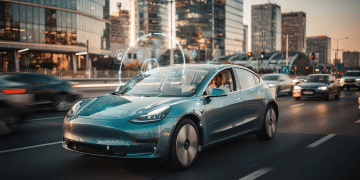
Autonomous Driving: Navigating US Regulatory Hurdles by Mid-2026

The dawn of autonomous driving has been heralded for years, promising a revolution in transportation that could redefine safety, efficiency, and personal mobility. From self-parking cars to fully autonomous robotaxis, the technology is advancing at an unprecedented pace. However, the road to widespread adoption is not merely paved with technological innovation; it is also heavily influenced by the complex landscape of legal and ethical considerations. In the United States, the journey towards a fully integrated autonomous future is particularly intricate, with a patchwork of state and federal regulations, and a public still grappling with the implications of ceding control to machines. As we approach mid-2026, several significant regulatory hurdles, particularly concerning autonomous driving regulations, are poised to shape the trajectory of this transformative technology.
The promise of autonomous vehicles (AVs) is immense. Proponents envision a future with drastically reduced traffic accidents, fewer traffic jams, and increased accessibility for individuals unable to drive. The economic benefits could be staggering, with enhanced productivity, optimized logistics, and new service industries emerging. Yet, realizing this future demands more than just technological breakthroughs. It requires a robust, adaptable, and comprehensive regulatory framework that can keep pace with innovation while ensuring public safety, addressing liability, and fostering consumer trust. Without clear and consistent autonomous driving regulations, the industry risks stagnation, fragmented deployment, and a loss of public confidence.
This article will delve into four critical regulatory hurdles that autonomous driving is expected to face in the US by mid-2026. These challenges are not isolated; they are interconnected, forming a complex web that policymakers, industry leaders, and the public must navigate together. Understanding these hurdles is crucial for anyone invested in the future of transportation, from manufacturers and developers to consumers and urban planners. The discussions surrounding these issues will undoubtedly define the success and speed of autonomous vehicle integration into our daily lives. Let’s explore the intricacies of these impending regulatory challenges and their potential impact on the autonomous driving landscape.
1. The Lack of a Unified Federal Regulatory Framework for Autonomous Driving Regulations
One of the most significant and overarching challenges facing autonomous driving in the US is the absence of a cohesive, unified federal regulatory framework. Currently, the regulation of autonomous vehicles is a complex interplay between federal and state authorities, leading to a fragmented and often contradictory legal landscape. While the National Highway Traffic Safety Administration (NHTSA) has issued guidelines and recommendations, these are not legally binding mandates, leaving states to develop their own laws, often resulting in a patchwork of differing regulations.
This fragmentation creates considerable obstacles for autonomous vehicle manufacturers and deployers. Developing an AV that complies with 50 different sets of state laws, each with its own requirements for testing, deployment, operator presence, and liability, is an arduous and costly endeavor. For instance, one state might require a human safety driver behind the wheel during testing, while another might permit fully driverless operations. Some states have specific licensing requirements for AVs, while others do not. This inconsistency hinders scalability, increases development costs, and ultimately slows down the widespread deployment of autonomous technology across the nation.
The call for a unified federal approach to autonomous driving regulations has grown louder from industry stakeholders. A consistent federal framework would provide clarity, predictability, and efficiency, allowing companies to focus on innovation rather than navigating a labyrinth of state-specific rules. Such a framework would ideally define national safety standards, establish clear guidelines for testing and deployment, and create a consistent liability structure. Without such uniformity by mid-2026, the US risks falling behind other nations that are proactively developing national AV policies, potentially stifling domestic innovation and investment in this critical sector.
The challenge extends beyond just vehicle operation. It also encompasses data privacy, cybersecurity, and infrastructure requirements. A federal framework could address these cross-cutting issues, ensuring a standardized approach to how AVs collect, use, and protect data, as well as how they interact with smart city infrastructure. The current piecemeal approach makes it difficult to implement nationwide solutions for these crucial aspects of autonomous driving. The legislative process for creating such a comprehensive federal framework is inherently slow and often subject to political complexities, making its realization by mid-2026 a significant hurdle, yet a critical necessity for the industry’s sustained growth and public acceptance.
2. Establishing a Clear Liability Framework for Autonomous Vehicle Accidents
The question of who is at fault when an autonomous vehicle is involved in an accident is perhaps one of the most contentious and legally challenging aspects of autonomous driving regulations. In traditional accidents, liability is typically assigned to the human driver. However, with AVs, the lines become blurred. Is the manufacturer liable for a software glitch? Is the owner responsible for failing to maintain the vehicle? What if a third-party sensor provider’s component malfunctions? The current legal system, built around human-driven vehicles, is ill-equipped to handle these complex scenarios, and a clear liability framework is desperately needed by mid-2026.
The development of a robust liability framework is crucial for several reasons. Firstly, it provides clarity for accident victims, ensuring they can seek appropriate compensation. Without it, legal battles could be protracted and unpredictable, undermining public confidence in AV technology. Secondly, it incentivizes manufacturers to prioritize safety and rigorous testing, as they would bear significant responsibility for failures. Thirdly, it impacts insurance models. Traditional auto insurance is based on driver risk; AVs necessitate a shift towards product liability insurance, or a hybrid model, which requires significant re-evaluation by the insurance industry and regulators.
Several approaches to liability have been proposed globally. Some suggest a strict liability model, placing the onus primarily on the manufacturer, which could encourage even greater safety development. Others advocate for a shared liability model, distributing responsibility among various stakeholders based on the cause of the accident. The challenge lies in defining the specific conditions under which each party—manufacturer, software developer, sensor supplier, vehicle owner, or even infrastructure operator—would be held accountable. This requires detailed technical understanding of AV systems and the ability to accurately determine the root cause of an incident, which can be incredibly complex given the black-box nature of some AI systems.
Moreover, the legal implications extend to issues like cybersecurity breaches. If an AV is hacked and causes an accident, who is responsible? The vehicle manufacturer, the software provider, or the entity responsible for the cybersecurity protection? These are not hypothetical questions; they are real-world scenarios that autonomous driving regulations must address. Without a clear, federally consistent, and comprehensive liability framework, the legal uncertainties could lead to a chilling effect on AV deployment, as companies might be hesitant to roll out technology that could expose them to immense, unpredictable legal risks. This hurdle is not just about law; it’s about trust and the fundamental principles of justice in an increasingly automated world.

3. Developing Consistent Performance and Safety Standards for Autonomous Driving Systems
Ensuring the safety of autonomous vehicles is paramount, and a critical regulatory hurdle involves establishing consistent, measurable performance and safety standards. Unlike traditional vehicles, where human error accounts for a vast majority of accidents, AVs introduce new safety considerations related to software reliability, sensor performance, decision-making algorithms, and human-machine interaction. By mid-2026, the absence of universally accepted and legally binding standards for these aspects could significantly impede progress and public acceptance of autonomous driving regulations.
Currently, many AV developers rely on voluntary industry standards or their own internal safety methodologies. While these efforts are valuable, they lack the legal authority and public accountability of government-mandated standards. A unified set of performance metrics is needed to objectively assess an AV’s ability to safely navigate diverse driving conditions, including adverse weather, complex urban environments, and unexpected road events. This includes defining what constitutes a ‘safe’ disengagement, how AVs should react to human drivers’ unpredictable behavior, and how they should handle edge cases that are rare but potentially dangerous.
The challenge is compounded by the rapid evolution of AV technology. Standards need to be flexible enough to accommodate innovation, yet robust enough to guarantee safety. Creating regulations that are both future-proof and granular enough to be effective is a delicate balancing act. For instance, how do you standardize the performance of an AI system that is constantly learning and adapting? What metrics should be used to certify an AV’s ability to perceive its environment, predict intentions, and plan safe trajectories?
Beyond technical performance, there is a need for standards related to cybersecurity. Autonomous vehicles are essentially computers on wheels, making them vulnerable to cyberattacks that could compromise safety. Regulations must mandate rigorous cybersecurity protocols, regular audits, and clear incident response plans. Furthermore, standards for human-machine interface (HMI) are crucial, especially for vehicles that allow for partial automation or require human intervention in certain situations. Clear guidelines are needed to ensure that human drivers understand when and how to take control, minimizing confusion and potential errors.
Without robust, federally mandated performance and safety standards, the public may remain skeptical about the reliability and trustworthiness of autonomous vehicles. This regulatory gap not only poses safety risks but also hinders consumer adoption and the overall growth of the autonomous driving industry. The development of such standards requires close collaboration between government bodies, industry experts, academics, and consumer advocates to ensure they are comprehensive, enforceable, and ultimately effective in fostering a safe autonomous future.
4. Addressing Public Perception and Building Trust in Autonomous Driving Technology
While often overlooked in purely technical discussions, public perception and trust represent a formidable regulatory hurdle for autonomous driving. Even with the most advanced technology and robust legal frameworks, widespread adoption of autonomous vehicles will not occur without public acceptance. Incidents involving autonomous vehicles, even when rare or not the fault of the AV, tend to garner significant media attention, eroding public confidence and fueling skepticism. By mid-2026, regulators and industry alike must proactively address this challenge, or risk significant delays in deployment.
The core of this hurdle lies in the psychological barrier of ceding control to a machine, especially when human lives are at stake. A substantial portion of the public remains wary of self-driving cars, citing concerns about safety, ethical decision-making in unavoidable accident scenarios (the ‘trolley problem’), and the potential for job displacement. This apprehension is not irrational; it stems from a natural human inclination to trust human judgment over algorithmic decisions, particularly in complex and unpredictable environments like public roads.
To overcome this, regulatory bodies have a crucial role to play in fostering transparency and educating the public. This involves clearly communicating the safety benefits of AVs, explaining how autonomous driving regulations are designed to protect them, and providing accessible information about testing protocols and safety records. Rather than allowing misinformation or sensationalism to dictate public discourse, regulators can serve as trusted sources of objective information, helping to demystify the technology and its implications.
Furthermore, building trust requires a commitment to ethical guidelines in AV development. This includes addressing concerns about algorithmic bias, ensuring equitable access to AV services, and establishing clear protocols for data usage and privacy. Regulators can mandate transparency in how AVs are programmed to make decisions in critical situations, allowing for public scrutiny and input. Public forums, pilot programs in controlled environments, and clear accident investigation processes can also contribute significantly to demystifying the technology and building confidence.
The challenge of public perception is intertwined with the other regulatory hurdles. A unified federal framework, clear liability rules, and strong safety standards all contribute to building trust. When the public sees that robust autonomous driving regulations are in place to ensure safety and accountability, their confidence in the technology is likely to increase. Conversely, a fragmented regulatory landscape, ambiguous liability, or perceived lax safety standards will only exacerbate public skepticism, creating a significant impediment to the widespread adoption of autonomous vehicles. Engaging with the public, listening to their concerns, and proactively addressing them with clear, consistent, and transparent policies will be essential for the success of autonomous driving in the US by mid-2026 and beyond.

The Path Forward: Overcoming Autonomous Driving Regulatory Hurdles
The journey towards a fully autonomous future in the United States is undeniably complex, marked by significant regulatory hurdles that demand immediate and concerted attention. The four challenges outlined – the absence of a unified federal framework, the need for a clear liability structure, the development of consistent performance and safety standards, and the critical task of building public trust – are not merely technical or legalistic issues. They are foundational elements that will either accelerate or impede the integration of autonomous driving technology into our society.
Addressing these autonomous driving regulations effectively by mid-2026 requires a multi-pronged approach involving all stakeholders. Federal agencies, such as NHTSA, need to move beyond guidelines and establish legally binding federal standards that preempt the current state-by-state fragmentation. This would provide the much-needed clarity and consistency for manufacturers, enabling them to scale their operations and focus on innovation rather than navigating disparate local laws. Legislation like the SELF DRIVE Act, which has seen various iterations in Congress, points towards the recognition of this need, but concrete action is still pending.
Concurrently, the legal and insurance sectors must collaborate to craft a comprehensive and equitable liability framework. This framework must account for the unique characteristics of AV technology, ensuring that victims of accidents are justly compensated, and that accountability is clearly defined. This will likely involve a re-evaluation of traditional tort law and the development of new insurance products tailored to autonomous vehicles, moving away from purely human-centric models.
The development of robust and adaptable performance and safety standards is also non-negotiable. These standards must be scientifically rigorous, technologically agnostic where possible, and regularly updated to keep pace with rapid technological advancements. International collaboration on these standards could also prove beneficial, fostering global harmonization and reducing barriers to entry for companies operating across borders. Openness and transparency in testing and validation will be key to ensuring these standards are effective and credible.
Finally, and perhaps most crucially, is the imperative to engage with and educate the public. Building trust is a long-term endeavor that requires transparent communication, clear demonstrations of safety, and opportunities for public input. Pilot programs, educational campaigns, and open data sharing on AV performance and safety metrics can help demystify the technology and address genuine public concerns. Regulators must act as trusted intermediaries, bridging the gap between technological innovation and societal acceptance.
The mid-2026 timeline presents both a challenge and an opportunity. It is a critical juncture where the foundational policies for autonomous driving will either be solidified or remain in flux. Failure to address these regulatory hurdles effectively could lead to a stalled rollout of AV technology, missing out on its potential to enhance safety, efficiency, and accessibility in transportation. Conversely, successful navigation of these challenges could unlock a new era of mobility, positioning the US at the forefront of autonomous innovation.
The future of autonomous driving, and its profound impact on our society, hinges not only on the brilliance of engineers and computer scientists but equally on the wisdom and foresight of policymakers. The decisions made in the coming years regarding autonomous driving regulations will determine whether this revolutionary technology truly delivers on its promise or remains largely confined to niche applications. The time for proactive, comprehensive, and collaborative regulatory action is now, as the autonomous future is rapidly approaching.